
2026 Top Guide to Cigarette Laws in Canada
Canada’s cigarette laws combine federal requirements with provincial and territorial rules. In 2026, a practical guide must explain both layers because sales, taxes, packaging, and smoke-free spaces may be regulated differently across the country. These rules affect ordinary moments: an age check at checkout, package warnings, or a no-smoking sign outside a building. Details matter.
This guide will outline the main legal requirements for buying, selling, possessing, and using cigarettes in Canada. It will also explain how minimum purchase ages, retail restrictions, excise taxes, and public-place rules can vary by location. The phrase “cheap cigarettes online Canada” may appear in searches, but a low price alone does not confirm that a seller or product meets Canadian requirements. Check age-verification practices, applicable taxes, and delivery rules with official government sources before making a decision.
Federal and local rules can change, and online summaries may lag behind them. That is easy to overlook. Readers should confirm current information with Health Canada, the Canada Revenue Agency, and their provincial or territorial government. This guide is informational, not legal advice; when a rule is unclear, checking the original regulation is wiser than relying on a quick search.
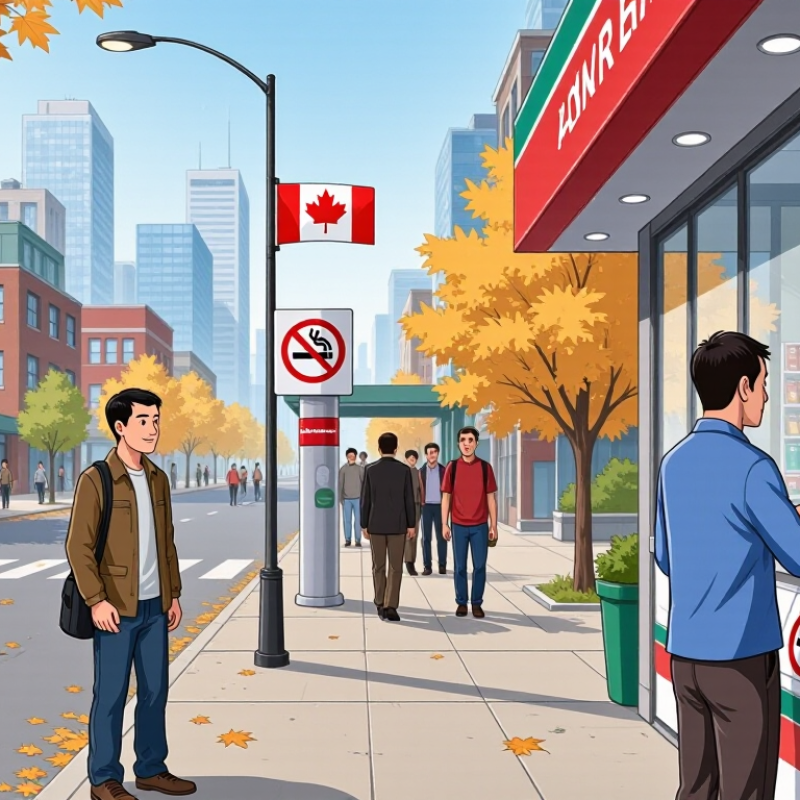
Canada’s Tobacco-Control Framework: Federal Rules and Provincial Authority
2026 Top Guide to Cigarette Laws in Canada
Canada’s Tobacco-Control Framework: Federal Rules and Provincial Authority
Canada’s cigarette rules are shared across federal, provincial, and territorial governments. Federal law sets a national baseline for tobacco manufacturing, promotion, packaging, and health warnings. These standards shape what people see on a cigarette package, including prominent warning labels. The details can change, so check current government guidance.
Provinces and territories add rules for retail sales and public spaces. The federal minimum age for tobacco sales is 18, but local laws may set a higher age. A shop near a provincial border may face different age requirements just a short drive away. That difference is easy to miss. Smoke-free rules also vary by location and may cover workplaces, patios, or other outdoor areas.
Retailers must follow the rules that apply where they operate, including requirements for sales and display. Tax rates and compliance procedures can differ, too. I find the division of authority less tidy than it first appears: one federal standard may sit alongside several local restrictions. For a practical check, consult the federal tobacco rules and the relevant provincial or territorial government before buying or selling tobacco. A municipal bylaw may add another layer.
| 2026 Top Guide to Cigarette Laws in Canada — Canada’s Tobacco-Control Framework: Federal Rules and Provincial Authority | |||
|---|---|---|---|
| Overview of key federal requirements and provincial and territorial responsibilities. Minimum purchase ages shown below are jurisdictional minimums; retailers must follow the applicable law where the sale occurs. | |||
| Federal Framework | |||
| Policy area | Federal framework | What it means for cigarettes | Provincial and territorial role |
| Core legislation | The Tobacco and Vaping Products Act (TVPA) establishes national rules for tobacco products, including cigarettes. | Federal requirements apply to matters such as manufacture, sale, promotion, and product labelling. | Provinces and territories may add requirements in areas within their authority, including retail sales and public-place restrictions. |
| Minimum age | The TVPA prohibits furnishing tobacco products to young persons under 18. | The federal minimum is a baseline, not the age that applies everywhere. | Every province and territory sets its own minimum age for tobacco sales. Sellers must comply with the higher applicable age requirement. |
| Packaging and health warnings | Federal regulations require standardized tobacco packaging and prescribed health warnings. | Packages must meet federal appearance, information, and warning requirements. Federal rules also require health warnings to appear on individual cigarettes. | Provincial and territorial rules may govern additional retail practices, but cannot replace applicable federal packaging requirements. |
| Promotion and advertising | The TVPA restricts tobacco promotion, including advertising and sponsorship, and prohibits promotion directed at young persons and certain lifestyle advertising. | Permitted communications are subject to federal conditions and restrictions. | Local laws can impose additional limits on retail displays, promotion, and the sale environment. |
| Excise duties and taxes | Federal tobacco excise duties are imposed under the Excise Act, 2001. | Federal duties apply alongside other applicable taxes; rates and rules can change. | Provinces and territories impose their own tobacco taxes. The amounts and tax rules differ by jurisdiction and may be updated. |
| Smoke-free protections | The Non-smokers’ Health Act applies to smoking in federally regulated workplaces and certain federally regulated settings. | Federal rules apply within their defined scope. | Provincial and territorial laws generally set the principal rules for smoking in enclosed public places and workplaces, with local rules sometimes adding restrictions. |
| Minimum Legal Age for Tobacco Sales by Province and Territory | |||
| Province or territory | Minimum purchase age | Primary local authority | Practical compliance point |
| Alberta | 18 | Provincial tobacco-sales and smoke-free rules | Retailers must not sell tobacco to anyone below the provincial minimum age. |
| British Columbia | 19 | Provincial tobacco-sales and smoke-free rules | Apply the provincial minimum age and any local restrictions on smoking locations. |
| Manitoba | 18 | Provincial tobacco-sales and smoke-free rules | Provincial requirements operate alongside federal product and promotion rules. |
| New Brunswick | 19 | Provincial tobacco-sales and smoke-free rules | Retail sales must meet the provincial minimum-age requirement. |
| Newfoundland and Labrador | 19 | Provincial tobacco-sales and smoke-free rules | Check provincial restrictions as well as any applicable municipal rules. |
| Nova Scotia | 19 | Provincial tobacco-sales and smoke-free rules | Provincial rules govern age-restricted sales and smoking in covered places. |
| Ontario | 19 | Provincial tobacco-sales and smoke-free rules | Retailers must follow the provincial age requirement and applicable sales restrictions. |
| Prince Edward Island | 21 | Provincial tobacco-sales and smoke-free rules | The provincial minimum age is higher than the federal baseline. |
| Quebec | 18 | Provincial tobacco-sales and smoke-free rules | Provincial requirements apply in addition to federal packaging and promotion rules. |
| Saskatchewan | 18 | Provincial tobacco-sales and smoke-free rules | Follow provincial sales requirements and any local smoking restrictions. |
| Northwest Territories | 19 | Territorial tobacco-sales and smoke-free rules | Territorial rules apply alongside federal requirements. |
| Nunavut | 19 | Territorial tobacco-sales and smoke-free rules | Retailers must meet the territorial minimum age and applicable sales rules. |
| Yukon | 19 | Territorial tobacco-sales and smoke-free rules | Check territorial requirements for retail sales and smoking locations. |
| Important: This table is a general overview, not legal advice. Smoke-free rules, retail requirements, taxes, and permitted smoking areas vary and may change. Confirm current federal, provincial, territorial, and municipal requirements before relying on them. | |||