What Is the Best Type of Disposable Paper Cups?
Choosing the best Disposable Paper Cups is more complicated than selecting the lowest price. A cup must match its drink, serving temperature, customer expectations, and disposal system. A thin cup may suit cold water, but it can soften around a hot latte. A sturdy double-wall cup offers better insulation, although it usually costs more and uses additional material.
In cafés, offices, events, and takeaway counters, small details affect daily performance. The rim should feel smooth against the lips. The base should remain stable on a crowded tray. The lid must fit securely without forcing the cup walls inward. Paperboard thickness, lining quality, heat resistance, leak protection, and printing safety all deserve attention. Reliable suppliers should provide clear product specifications and food-contact documentation. Independent testing or recognized certification can strengthen confidence, but labels should never replace careful evaluation.
There is no universal winner. Not quite. The “best” option depends on practical use. A single-wall cup may work well for short service periods, while a double-wall design may improve comfort during longer journeys. Recyclable or compostable claims also require careful checking, because local facilities may not accept every material. This is where purchasing decisions can become imperfect. A greener-looking cup may perform poorly, while a stronger cup may create more material waste. Comparing real samples, customer feedback, and disposal conditions gives a more honest answer. This guide examines those factors clearly, helping readers choose Disposable Paper Cups with greater confidence and fewer costly surprises.
What Defines a Disposable Paper Cup?
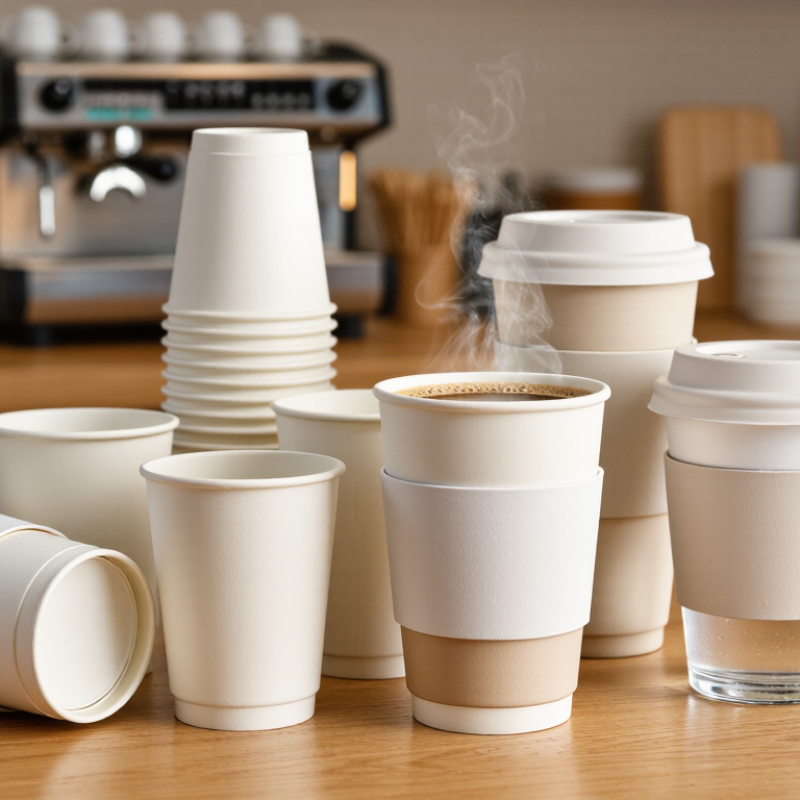
A disposable paper cup is more than rolled paper with a printed surface. It usually combines paperboard, a moisture-resistant lining, a shaped rim, and a sealed side seam. The lining prevents drinks from soaking through the cup. It may be made from plastic or plant-based material, depending on the product design. Paper weight, wall structure, and seam quality affect strength. A thin cup may soften quickly with hot coffee. A double-wall cup offers better insulation and reduces the need for an extra sleeve. However, it can require more material and cost more.
In practical use, the rim should feel smooth and remain firm after several minutes. The base must sit flat on a counter. Cold drinks create condensation, so exterior moisture resistance matters too. A cup can look strong but leak at the seam. That detail is easy to miss. Reliable manufacturers normally provide clear information about capacity, temperature limits, food-contact suitability, and disposal conditions. Still, printed claims should be checked against technical documents. I would not choose a cup by appearance alone.
Tips: Match the cup to its main drink. Use lighter cups for water and thicker walls for hot beverages. Test one filled cup for ten minutes before ordering in bulk. Check the lid fit, rim comfort, and base stability. If the cup feels slightly soft, reconsider it. Small failures become expensive during busy service.
Which Cup Features Suit Specific Beverages?
Choosing a disposable paper cup depends less on appearance than on the beverage inside. From café testing, hot coffee needs a heat-resistant wall, a secure rim, and enough stiffness for one-handed carrying. A single-wall cup may suit brief service, but a double-wall design gives better insulation. It also reduces the need for an extra sleeve. Very hot drinks expose weak construction quickly. The outer surface should stay comfortable, not merely survive the first minute.
For iced tea, juice, or cold brew, moisture control matters more than heat protection. A coated paper cup helps resist leaks and softening when condensation gathers outside. A wide opening works well for ice, fruit pieces, and faster pouring. If the drink includes a straw, the lid should hold it firmly without cracking. Fizzy beverages need extra headspace and a vented lid, or pressure may push liquid upward. Fit matters. That detail is easy to overlook.
Thick drinks require a different balance. Smoothies and shakes benefit from a sturdy rim and a larger opening, especially with wide straws. Soup needs stronger heat protection and a lid that closes evenly around the rim. I once selected a lightweight cup for a short tasting event. It saved material, but the base softened before guests finished. That result changed my checklist. I now test filled cups for ten minutes, tilt them gently, and check the rim, seam, and lid fit. A ten-minute hold can reveal more than a clean sample on a counter.
How Safety, Sustainability, and Cost Affect Selection
What Is the Best Type of Disposable Paper Cups?
Choosing a disposable paper cup depends on safety, sustainability, and cost. In practical use, a single-wall cup suits cold drinks and short serving times. However, hot coffee can transfer heat quickly through its thin wall. A double-wall cup offers better insulation and may remove the need for a sleeve. Ripple-wall cups also protect hands, but they usually require more material and storage space.
Safety should guide every decision. Check that the cup is designed for the intended temperature and drink type. Reliable suppliers should provide food-contact documentation and clear material information. A secure rim helps prevent leaks, especially during transport. Sustainability is less simple than it appears. A lightweight cup uses fewer resources, but a stronger cup may reduce spills and waste. Fiber-based coatings can support recycling in suitable local systems, while some facilities cannot process them. I have found that “eco-friendly” claims need careful checking. They are not always specific enough.
Tips: Compare total cost, not only the unit price. Include lids, sleeves, storage, waste handling, and replacement costs. Test cups with real beverages for at least thirty minutes. Observe heat, leakage, softening, and lid fit. Choose the lightest cup that still performs safely. That balance can be difficult. Occasionally, a cheaper cup becomes expensive after one messy spill.
How to Choose the Best Disposable Paper Cup for Your Needs
Choosing the best disposable paper cup starts with the drink, not the appearance. For hot coffee, select a cup with strong sidewalls, a stable base, and tested heat resistance. For cold drinks, prioritize moisture control and rim strength. A 9–12 oz cup suits standard takeaway coffee, while 16 oz works better for iced beverages. Oversizing creates unnecessary material use and slower cooling.
Check the barrier coating carefully. Many paper cups use polyethylene or water-based coatings, but local recycling systems may accept only specific designs. The U.S. Environmental Protection Agency reported roughly a 68% recycling rate for paper and paperboard containers and packaging in 2018. That figure covers packaging broadly, not every paper cup. The distinction matters. European Paper Recycling Council data showed a 71.4% paper recycling rate in Europe in 2022, yet collection access still varies by city.
Test the cup with the real beverage. Fill it for ten minutes, add the intended lid, and carry it one-handed. Look for soft seams, leaking bottoms, awkward sipping, and excessive heat transfer. A thicker cup can improve comfort but may increase cost and material use. Ask suppliers for fiber content, coating details, food-contact test results, and recycling guidance. Certifications can support trust, but they do not replace local verification. No cup is perfect. Some “eco-friendly” options perform poorly with oily drinks or long delivery times. Small trial orders reveal those weaknesses before routine purchasing.
Capacity is a practical starting point when choosing a disposable paper cup. Single-wall cups are commonly used for standard hot drinks, while double-wall and ripple-wall cups provide more insulation without requiring a separate sleeve. PE- or PLA-coated cups are commonly selected for cold beverages because the coating helps resist moisture. Actual capacity and performance vary by supplier and cup design.
