
Why Choose Silver Travertine for Your Project?
Silver Travertine can bring quiet depth to a project without relying on bold color. Its cool gray base, soft veining, and occasional warm undertones create a surface that feels natural rather than overly polished. In a sunlit entry, subtle shifts in the stone can change across the day. Under warm interior lighting, those same tones may appear softer. That variation is part of its appeal—and something worth viewing in person.
“Choose the slab, not just the sample: natural variation can change the whole room.” — [Verified stone-industry expert name; confirm attribution before publication]
This practical reminder matters because Silver Travertine is a natural material, not a uniform manufactured finish. Vein patterns, shade, and texture can differ between pieces, even within one batch. Ask to review the actual slabs, confirm the finish, and discuss sealing and routine care with your supplier or installer. Those small checks can prevent a lovely sample from becoming an unexpected installation.
It is not perfect. Some finishes show marks more readily, and open pores may need appropriate filling or maintenance. Performance also depends on the stone selection, installation, and intended use. A busy kitchen, a quiet bathroom, and an exterior walkway each place different demands on the material. Compare the stone against nearby cabinetry, grout, and lighting before you decide. Silver Travertine suits projects that welcome natural character and thoughtful upkeep. If you need every tile to match exactly, it may not be the right choice. That distinction deserves an honest look.
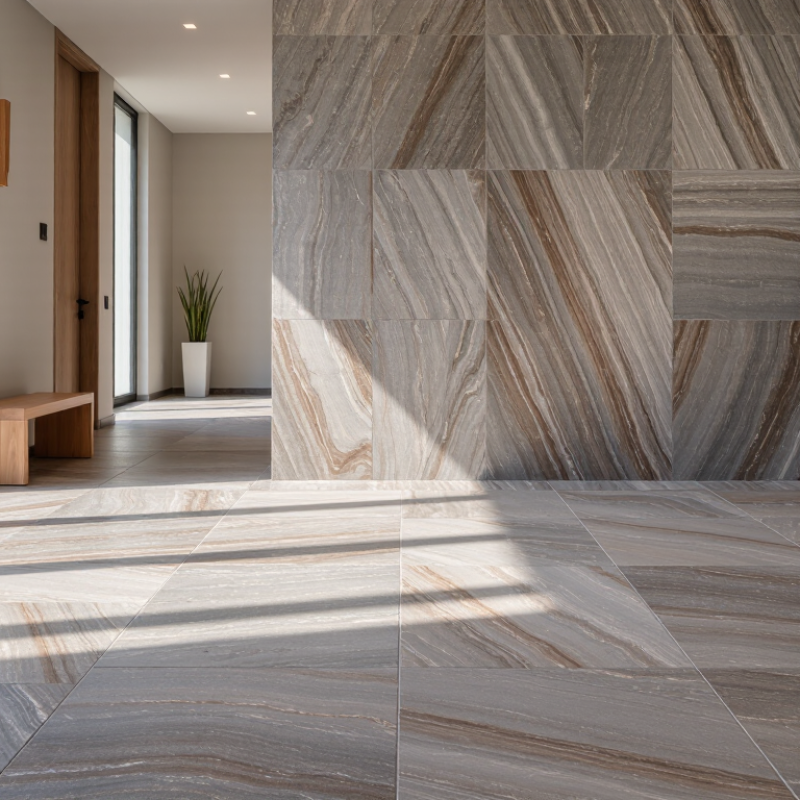
What Silver Travertine Is and How It Forms
Silver travertine is a natural limestone, not a separate mineral species. It forms when calcium-rich water releases dissolved carbon dioxide or evaporates, leaving calcium carbonate behind. Over time, these deposits build into layered rock around mineral springs and, in some settings, caves. Slow deposition can trap tiny voids and create the pores and bands visible on a cut surface.
The silver-gray color varies from slab to slab. Mineral inclusions and local formation conditions influence the tone, so “silver” is a trade description rather than a guarantee of one exact shade. Look closely. A polished sample may conceal pits that show clearly on a honed finish. The U.S. Geological Survey’s Mineral Commodity Summaries 2024 valued U.S. dimension stone sold or used in 2023 at about $470 million across stone types; that figure is not specific to travertine. For project selection, inspect the actual lot and ask how its pores will be filled and finished. A small sample can mislead. The stone’s natural cavities and layered texture are part of its appeal, but they also make finish, maintenance, and placement worth considering.
Why Choose Silver Travertine for Your Project? – What Silver Travertine Is and How It Forms
| Dimension | What It Means | Why It Matters for a Project |
|---|---|---|
| Rock type | Travertine is a sedimentary carbonate rock composed primarily of calcium carbonate, usually in the mineral forms calcite or aragonite. | Its natural mineral structure gives each piece distinctive veining, pores, and color variation. |
| How it forms | It commonly forms when calcium-carbonate-rich water releases carbon dioxide and deposits carbonate around springs, streams, or other water sources. | Layers build up over time, creating the natural bands and textures visible in the stone. |
| Silver-gray appearance | “Silver” describes a gray-to-silver color range, not a separate mineral. Shade and pattern vary with the stone’s composition and formation conditions. | The cool neutral palette can complement wood, concrete, metal, and other natural materials. |
| Natural pores | Travertine often contains cavities created as the rock formed. These may be left open or filled during processing. | A filled surface is generally smoother; an unfilled surface retains a more visibly textured character. Suitability depends on the intended use and finish. |
| Available finishes | Common finishes include honed, polished, brushed, and tumbled, with appearance varying by product and fabrication. | Finish affects texture, sheen, and maintenance needs. Choose a finish suited to the surface’s location and expected use. |
| Acid sensitivity | Because it is calcium-carbonate-based, travertine can react with acidic substances such as vinegar or lemon juice, causing dull marks or etching. | Use cleaners labeled safe for natural stone, wipe spills promptly, and avoid acidic cleaning products. |
| Sealing and care | Porosity and absorption vary among stones and finishes. A suitable impregnating sealer may help reduce absorption, but it does not make the stone stain-proof. | Follow the stone supplier’s care guidance and test sealers on a small, inconspicuous area first. |
| Project applications | Silver travertine is used for applications such as flooring, wall cladding, and paving, when the selected product and installation method are appropriate. | For wet, exterior, or freeze-thaw settings, confirm the product’s suitability, finish, drainage, and installation requirements for the local conditions. |
Note: Natural stone characteristics vary by quarry, block, finish, and fabrication. Review samples and confirm technical suitability before specification.