How to Choose the Perfect Executive Office Desk for Your Workspace?
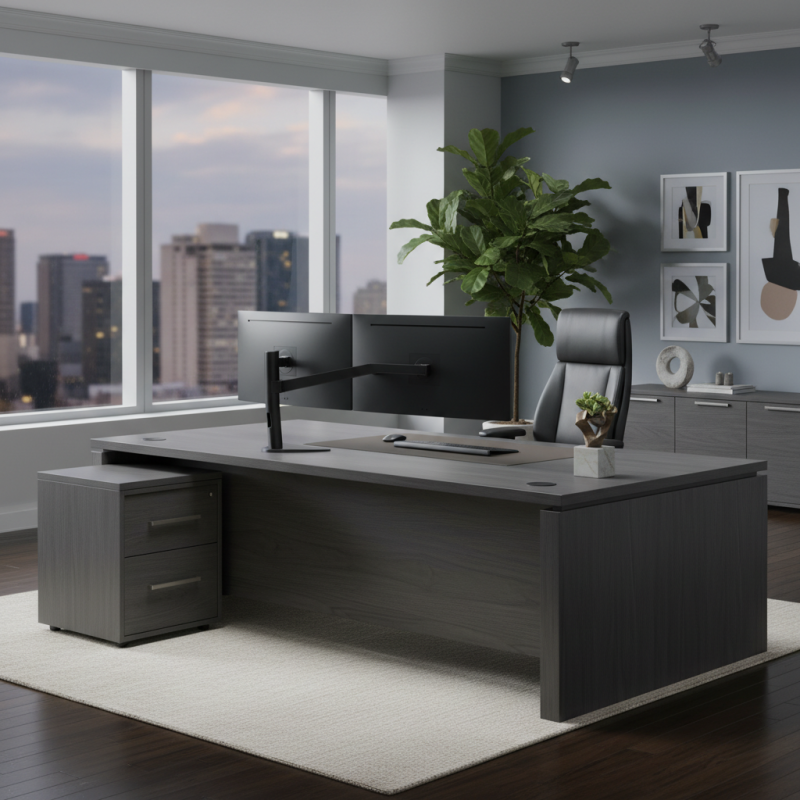
Choosing the right executive office desk is crucial for your workspace. The perfect desk reflects your professionalism and style. It can set the tone for productivity and creativity.
An executive office desk should offer comfort and functionality. Consider the layout of your space. Measure the area to ensure a good fit. Many desks come with storage options, which can help keep your workspace organized.
However, it's essential to carefully evaluate your needs. Some may prefer a large surface for multiple monitors. Others may need a minimalist design to enhance focus. Finding the right executive office desk is a personal journey. Reflect on what works best for you. Your workspace should inspire and support your goals.
Key Considerations for Selecting an Executive Office Desk
When selecting an executive office desk, consider the size of your workspace. A large desk can dominate a small room. It may create a cluttered feel. Conversely, a smaller desk might feel inadequate in a spacious office. Measure your available space carefully. Visualize how the desk fits in the overall layout.
Material is another essential factor. Wood offers a classic, professional look. Metal or glass can provide a modern touch. Consider how each material affects your work environment. Think about maintenance too. Some finishes require more upkeep, which can become a burden.
Storage options are equally important. Do you require drawers for files and supplies? Cabinets can help keep your space organized. Think about your workflow. An efficient desk can enhance productivity. Reflect on your daily tasks and choose features that support your routine.
How to Choose the Perfect Executive Office Desk for Your Workspace? - Key Considerations for Selecting an Executive Office Desk
| Feature |
Description |
Importance |
| Material |
Choose durable materials such as solid wood, metal, or high-quality laminate. |
High |
| Size |
Consider the available space and choose a desk that fits without overcrowding. |
High |
| Ergonomics |
Ensure the desk height and layout promote good posture and comfort. |
Critical |
| Style |
Choose a design that complements the office decor and reflects professionalism. |
Medium |
| Storage |
Look for desks with built-in storage or options for adding storage solutions. |
High |
| Cable Management |
Consider a desk with features that help organize and hide cables. |
Medium |
| Flexibility |
Assess if the desk can be easily moved or adjusted for different tasks. |
Medium |
Evaluating Desk Styles and Designs for Your Workspace
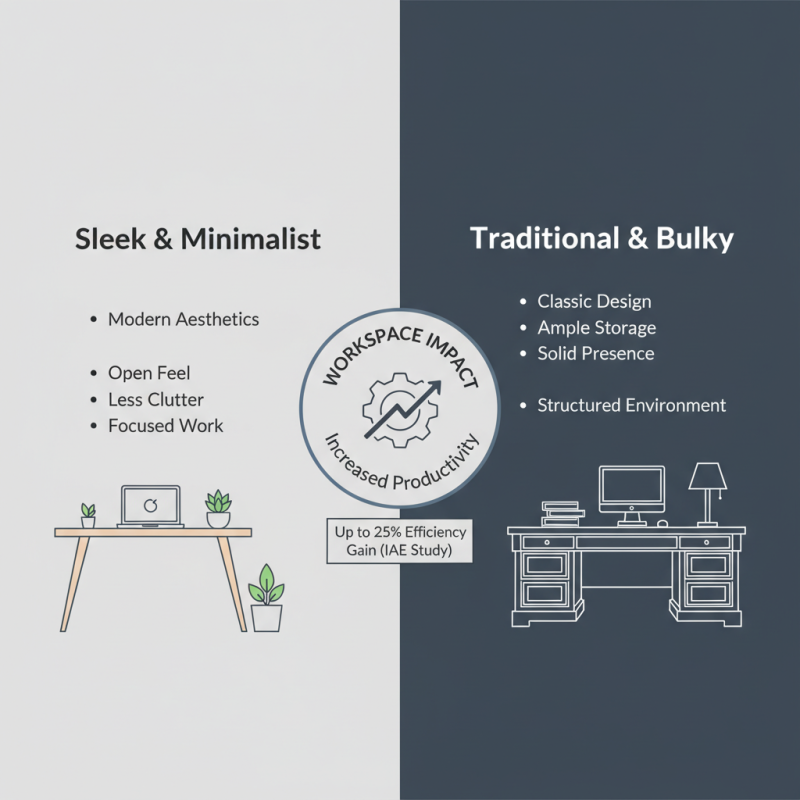
Choosing the right desk style and design can significantly affect productivity and comfort. According to a recent study from the International Ergonomics Association, a well-designed workspace can improve efficiency by up to 25%. When evaluating desk styles, consider both aesthetics and functionality. Some prefer sleek, minimalist designs, while others may favor traditional, bulky options. Each choice can create a specific atmosphere in your office.
Height-adjustable desks are rising in popularity. Flexible work environments promote physical wellness and help mitigate health risks associated with prolonged sitting. Studies indicate that sitting for over eight hours can increase the likelihood of cardiovascular disease. Desks that can cater to both sitting and standing positions are not just trendy; they reflect an understanding of modern work dynamics.
However, many users overlook the importance of desk organization. Clutter can lead to distractions and decreased focus. In fact, a survey by the National Association of Professional Organizers found that 80% of workers feel overwhelmed by their workspace. Selecting desks with built-in storage or options for managing cables can combat this issue. Investing time in evaluating these design elements can lead to a workspace that enhances creativity and reduces stress.
Understanding Material Options for Durability and Aesthetics
Choosing the right material for your executive office desk is crucial. Wood, metal, and glass are popular options, each with its unique charm. Natural wood brings warmth and elegance. It can show scratches and dents over time, calling for care and maintenance. Metal desks offer a sleek, modern look. They are durable but can feel cold and uninviting. Glass desks provide a contemporary vibe. However, they can be prone to smudges and require regular cleaning.
Consider your workspace aesthetics and functionality. A heavy desk may be sturdy but restricts movement. Lighter materials offer flexibility but may lack robustness. Balance these factors thoughtfully. Does the desk meet your daily needs? Is it visually pleasing? Reflect on the atmosphere you want to create. Each material offers a different experience, and the right choice can elevate your workspace. Don’t rush this decision; test the options if you can.
Material Options for Executive Office Desk: Durability vs Aesthetics
Assessing Size and Space Requirements for Your Office Layout
When choosing an executive office desk, assessing size and space requirements is crucial. A report from the International Facility Management Association (IFMA) indicates that nearly 70% of employees feel their workspace impacts their productivity. The dimensions of your desk should align with the overall layout of your office. If the space is limited, a desk that is too large can create a cluttered environment.
Consider measuring not just the desk but also the room. A desk typically needs a clearance of three feet around it for easy movement. This means if the desk is six feet long, the overall area should ideally be at least twelve feet wide. On average, executives can function well within a 100 to 200 square foot office. Yet, many mistakenly overcrowd their space.
Reflect on personal needs. Do you often require collaboration in your office? A large desk may isolate you. A smaller desk could foster interaction. Ultimately, balancing aesthetics with functionality is key. Create an environment that invites focus and communication. Prioritize comfort and ergonomics.
Incorporating Functionality and Ergonomics in Your Desk Choice
Choosing an executive office desk involves more than aesthetics. Functionality and ergonomics are key factors that influence productivity. Studies show that ergonomic workspaces can reduce the risk of discomfort and enhance focus. A well-designed desk can lead to an increase in productivity by up to 25% according to the Human Factors and Ergonomics Society.
When selecting a desk, consider adjustable height options. This allows users to switch between sitting and standing, promoting better posture. Additionally, storage solutions should be integrated. Having easy access to documents reduces clutter and distraction. A clutter-free workspace fosters clarity of thought.
Here are tips for making the right choice:
- Prioritize adjustable features.
- Select a desk that allows for easy cable management.
- Ensure there’s ample surface area for work essentials.
Remember, not every feature suits every individual. You may find certain elements frustrating. Testing different desks can help identify what truly enhances comfort and efficiency in your workspace. Always reflect on your
needs and adjust accordingly.