
How to Choose a Modern Executive Desk in 2026
Choosing a modern executive desk in 2026 requires more than matching a walnut finish to an office wall. The desk must support focused work, video meetings, secure storage, and changing work patterns. Gensler’s 2024 Global Workplace Survey shows that employees value workplaces offering choice, control, and effective settings for different tasks. That finding matters. A large desk may look authoritative, yet still perform poorly during a hybrid workday.
Workplace strategist Kate Lister describes this shift clearly: “Work is no longer a place we go, but something we do.” Her observation changes how executives should judge a desk. Consider cable management, monitor depth, seated comfort, adjustable height, and reachable power outlets. The International WELL Building Institute also emphasizes comfort, movement, and user wellbeing in workplace design. A practical desk should leave room for a laptop, documents, and a visible notebook without creating visual clutter.
This guide examines materials, dimensions, ergonomics, technology, and long-term value. It also questions attractive assumptions. More surface area does not always improve productivity. Luxury hardware can become inconvenient hardware. The best modern executive desk may be quieter and simpler than expected. Buyers should inspect edge comfort, drawer movement, warranty terms, and repair support before trusting photographs. Sustainability claims also deserve evidence, including recycled content, emissions standards, and product-life information. No desk fixes poor leadership or a badly planned room. Still, the right desk can make decisions easier, meetings cleaner, and daily work less physically demanding.
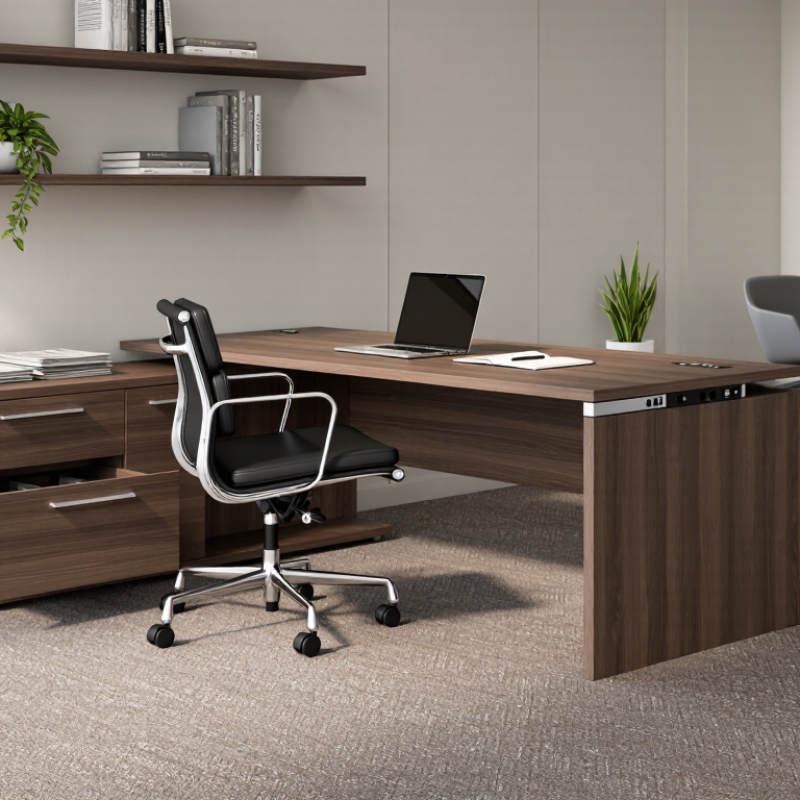
Define the Role and Requirements of a Modern Executive Desk
How to Choose a Modern Executive Desk in 2026
Define the Role and Requirements of a Modern Executive Desk
A modern executive desk is more than an impressive surface. It is a daily work tool for decisions, meetings, and focused tasks. Define its main role before choosing its appearance. If meetings dominate, choose a broad front edge and comfortable visitor clearance. If writing and screen work dominate, prioritize depth, stable support, and adjustable monitor placement. A desk should match your actual routine, not an imagined version of it.
Measure the room carefully. Keep enough space behind the chair for safe movement. Allow room for drawers, cables, lighting, and a second chair. A practical desktop depth often supports a monitor, keyboard, documents, and a small lamp without feeling crowded. Test the sitting height with your elbows relaxed and your feet flat. Small details matter. Cable channels, rounded edges, durable finishes, and quiet drawers improve daily use. A beautiful desk can still feel wrong after three hours.
Tips: Mark the desk size on the floor with tape. Sit inside the outline. Open nearby doors and drawers. Check whether sunlight creates screen glare. Ask whether the desk supports tomorrow’s workload, not only today’s equipment. Avoid choosing a heavy design merely because it looks authoritative. That choice can reduce flexibility later. Also, do not overlook maintenance; fingerprints and dust may change how professional the desk appears.
How to Choose a Modern Executive Desk in 2026 - Define the Role and Requirements of a Modern Executive Desk
| Evaluation Dimension | Recommended Data or Range | Why It Matters for an Executive Desk | Practical Selection Criteria | Priority |
|---|---|---|---|---|
| Primary Work Surface Width | 60–72 in (152–183 cm) | Provides room for a monitor setup, documents, writing space, and daily meeting materials without excessive crowding. | Choose the wider end of the range when the desk must support two or more displays, signing documents, or frequent visitor interaction. | Essential |
| Primary Work Surface Depth | 30–36 in (76–91 cm) | Supports a comfortable viewing distance and leaves usable space between the monitor, keyboard, and front edge. | Confirm that the desktop can accommodate the monitor stand or arm, keyboard, task lighting, and paperwork without reducing legroom. | Essential |
| Desk Height | Fixed: about 28–30 in (71–76 cm); adjustable: approximately 24–50 in (61–127 cm) | Correct height helps the user keep shoulders relaxed, elbows near the body, and wrists in a neutral position. | For shared offices, select a height-adjustable model. For a fixed desk, verify the height against the primary user’s chair and seated posture. | Essential |
| Leg and Knee Clearance | At least 27 in (69 cm) wide, 24 in (61 cm) high, and 19 in (48 cm) deep where applicable | Open clearance allows the user to sit centrally, change posture, and move the chair without hitting pedestals or structural panels. | Check the space beneath the desk, including crossbars, modesty panels, drawers, and cable trays. | Essential |
| Desktop Thickness and Stability | About 0.75–1.25 in (19–32 mm); minimal visible movement during typing | A stable surface improves writing comfort, monitor safety, and the perceived quality of a leadership workspace. | Test the front edge and corners for wobble. For large desktops, prioritize a rigid frame and adequate center support. | High |
| Weight Capacity | At least 150–220 lb (68–100 kg), including the desktop and accessories | Supports monitors, computer equipment, documents, lamps, and organizational accessories without compromising stability. | Calculate the combined equipment weight and keep a safety margin. For height-adjustable desks, use the manufacturer’s rated lifting capacity. | High |
| Cable Management | Rear cable channel, one or more grommets, and access for power and data cables | Organized wiring reduces visual clutter and makes a modern executive workspace easier to maintain and reconfigure. | Look for removable covers, separated power and data routing, and enough capacity for monitor, computer, conferencing, and charging cables. | High |
| Visitor and Meeting Function | Clear front edge with approximately 36–48 in (91–122 cm) of visitor approach space | An executive desk often serves as both a personal workstation and a setting for short discussions or document reviews. | Measure the surrounding room, door swing, visitor chairs, and circulation paths before selecting a larger executive configuration. | High |
| Storage Capacity | One lockable personal storage zone plus accessible space for frequently used materials | Storage supports document control while keeping the work surface clear and presentation-ready. | Separate daily-access storage from secure storage. Avoid placing deep drawers where they restrict leg movement or chair positioning. | Medium |
| Surface Durability | Scratch-resistant, stain-resistant, and easy-to-clean finish | The desktop must withstand regular writing, computer use, beverages, cleaning, and frequent interaction with documents. | Review the care requirements and test a sample if possible. Select a finish that does not create distracting glare under office lighting. | High |
| Edge Design | Rounded or softened front edge with no sharp contact points | A comfortable edge reduces pressure on the forearms during extended keyboard and writing tasks. | Run a hand along the front edge and corners. Avoid sharp profiles, exposed fasteners, or decorative elements in the primary contact area. | Medium |
| Technology Integration | Space for displays, docking equipment, charging devices, and video-conferencing accessories | Modern executive work commonly combines focused computer work, virtual meetings, and rapid device charging. | Confirm monitor-arm compatibility, power access, cable openings, and enough rear clearance for ventilation and connections. | High |
| Ergonomic Compatibility | Works with an adjustable chair, monitor at eye level, and keyboard positioned for relaxed shoulders | The desk is only effective when its height and geometry work together with the chair, monitor, keyboard, and user posture. | Evaluate the complete workstation rather than the desk alone. The user’s feet should remain supported and the display should not force excessive neck flexion. | Essential |
| Accessibility and Approach | Clear route to the desk and usable knee clearance; adjustable height preferred for varied users | Inclusive planning makes the workspace more usable for people with different body sizes, mobility needs, and working styles. | Measure approach space, turning space, control reach, and clearance around drawers and visitor seating before installation. | Essential |
| Environmental Profile | Documented material composition, low-emission finish, and repairable or replaceable components | Material transparency and long service life can reduce replacement frequency and support healthier interior environments. | Request product documentation covering emissions, recycled content, repair options, packaging, and end-of-life handling. | Medium |
| Room Fit and Circulation | Allow at least 36 in (91 cm) for a comfortable primary walkway where space permits | A large desk should not obstruct doors, emergency routes, storage access, or movement around the office. | Create a floor plan using the desk footprint, chair movement, visitor seating, and required circulation paths before purchasing. | Essential |
Related Posts
-
Why Your Office Needs an Executive Desk for Enhanced Productivity
-
Exploring Unique Alternatives in Office Furniture: A Global Buyer’s Guide
-
Maximizing Value: The Impact of After-Sales Support on Maintenance Costs for Best Office Furniture Sets
-

How to Source High Quality Suppliers for the Best Modern Office Furniture with Effective Strategies
-
Essential Tips for Choosing the Best Task Chair for Comfort
-
How to Choose the Best Executive Office Desk?