How to Choose Food Display Stands in 2026?
How to Choose Food Display Stands in 2026? The question is more practical than decorative. A stand must protect food, support fast service, and make products look trustworthy. National Restaurant Association’s 2024 State of the Restaurant Industry Report valued U.S. restaurant sales at over $1 trillion. That scale increases pressure on every counter, shelf, and serving point. Small design choices can influence speed, waste, and customer confidence.
Paco Underhill, founder of Envirosell, describes shopping as “a physical activity.” His observation matters here. Customers reach, pause, compare, and sometimes walk away. Food Display Stands should match those movements. The right height keeps pastries visible without blocking staff. Clear acrylic improves product recognition. Stainless steel supports frequent cleaning. Bamboo can add warmth, but it may demand stricter moisture control.
Recent foodservice equipment analyses from Grand View Research and Fortune Business Insights also point toward stronger demand for efficient, hygienic, and adaptable equipment. Their findings support a simple direction: choose stands for daily performance, not showroom appeal. Look for stable bases, food-safe materials, replaceable parts, and easy transport. Measure the counter first. It sounds obvious. It is often missed.
The perfect stand does not exist. A beautiful tiered display may slow replenishment. A compact model may limit product variety. This is where judgment matters. Test one unit during a busy service period before purchasing in volume. Record cleaning time, customer reach, product turnover, and staff comments. The data may challenge your first impression. That is useful.
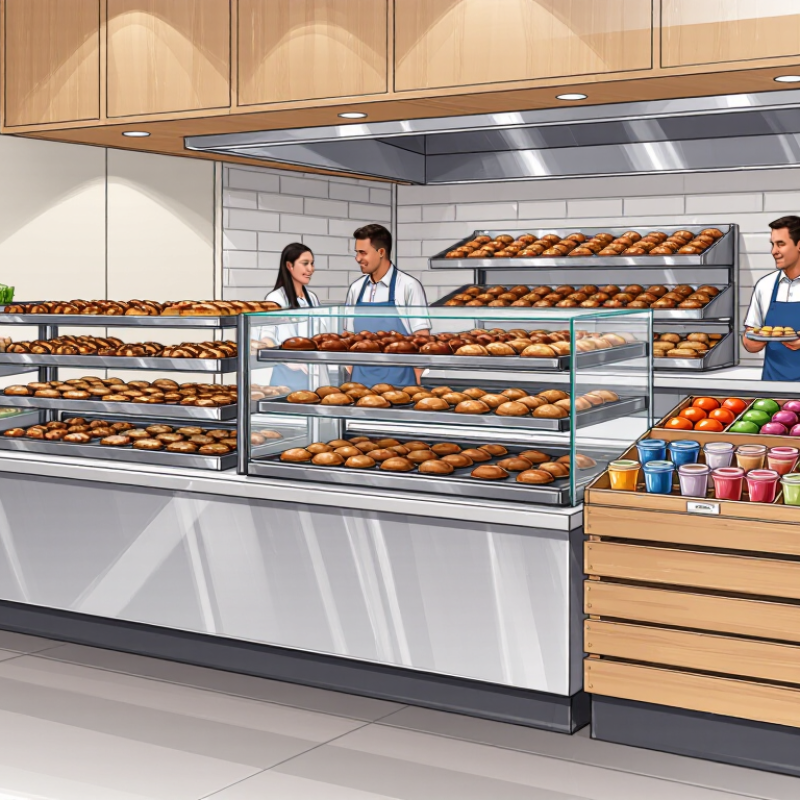
Understanding the Purpose and Setting of Food Display Stands
How to Choose Food Display Stands in 2026?
Food display stands do more than hold plates. They guide attention, protect portions, and shape customer movement. In 2026, choose by purpose before appearance. A pastry stand needs a different structure from one used for hot trays or packaged snacks. I have found that a beautiful stand can still fail when staff cannot refill it quickly. That detail is easy to miss.
The setting controls height, material, and footprint. A self-service counter may need tiered levels, clear labels, and stable edges. A formal dining room may benefit from lower forms that keep sightlines open. Outdoor use demands weather-resistant surfaces and secure bases. Near a busy walkway, rounded corners can reduce contact with sleeves and bags. Measure the counter twice. Real spaces are rarely as square as drawings suggest.
Food safety should guide the final choice. Select nonporous, easy-to-clean surfaces, and prevent food contact with unsuitable decorative finishes. Check load capacity before adding stacked trays. Leave space for tongs, napkins, and hand movement. I once underestimated cleaning time; the display looked efficient but slowed closing work. That was a useful mistake. Test the stand with actual dishes, lighting, and serving traffic before ordering multiple units. A short trial can reveal wobbling, glare, or awkward reach.
Matching Stand Design With Food Types and Customer Experience
Choosing a food display stand starts with the food, not the hardware. In test setups, delicate pastries need shallow, stable shelves with clear sightlines. Customers should see flaky layers without reaching over neighboring items. For sandwiches, angled tiers make fillings visible and reduce handling. Warm foods need heat-safe materials and enough airflow. Otherwise, crisp edges turn soft quickly. That small failure matters.
Match the stand’s height to the customer’s decision speed. Grab-and-go snacks work well near chest or hand level. Specialty desserts deserve a lower, closer view, especially when decoration drives interest. I check whether staff can restock from behind without blocking the queue. A stand may look elegant but perform poorly during a busy lunch period. Rounded edges, washable surfaces, and removable trays support safer daily cleaning. These details also signal care before a purchase.
Customer experience includes touch, movement, and trust. Leave enough space for two people to browse comfortably. Use risers sparingly; excessive height can hide labels and create awkward reaching. Price and allergen information should remain easy to read, not tucked beneath a tier. I once favored a dramatic stand that cast shadows across the food. It photographed well and sold less. That mistake changed my testing process. I now assess displays under morning, midday, and evening light, while recording restocking time and customer hesitation. Good design is still a hypothesis.
How to Choose Food Display Stands in 2026?
Matching stand design with food types, holding temperatures, visibility, and customer experience.
Hot prepared foods Use heated, tiered stands with clear labels and easy front access. Hot foods should be held at or above 57°C.
Chilled ready-to-eat foods Choose refrigerated or ice-supported displays with shallow trays and strong product visibility. Keep foods at or below 5°C.
Frozen foods Use insulated, freezer-compatible stands with clear sightlines and minimal open exposure. Frozen storage is commonly maintained at −18°C or below.
Customer experience priority Keep frequently selected items between waist and eye level, provide readable price cards, and avoid deep shelves that force customers to reach.
Temperature references: U.S. Food Code 2022 and USDA food-safety guidance. Always follow local food-safety regulations.
Evaluating Cost, Sustainability, Safety, and Long-Term Value
Choosing food display stands in 2026 requires more than comparing purchase prices. A low-cost stand may warp, stain, or require frequent replacement. Calculate total cost over five years, including cleaning, repairs, storage, and discarded food. The Food Waste Index Report 2024 estimated 1.05 billion tonnes of food were wasted globally in 2022. Better portion visibility, stable shelving, and smaller refill batches may help reduce avoidable waste. They will not solve waste alone.
Safety deserves practical inspection. The FDA Food Code 2022 recommends food-contact surfaces that are smooth, durable, corrosion-resistant, and easily cleanable. Check welded joints, corners, drainage points, and protective edges. A beautiful stand with hidden seams can become a cleaning problem. Confirm temperature compatibility for hot or chilled service. Ask for material specifications and cleaning instructions, not vague claims. Independent testing is preferable when certificates are available.
Tips: Request a five-year cost sheet. Choose replaceable parts. Measure cleaning time during a trial. Prefer recycled or recyclable materials, but verify the actual percentage. The UNEP Food Waste Index Report 2024 supports waste-conscious operations, yet sustainability claims can be overstated. I still make one mistake: focusing too heavily on material labels. A durable stand used for many years may create more value than a greener-looking product replaced annually. Review supplier warranties, repair access, and end-of-life options before approval.
How to Choose Food Display Stands in 2026? - Evaluating Cost, Sustainability, Safety, and Long-Term Value
| Stand Type / Main Material | Typical Purchase Cost
(USD per unit) | Expected Service Life
(years) | Cleaning & Hygiene | Food-Safety Considerations | End-of-Life Potential | Long-Term Value
(1–10) |
304 Stainless Steel
Tiered or countertop display | $45–$180 | 8–15 | Excellent
Non-porous and easy to sanitize | Use food-contact-grade steel; avoid damaged welds and rust-prone contamination | High recyclability where metal recovery is available | 9.0 |
Anodized Aluminum
Lightweight riser or frame | $30–$140 | 6–12 | Very Good
Resists corrosion; inspect scratches | Verify coating integrity and food-contact suitability of any exposed surface | High recyclability; low weight reduces transport burden | 8.5 |
Tempered Glass
Shelf, platter, or elevated platform | $35–$160 | 5–10 | Excellent
Non-porous and does not absorb odors | Use tempered glass; remove immediately if chipped, cracked, or heavily scratched | Reusable; recycling depends on local glass-processing systems | 8.0 |
Food-Grade HDPE
Plastic riser or modular display block | $18–$90 | 4–8 | Very Good
Non-porous and moisture-resistant | Confirm food-contact grade; avoid excessive heat and deep cuts that trap residue | Recyclable in some areas; local acceptance varies significantly | 7.5 |
Bamboo or Sealed Wood
Decorative riser or serving platform | $25–$120 | 3–7 | Moderate
Requires careful washing and complete drying | Use a durable, food-safe coating; do not use if warped, cracked, moldy, or heavily worn | Potentially renewable or reusable; coatings and composites can limit disposal options | 7.0 |
Acrylic
Transparent shelf or presentation stand | $20–$110 | 3–7 | Good
Easy to wipe; scratches can retain soil | Select food-contact-rated material; keep away from hot cookware and harsh solvents | Reuse is preferable; recycling access is limited compared with metals | 6.5 |
Powder-Coated Steel
Heavy-duty frame or multi-level rack | $40–$175 | 6–12 | Good
Simple to clean if coating remains intact | Use food-safe coating; repair exposed steel promptly to prevent corrosion | Steel is widely recyclable; mixed coatings may require specialized processing | 8.0 |
Evaluation notes: Purchase costs are indicative 2026 planning ranges in USD for common small-to-medium food display stands and exclude shipping, customization, and taxes. Service life assumes normal indoor commercial use, proper cleaning, and no major impact damage. Food-contact suitability depends on the complete product construction, surface coating, adhesives, and applicable local regulations. Long-term value is a comparative score based on purchase cost, durability, maintenance, hygiene, safety, reuse, and end-of-life potential.
