How to Choose the Best Shower Sprayer
Choosing the best Shower Sprayer is about more than matching the bathroom finish. The right model should feel comfortable in your hand, deliver a useful spray, and work well with your home’s water pressure. A wide rainfall pattern can feel soothing, while a focused spray may rinse shampoo more quickly. Small details matter. Check hose reach beside the tub, button grip with wet fingers, and whether the holder keeps the sprayer secure. A polished display model may not suit your daily routine.
Richard Trethewey, a longtime plumbing and heating expert, is a useful reference for practical fixture choices. I can’t verify a verbatim quote from him on this specific topic, so this guide uses an editorial takeaway instead: “Choose for dependable performance and everyday fit, not appearance alone.” Consider who will use the shower, how easy the nozzle is to clean, and whether replacement parts are available. If water pressure is weak, a sprayer’s pattern and design may affect how it feels, but results depend on the plumbing system. Check product specifications, installation needs, and care instructions before buying. And be honest about trade-offs: a feature-rich model can add convenience, yet more settings do not always mean a better shower.
Types of Shower Sprayers and How They Differ
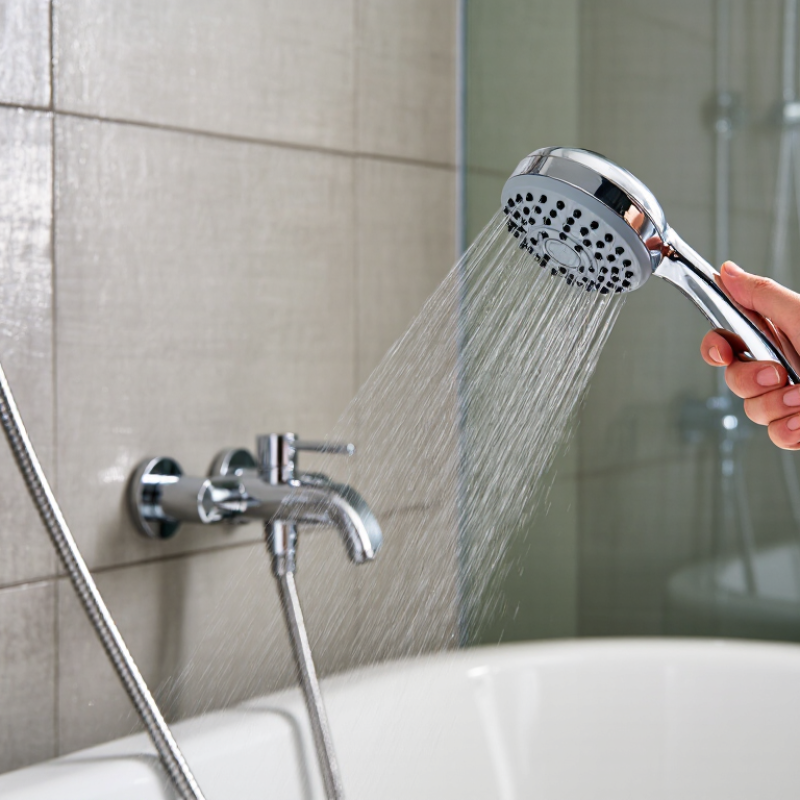
Shower sprayers differ in coverage, control, and how they deliver water. A fixed showerhead keeps the spray in one place, while a handheld sprayer can reach a seated bather, rinse a child, or wash the shower walls. Rain-style heads spread water across a wider area, but their gentle flow may feel weak to someone who prefers a concentrated stream. Dual systems combine fixed and handheld options. More choice, though, can mean more parts to clean.
Flow rate matters, too. The U.S. EPA’s WaterSense showerhead guidance sets a limit of 2.0 gallons per minute for certified models, compared with the federal standard of 2.5 gallons per minute for most showerheads. The EPA estimates that a family could save 2,700 gallons of water each year by replacing an older, inefficient showerhead with a WaterSense-labeled model. A lower flow does not guarantee a satisfying shower; spray pattern and household water pressure also shape the experience.
Look at the spray settings in person if possible. A narrow massage pattern may feel useful after exercise, while a broad setting can rinse shampoo more quickly. Check whether the controls are easy to turn with wet hands, and whether the hose reaches the tub floor. Small details matter. I would not choose by appearance alone; a beautiful wide head can disappoint if its spray barely reaches your shoulders.
Assessing Your Plumbing, Water Pressure, and Installation Options
Before choosing a shower sprayer, check the plumbing already in place. Look at the shower arm, hose connection, and any diverter that switches water between a tub spout and showerhead. Compare measurements with the sprayer’s installation instructions; connections that look similar may not fit. Water pressure matters, too. A new sprayer cannot reliably fix weak pressure caused by a partly closed valve, buildup, or several fixtures running at once. It is easy to blame the showerhead before checking the supply.
Tips: Run the shower alone and note whether the flow changes. Check for visible leaks and confirm the shutoff valve is fully open. If pressure stays low, ask a qualified plumber to assess the system.
Installation options depend on your setup and comfort with basic tools. A handheld model may connect to an existing shower arm, while a slide bar needs secure wall mounting. Tile can crack if drilled carelessly, so check the instructions and use suitable anchors. A tub diverter may need adjustment or replacement. Small details matter. I would not assume the simplest-looking option is always the easiest; access, wall material, and hose reach can change the job. If the connection drips after installation, stop and reseat it rather than tightening harder.
How to Choose the Best Shower Sprayer
Assess your plumbing, water pressure, and installation options before choosing a shower sprayer.
Residential Water Pressure Reference
How to use this chart: Residential water pressure is commonly kept between 40 and 80 psi. Measure static pressure with a pressure gauge, then check the sprayer manufacturer’s pressure requirements. Pressure alone does not determine shower flow; also check your plumbing connection, existing flow restrictions, and whether the installation supports a handheld hose or other sprayer style. Local requirements may vary.
Comparing Spray Patterns, Adjustability, and Ease of Use
Choosing a shower sprayer starts with the spray pattern you will actually use. A wide rain setting feels gentle and covers your shoulders, while a focused stream can rinse shampoo from thick hair faster. Some sprayers offer pulsing massage settings, but strong jets may feel sharp on sensitive skin. Compare more than the display label: check whether you can switch patterns with one hand and whether changing settings interrupts the water flow. Small details matter.
Tips: Before buying, hold the handle if possible. Check its weight, grip, and button placement with wet hands. A smooth hose should reach your shoulders without pulling tight. If you share the shower, choose controls that are easy for everyone to understand.
Adjustability can make a sprayer more useful, but extra settings are not always better. Look for a clear control that turns easily, even when your hands are soapy. A movable head helps direct water toward a child, a pet, or the shower walls. Also check that the holder keeps the sprayer steady at your preferred angle. A small drawback: some adjustable joints loosen over time, so inspect how firmly the head locks in place. The best choice is often the one you can operate without pausing to figure it out.
Evaluating Materials, Water Efficiency, and Maintenance Needs
A shower sprayer should feel comfortable in your hand, but its material also affects durability and care. Stainless steel resists corrosion and suits frequent use, while brass components can offer sturdy connections. Many lightweight sprayers use ABS plastic, which is easier to handle but may show scratches sooner. Finish matters, too: a polished surface can look clean, yet water spots often stand out on it.
Feel the difference.
Water efficiency is not just a low-flow label. Check the stated flow rate and whether the spray pattern remains comfortable at your home’s water pressure. A broad, soft spray may feel less forceful than a concentrated one, even when both use similar amounts of water. If possible, compare the spray in person. I still tend to judge by appearance first, which is not always useful.
Maintenance needs are easy to overlook. Silicone spray nozzles can often be rubbed gently to loosen mineral deposits, while removable screens may need occasional rinsing. Follow the care instructions, and avoid harsh cleaners that can damage finishes. After a shower, a quick wipe can reduce water marks, especially in hard-water areas.
Small details matter.
A sprayer that is simple to clean may be more satisfying over time than one with extra settings you rarely use.
Matching Features and Budget to Your Bathroom and Preferences
A good shower sprayer should fit your routine, not just look impressive on a product page. Measure the shower area and check water pressure before choosing a wide spray face or handheld model. A handheld sprayer can make rinsing shampoo, cleaning corners, or bathing a pet easier. But its hose needs enough reach, and its holder should sit comfortably for everyone using the shower. Small details matter.
Set a spending limit, then compare useful features: adjustable spray patterns, easy-to-clean nozzles, and a secure mount. More settings do not always mean better performance.
The U.S. Environmental Protection Agency says WaterSense-labeled showerheads use no more than 2.0 gallons per minute. Replacing inefficient models with WaterSense-labeled ones can save an average family about 2,700 gallons of water each year, according to EPA estimates.
That efficiency may matter more than an elaborate finish. Still, a lower flow can feel less forceful in some bathrooms, especially when household pressure is already weak. Check compatibility before buying. I’d be cautious about assuming a new sprayer will fix poor pressure; it may not. A simple, comfortable model can be the smarter choice.
