What Is a Dehumidifier Controller and How Does It Work?

Indoor air can feel sticky long before moisture becomes visible. That is where a Dehumidifier Controller becomes useful. It measures relative humidity and decides when the dehumidifier should operate. In a basement, for example, a wall sensor may read 68% humidity. The controller can activate the unit near that level. It can stop the unit after humidity falls below a chosen setting.

Building-science expert Dr. Joseph Lstiburek offers a simple moisture-control principle: “Buildings should be dry.” A Dehumidifier Controller applies that idea through sensors, relays, and programmed limits. It does not merely switch power on and off. Better models account for humidity differences, compressor delays, temperature, and drainage conditions. These details help reduce short cycling, wasted energy, and unnecessary wear.

The process sounds simple. It is not always simple. Sensor placement can distort the reading. A sensor beside a cold window may report unusually high humidity. A controller installed near a warm appliance may report too little. Settings also need judgment. A 45% target may suit one room, while a cool storage area may need another approach. This article explains the controller’s main parts, operating sequence, control settings, and practical installation concerns. It also examines common mistakes, because even a well-designed system can perform poorly when the sensor, drain, or setpoint is overlooked. Mistakes happen. The useful question is why.
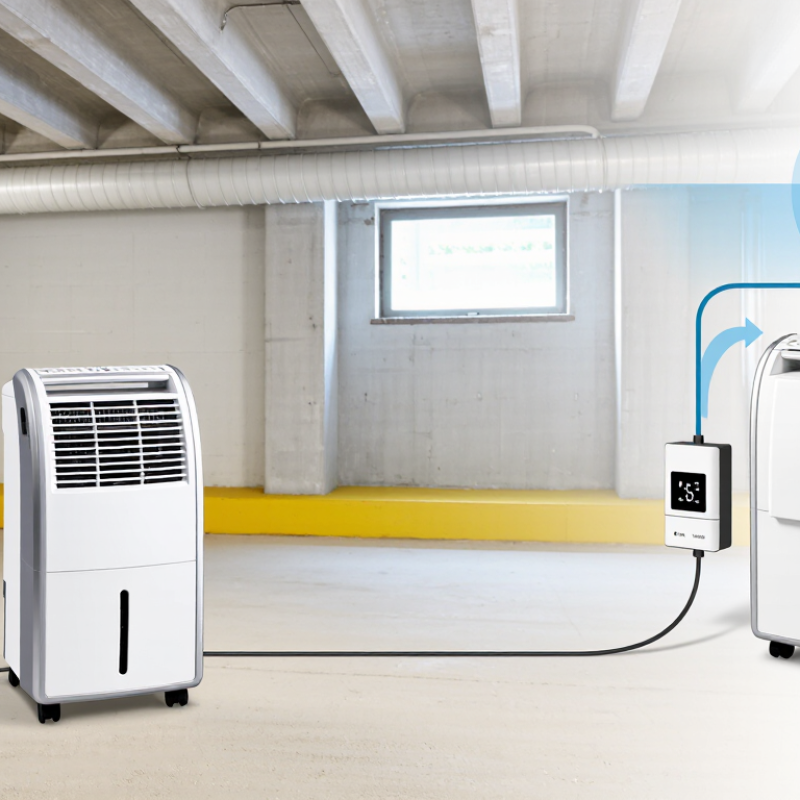
What Is a Dehumidifier Controller and How Does It Work?

Definition and Purpose of a Dehumidifier Controller

A dehumidifier controller is a device that measures indoor relative humidity and manages dehumidifier operation. It usually contains a humidity sensor, control circuit, and adjustable setpoint. When humidity rises above the selected level, the controller activates the dehumidifier. It stops the unit after reaching the target, reducing unnecessary runtime and energy use. That sounds simple. Sensor accuracy still matters.

Its main purpose is moisture control, not merely comfort. The U.S. Environmental Protection Agency’s Moisture Control Guidance recommends keeping indoor relative humidity below 60%, ideally between 30% and 50%. Excess moisture can encourage condensation, musty odors, and microbial growth around cold surfaces. A controller helps maintain steadier conditions in basements, storage rooms, bathrooms, and other damp areas. The U.S. Department of Energy also advises using humidity-based controls to prevent over-drying and wasteful operation.

A practical controller should respond smoothly, allow calibration, and remain readable in poor lighting. Position matters. A sensor near a doorway, heater, or air outlet may record misleading conditions. In field use, the displayed reading may differ from a separate calibrated meter. That is easy to overlook. Regular inspection, sensor checking, and drain verification improve reliability. However, a controller cannot repair leaks or poor ventilation. It only manages the moisture it can detect.

Main Components and Their Functions

A dehumidifier controller is the decision-making part of a moisture-control system. Its job is to measure indoor humidity and activate equipment when levels rise above a chosen setting. The humidity sensor detects water vapor in the air. It may use a capacitive element that changes electrical behavior as moisture increases. Sensor placement matters. A sensor near a shower can produce misleadingly high readings.

Small changes matter.

Inside the controller, a microprocessor compares the measured humidity with the target level. It then sends a signal to a relay or electronic switch. The relay starts or stops the dehumidifier, fan, or ventilation motor. Many controllers also include a display, adjustment buttons, and alarm indicators. The display shows relative humidity, operating status, and sometimes fault codes. Power terminals supply electricity, while control terminals connect to external equipment. Incorrect wiring can damage components or create a safety hazard.

Installation details affect real performance. A sensor should sit away from direct airflow, heaters, windows, and damp surfaces. Field technicians often check its reading with a calibrated reference meter. Readings are not always perfectly stable. Temperature changes, dust, and poor airflow can influence accuracy. That is easy to overlook. Regular testing helps identify drift before moisture causes musty odors, condensation, or material damage. A practical controller should also include a restart delay, overload protection, and a clear method for adjusting the humidity setpoint.

How a Dehumidifier Controller Measures Humidity

A dehumidifier controller is only as reliable as its humidity measurement. Most controllers use a capacitive relative-humidity sensor. This sensor contains a moisture-sensitive polymer between conductive layers. As water vapor enters the polymer, its electrical capacitance changes. The circuit converts that change into a relative-humidity reading.

Relative humidity compares current moisture with the maximum moisture air can hold at the same temperature. Temperature matters. A room reading of 60% RH can feel very different at 18°C and 28°C. The 2023 ASHRAE Handbook—Fundamentals explains this relationship through humidity ratio, vapor pressure, and dew point. Many controllers also use a temperature sensor, then calculate RH electronically. Small errors can still matter.

The U.S. Environmental Protection Agency commonly recommends keeping indoor humidity between 30% and 50% to reduce moisture-related problems. The controller compares its sensor reading with a selected target, such as 45% RH. If the measured value rises above that setting, it activates the dehumidifier. When the reading falls below the control band, it stops the unit.

Placement changes the result. A sensor beside a cold wall may detect condensation risk, not average room conditions. Dust, aging, and poor calibration can also create false confidence. A 2024 NIST humidity measurement guide stresses traceable calibration and uncertainty evaluation. That reminder is easy to overlook. A controller may display 50% RH, while the real level differs by several percentage points. Regular checking with a calibrated reference remains sensible.

What Is a Dehumidifier Controller and How Does It Work? - How a Dehumidifier Controller Measures Humidity

Data Dimension Typical Information How It Relates to Humidity Control
Primary Function Monitors indoor relative humidity and controls when a dehumidifier operates. It compares measured humidity with a selected target and switches the equipment on or off.
Measured Parameter Relative humidity, expressed as a percentage (%RH). Relative humidity indicates how much water vapor is present in the air compared with the maximum amount the air can hold at the same temperature.
Common Indoor Target Approximately 40%–60% RH for general comfort and moisture management. The appropriate target depends on temperature, building conditions, occupant comfort, and the risk of condensation or mold growth.
Humidity Sensor Usually an electronic capacitive or resistive humidity sensor. The sensor detects changes in moisture content by measuring an electrical property that varies with humidity.
Measurement Process The sensor samples air near the controller or inside the dehumidifier. An electronic circuit converts the sensor signal into a humidity reading, which may be shown on a display or used internally.
Control Setpoint A user-selected humidity level, such as 50% RH. The controller uses the setpoint as the reference for deciding whether moisture removal is needed.
Switch-On Condition Measured RH rises above the control threshold. The controller sends an electrical signal to start the dehumidifier or activate its moisture-removal cycle.
Switch-Off Condition Measured RH falls to or below the lower control limit. The controller stops the dehumidifier to prevent unnecessary operation and excessive drying.
Hysteresis A small difference between the switch-on and switch-off humidity levels. Hysteresis reduces rapid on-and-off cycling caused by minor sensor fluctuations. For example, a controller may start above 55% RH and stop near 50% RH.
Temperature Compensation Some controllers measure both humidity and air temperature. Temperature affects relative humidity, so compensation can improve reading stability and help identify condensation risk.
Output Signal A relay, low-voltage control signal, or compatible switching output. The output connects the humidity decision to the dehumidifier, ventilation system, or another moisture-control device.
Airflow Requirement The sensor needs access to representative room air. Blocked vents, direct airflow, sunlight, heaters, or placement near moisture sources can produce inaccurate readings.
Typical Response Delay The displayed or detected humidity may take time to stabilize after environmental changes. A short delay helps prevent unnecessary switching when humidity changes temporarily or when air has not fully mixed.
Measurement Accuracy Accuracy varies by sensor quality, calibration, temperature, airflow, and operating range. A controller reading is an estimate of local air conditions and may differ from a separate meter placed elsewhere.
Basic Operating Sequence Sense → calculate → compare → switch → recheck. The controller repeatedly measures humidity, compares it with the setpoint and hysteresis limits, operates the equipment, and then checks the air again.

Step-by-Step Operation and Control Process

What Is a Dehumidifier Controller and How Does It Work?

A dehumidifier controller manages moisture through a simple feedback loop. It begins with a humidity sensor inside the room or return-air duct. The sensor measures relative humidity, then sends the reading to the control board. The EPA recommends keeping indoor relative humidity between 30% and 50%. Its Indoor airPLUS guidance also warns against levels above 60%. These figures give the controller a practical operating target.

The process is step-by-step. First, the user selects a humidity setpoint, such as 45%. Next, the controller compares that target with the sensor reading. If humidity rises above the setpoint, a relay starts the fan and compressor. Air moves across a cold coil, where water vapor condenses into droplets. The water then enters a drain pan or pump. When humidity falls below the lower control limit, the compressor stops. A short delay prevents rapid cycling.

The sensor needs attention.

Many controllers use a two-point differential, often called hysteresis. This prevents constant starting and stopping near the target. Some systems also pause during coil icing, detect a full tank, or restart after power loss. ASHRAE Standard 55-2023 highlights the importance of humidity in perceived indoor comfort, but comfort is not identical to moisture safety. A dusty sensor can lie. Poor airflow can also distort readings. That limitation deserves regular inspection, even when the display looks normal.

Types, Applications, and Key Selection Factors

What Is a Dehumidifier Controller and How Does It Work?

A dehumidifier controller measures indoor moisture and signals equipment to start or stop. The commonest type is a mechanical humidistat with a simple adjustable dial. Digital controllers provide clearer readings and tighter setpoint control. Smart models may add remote monitoring, alarms, and data logging. However, a displayed percentage is not always exact. Sensor placement and dust can distort the reading.

Applications vary with building conditions. Homes often use controllers in basements, laundry areas, and bedrooms. HVAC systems may use them to coordinate ventilation and whole-house dehumidification. Crawl spaces need durable sensors because temperature changes and condensation are common. Commercial storage rooms, museums, and production areas may require continuous monitoring. Industrial spaces usually need stronger relays and wider operating ranges. One controller cannot suit every environment.

Selection should begin with the target humidity range, not the lowest price. Check sensor accuracy, adjustment resolution, response time, and operating temperature. Confirm that the output matches the dehumidifier, fan, or control panel. Relay capacity matters when switching larger equipment. For remote systems, review network reliability and alarm options. A controller installed near a cold wall may react too early. Calibration should be checked with a trusted reference instrument during commissioning and routine maintenance. This step is often skipped, and the result can be unnecessary operation or lingering moisture. Installation instructions, electrical safety requirements, and service access also deserve careful attention.

What Is a Dehumidifier Controller and How Does It Work?

A dehumidifier controller measures relative humidity (RH) with a sensor and switches the dehumidifier on or off to maintain a selected humidity range. Common controller types include mechanical humidistats, digital electronic controllers, and smart controllers with remote monitoring.

The chart shows practical RH reference bands rather than universal setpoints. The U.S. Environmental Protection Agency recommends maintaining indoor relative humidity between 30% and 50% when possible and keeping it below 60% to help reduce mold risk. HVAC comfort requirements can vary with temperature, clothing, activity, and building design.

Controller Types

Mechanical humidistats use a simple adjustable dial. Digital controllers provide more precise setpoints and readable RH values. Smart controllers can add scheduling, alarms, data logging, and remote access.

Typical Applications

Controllers are used in homes, basements, crawlspaces, offices, storage areas, archives, and HVAC systems where excessive moisture may cause condensation, odors, corrosion, or mold.

Key Selection Factors

Check sensor accuracy, adjustable RH range, switching capacity, relay compatibility, response time, condensation protection, alarm functions, installation environment, and whether remote monitoring is required.

Request More Information