How to Choose Alkali Resistant Fiberglass Mesh

Choosing Alkali Resistant Fiberglass Mesh starts with understanding where it will be used. Cement-based plaster, render, and insulation systems can expose mesh to alkaline conditions. A suitable product should be designed to resist that environment and reinforce the surrounding layer. The right choice depends on more than a product label.

Check the technical data sheet for coating type, mesh weight, opening size, and tensile strength. Compare these details with the system requirements, not just with another roll’s price. For example, a mesh with openings that suit one render thickness may not fit a different application. Details matter. Also inspect sample rolls for even weaving, clean edges, and consistent coating. Ask suppliers for test reports and clear product specifications, then confirm that the stated results apply to the mesh being offered. Check the evidence.

Storage and installation deserve attention, too. Damp conditions, rough handling, or poor embedment can affect performance, even when the mesh itself meets expectations. Follow the system manufacturer’s instructions and check compatibility with the base coat. I would not choose by weight alone; it is an easy shortcut, but it can miss important differences in coating and strength. Project conditions vary, so there is no single specification that suits every wall. A careful comparison helps narrow the options and makes the final selection easier to explain and verify.
How to Choose Alkali Resistant Fiberglass Mesh

What Alkali-Resistant Fiberglass Mesh Is and How It Works

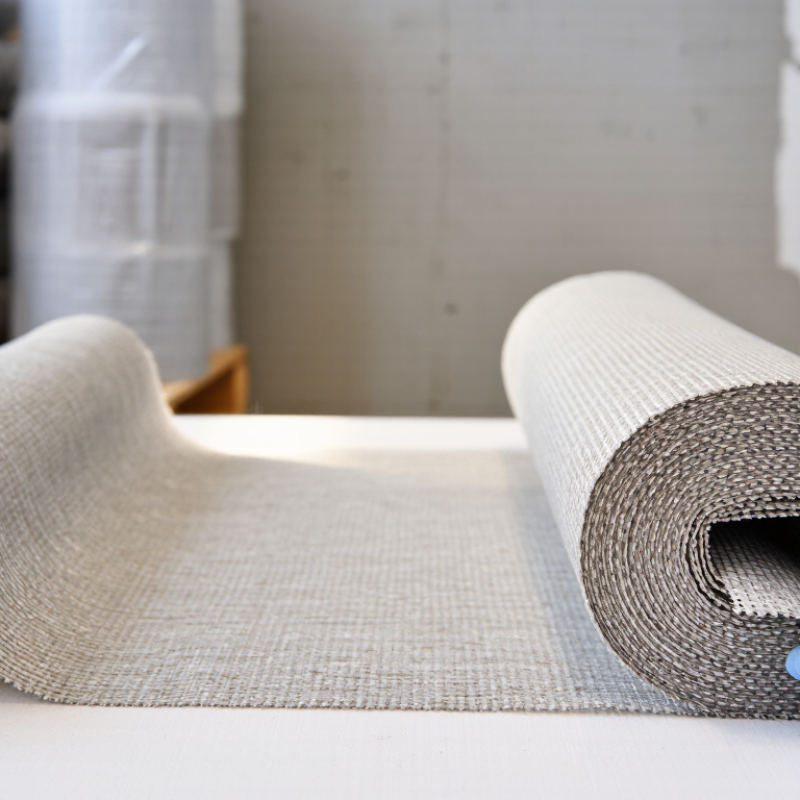
Alkali-resistant fiberglass mesh is an open grid woven from glass yarns made to withstand cement’s highly alkaline environment. Ordinary glass can gradually weaken when exposed to alkaline moisture. AR mesh uses more resistant glass compositions, often containing zirconia, and typically has a polymer coating. That coating helps protect the yarns and allows the mesh to bond with mortar.

Inside a cement render or base coat, the mesh helps spread small stresses across a wider area. If the wall shifts slightly or the surface shrinks as it dries, the grid can limit crack growth. It does not make a wall crack-proof. Placement matters: mesh should be fully embedded in the specified layer, not left exposed or pressed directly against the substrate. Overlap and installation depth should follow the system instructions.

Look closely at the mesh’s stated alkali resistance, weight, and opening size, then check that it suits the intended plaster or render. A denser grid is not automatically better; it must still embed properly in the chosen mortar. That detail is easy to miss. In practice, poor coverage or an unsuitable mortar can undermine good mesh, so inspect the finished layer for visible fibers and uneven areas.

Which Specifications Matter for Your Project

For alkali resistant fiberglass mesh, start with the mortar, render, or cementitious layer it must reinforce. Mesh opening size affects how well the material embeds and distributes stress. A nominal 5 × 5 mm opening is common in some wall systems, but it is not a universal choice. Match the mesh to the system specification, layer thickness, and surface conditions. Small details matter. A heavy mesh may add strength, yet it can be harder to embed smoothly in a thin coat.

Check the weight per square metre and tensile strength in both directions, not just the product’s appearance. Ask for test data on alkali resistance, since cement-based materials create a harsh environment over time. Confirm whether the stated strength applies after exposure, and whether the test method matches your project requirements. Roll width and length matter too: they affect overlap, cutting waste, and coverage around corners or openings. On site, a mesh that is too stiff can wrinkle near window edges. That is easy to overlook on paper. Compare the technical sheet with the actual substrate and installation method, then confirm required overlaps with the project designer or system supplier.

How to Check Mesh Quality and Alkali Resistance

A reliable alkali-resistant fiberglass mesh should be checked by test evidence, not appearance alone. Look for a declared zirconia content in the glass fiber. ASTM C1666/C1666M specifies a minimum of 16% zirconia for alkali-resistant glass fiber. This is a useful material benchmark, but it does not prove that a finished mesh will retain its strength. Ask for a batch-specific test report showing the test method, exposure conditions, and results before and after alkaline aging. A tidy certificate can still leave important details unclear.

Check the mesh itself, too. Inspect the weave for broken strands, uneven openings, and loose edges; then compare the stated mesh weight and opening size with the product specification. For external wall insulation systems, EN 13496 describes methods for measuring mesh tensile properties. ETAG 004 evaluation criteria have commonly used 20 N/mm residual tensile strength and 50% strength retention after alkaline aging. Confirm the applicable project specification, since test conditions matter. Ask for results in both directions, warp and weft, and compare like with like. When testing a sample, record its dimensions and conditioning, and avoid judging resistance from a brief soak. I would still treat one passing sample cautiously; production consistency needs evidence across batches.

How to Match Mesh Types to Applications

How to Choose Alkali Resistant Fiberglass Mesh

Match the mesh to the coating, substrate, and expected stress. For cement render or exterior insulation systems, use mesh rated for sustained contact with alkaline materials. Check the product’s alkali-resistance data, tensile strength, and stated application range; appearance alone proves little. A wider mesh opening may suit a thicker base coat, while finer mesh can help reinforce a smooth finish. Follow the system supplier’s specifications, since mesh weight and opening size are not interchangeable.

Tips: Confirm compatibility before buying. Ask for test data, not just a “strong mesh” claim. Keep the mesh fully embedded in the base coat, with overlaps set by the system instructions. At corners and around window openings, add specified reinforcement patches. Small details matter.

For repair work, match the mesh to the repair layer and existing finish. For example, a thin interior plaster patch may not need the same weight as a façade exposed to weather and movement. There is no perfect mesh for every job. I would compare a few documented options, then check whether installers can embed them without wrinkles or visible ridges. Real site conditions can be messier than a product sheet suggests.

How to Choose Alkali Resistant Fiberglass Mesh - How to Match Mesh Types to Applications
Application Typical Mesh Opening Typical Weight Useful Mesh Characteristics Selection Checks
Exterior insulation and finish systems (EIFS) About 4 × 4 mm About 145–160 g/m² for standard reinforcing mesh; heavier grades are used in impact-prone areas Alkali-resistant glass yarns with a protective coating; compatible with the specified base coat Check the system specification, required impact resistance, mesh overlap, and alkali-resistance test results.
General cement render and plaster reinforcement About 4 × 4 mm or 5 × 5 mm About 110–160 g/m² Balanced strength and flexibility for embedding within a render or plaster layer Confirm the mesh can be fully embedded and is suitable for the render thickness and substrate.
Interior wall skim coat and crack control About 4 × 4 mm or 5 × 5 mm About 75–110 g/m² Lightweight mesh suited to thin coats and localized reinforcement Use only where the wall system permits mesh reinforcement; treat joints and corners as specified.
Cementitious waterproofing and tile underlayment About 4 × 4 mm or 5 × 5 mm About 75–145 g/m² Flexible, alkali-resistant mesh that can be embedded in the specified coating or mortar layer Verify compatibility with the waterproofing product; mesh does not replace required membranes or movement joints.
High-impact or heavy-duty reinforced base coat About 4 × 4 mm or 5 × 5 mm About 160–300 g/m², depending on the system Heavier yarns and greater reinforcement for areas exposed to increased mechanical impact Follow the system designer’s requirements for mesh grade, layer placement, overlaps, and impact performance.
Corner, opening, and detail reinforcement Commonly matched to the main system mesh Varies by detail and product design Pre-formed corner profiles or cut mesh pieces help reinforce edges and openings Use compatible details and install them in the prescribed sequence to avoid gaps or exposed mesh.
How to compare products: Weight and mesh opening are useful screening dimensions, but they do not by themselves establish performance. Check the technical data sheet for glass type, coating, tensile strength, strength retention after alkali exposure, and the test method used. Choose mesh that meets the project specification and is compatible with the complete wall or coating system.

How to Compare Suppliers and Verify Product Claims

How to Choose Alkali Resistant Fiberglass Mesh

How to Compare Suppliers and Verify Product Claims

Supplier claims are useful starting points, not proof. Compare mesh weight, opening size, roll width, and coating details on current product data sheets. Then check whether samples match those figures. A mesh should feel evenly coated, with no bare patches or loose strands. Small differences can affect handling and reinforcement performance. Numbers matter.

Ask suppliers for test reports showing tensile strength before and after alkaline exposure. Check the test method, sample description, report date, and laboratory identity. A result without these details is hard to compare. Confirm that the tested mesh matches the product being quoted, including its coating and construction. Request a recent production sample, and compare it with the report. Supplier records may not capture every batch perfectly; that is worth discussing openly.

Tips: Ask how batches are identified and whether inspection records are available. Keep a sample from each delivery. Check the weave under good light, measure several openings, and note any coating variation. If a claim sounds unusually strong, ask what conditions produced it. A clear answer is reassuring. A vague one deserves follow-up.

Request More Information