How to Choose High Quality Cabinet Hardware in 2026?

Choosing cabinet hardware in 2026 requires more than matching a finish to a kitchen. High Quality Cabinet Hardware should support daily use, safe installation, and long-term value. A drawer pull may be touched dozens of times daily, often with wet or oily hands. That routine quickly exposes weak plating, loose screws, and uncomfortable edges. This guide examines material grades, corrosion resistance, load performance, and manufacturing consistency. It also considers accessibility, repairability, and responsible sourcing. Trends change. Function lasts longer.

Real evaluation begins with evidence, not attractive product photographs. In practical installations, experienced professionals check thread engagement, mounting strength, edge comfort, and alignment tolerances. Stainless steel, solid brass, and zinc alloy each offer different benefits. None is perfect for every cabinet or environment. Reliable suppliers should provide clear material information, testing details, warranty terms, and replacement hardware. Installation quality matters too. Even excellent pulls can fail when screws are too short or cabinet panels are damaged.

Some assumptions deserve reconsideration. A heavy handle is not automatically stronger, and a premium label proves little without supporting evidence. Finish samples can age differently under sunlight, moisture, and frequent cleaning. A beautiful knob may still feel awkward after months of use. We will compare construction, design, performance, and real-world maintenance to help readers choose with confidence. Expect useful standards, but also practical caution. No guide removes every uncertainty. A careful decision balances budget, comfort, durability, and the cabinet’s actual working conditions.
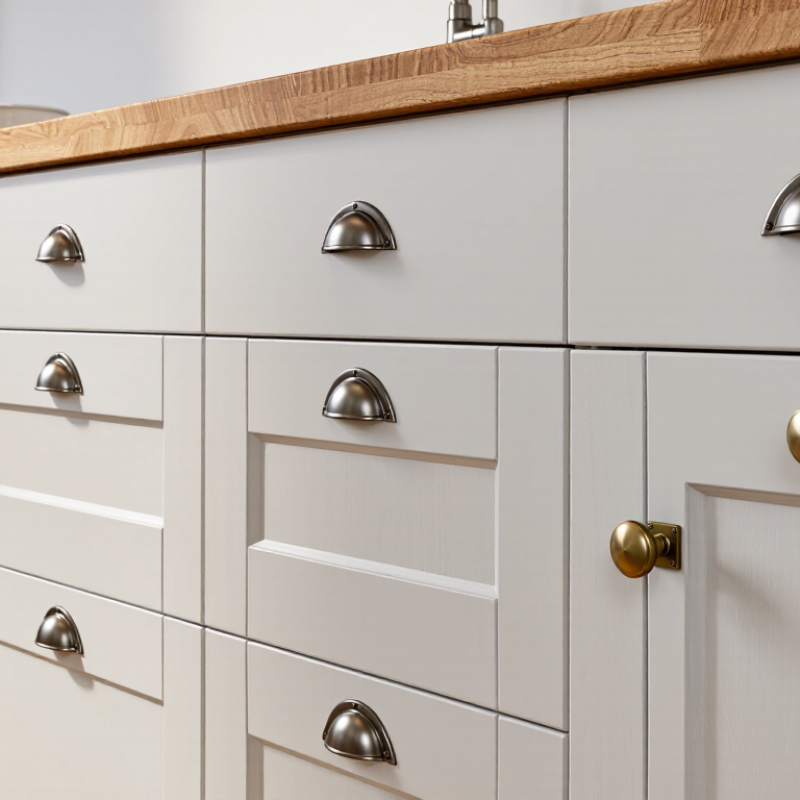
How to Choose High Quality Cabinet Hardware in 2026?

Understanding Cabinet Hardware Quality Standards in 2026

How to Choose High Quality Cabinet Hardware in 2026?

Understanding Cabinet Hardware Quality Standards in 2026

Quality starts with measurable performance, not a shiny showroom finish. ANSI/BHMA A156.9 covers cabinet hardware testing, including hinges, drawer slides, pulls, and catches. Look for smooth movement, secure mounting, and consistent alignment after repeated use. A drawer should open quietly, without side-to-side play. Corrosion resistance also matters in kitchens and bathrooms. ISO 9227 salt-spray testing can provide useful evidence, although it does not perfectly copy every household environment.

The 2024 Houzz U.S. Kitchen Trends Study reported a median major-kitchen renovation spend of $75,000. With that investment, weak hardware can become an expensive annoyance. Material thickness, fastener quality, load ratings, and cycle-test results deserve attention. Stainless steel, zinc alloy, and aluminum can all perform well, depending on grade and finishing quality. In practice, installers often find that poor screws cause early failure. That detail is easy to miss. My own view is imperfect: a certified test result still cannot replace checking the actual sample by hand.

Tips: Request test documentation and published load ratings. Open each sample repeatedly. Inspect threads, edges, plating, and screw length. Ask whether testing used the complete hardware assembly. Compare performance, not just appearance. Also, leave room for doubt. Supplier documents may describe laboratory conditions, not your humid kitchen, heavy cookware, or daily habits.

Identifying Durable Materials, Finishes, and Construction Methods

How to Choose High Quality Cabinet Hardware in 2026?

Cabinet hardware faces thousands of pulls, impacts, and damp hands. Choose solid brass, stainless steel, or zinc alloy with a substantial wall thickness. Thin plated steel can look attractive but bend around screw holes. The 2024 U.S. Houzz Kitchen Trends Study reported that 76% of renovating homeowners upgraded their cabinets. That level of replacement makes hardware quality more important, not decorative.

Finish selection needs practical testing. PVD coatings generally resist abrasion better than simple electroplating, while powder coating can perform well on properly prepared metal. Ask for salt-spray results based on ASTM B117, but do not treat one test as absolute proof. Real kitchens contain steam, cleaners, and greasy fingerprints. A handle that survives a laboratory chamber may still dull beside a dishwasher. I have seen that mismatch.

Construction details reveal more than color. Look for machine-cut threads, captive washers, smooth mounting plates, and screws long enough for the cabinet material. The BHMA A156.9 standard provides performance categories for cabinet hardware, including cycle and corrosion testing. Request the test level and method in writing. Avoid vague claims such as “premium grade.” The Freedonia Group’s 2024 cabinetry industry analysis links remodeling demand with continued hardware replacement, yet replacement frequency varies widely. That is the difficult part: a beautiful finish cannot compensate for loose threads, weak anchors, or poor installation. Be willing to inspect the underside, too. That small detail is often missed.

Matching Hardware Types to Cabinet Design and Daily Use

How to Choose High Quality Cabinet Hardware in 2026?

Matching hardware to cabinet design starts with daily behavior, not decoration. The 2024 Houzz U.S. Kitchen Trends Study reports that 73% of renovating homeowners upgraded their cabinet hardware. That choice affects every morning, meal, and cleanup. Long pulls suit wide drawers and modern slab doors. Small knobs can preserve a lighter look on traditional cabinets. Test both with wet or oily hands. A beautiful pull may still feel awkward.

Hardware material should match the cabinet’s workload. Stainless steel, solid brass, and zinc alloys can offer dependable performance when properly finished. In busy kitchens, choose rounded edges and enough clearance for fingertips.

For bathroom vanities, compact knobs may reduce visual clutter and contact with nearby walls. The National Kitchen and Bath Association’s 2024 Design Trends Report continues to highlight functional storage and accessible kitchen planning. Hardware supports both goals when placement feels natural.

Measure drawer width before selecting pull length. A pull covering roughly one-third of a drawer often looks balanced, but proportions vary. Use knobs on doors and pulls on drawers if you want a calm, consistent rhythm. That rule is not universal. I have seen mixed layouts work beautifully when the cabinet profile is strong. Order samples before buying in quantity. Finish colors can shift under warm lighting, and online photographs often hide that problem.

Evaluating Function, Installation Fit, and Long-Term Performance

Choosing high-quality cabinet hardware in 2026 starts with function, not appearance. A handle should feel comfortable, resist wobbling, and suit the cabinet’s daily use. Test the grip with clean and slightly damp hands. Small details matter. For drawers, check whether the hardware supports repeated pulling without stressing the mounting area. Soft-close hinges should move smoothly, without scraping, sudden drops, or uneven gaps.

Installation fit deserves equal attention. Measure the existing hole spacing before ordering replacement hardware. Check screw length, door thickness, hinge overlay, and clearance between neighboring doors. I once assumed two cabinets used identical hinges; they did not. That mistake created misaligned doors and extra drilling. A paper template can prevent this problem. Tighten screws firmly, but avoid overtightening, which can damage wood or strip threads.

Tips: Keep a ruler, drill guide, level, and spare screws nearby. Install one sample piece first. Open the cabinet repeatedly and inspect movement, noise, and alignment. If the piece feels loose after several cycles, stop and correct it.

Long-term performance depends on materials, surface protection, and maintenance. Look for corrosion-resistant components, durable finishes, and smooth edges. In humid rooms, exposed metal can age faster than expected. Clean hardware with a soft cloth and mild soap, then dry it fully. Avoid harsh chemicals. Even carefully selected hardware may need adjustment after installation, especially when wood expands or contracts seasonally.

How to Choose High Quality Cabinet Hardware in 2026?

A practical evaluation framework based on the factors that most directly affect daily usability, installation accuracy, and long-term performance.

Function receives the highest weighting because smooth movement, secure locking, and suitable load capacity determine everyday performance. Installation fit covers dimensions, hole patterns, adjustment range, and compatibility with the cabinet. Corrosion resistance and cycle durability are essential indicators of long-term value, especially in kitchens, bathrooms, and other high-use areas. The percentages represent evaluation priorities rather than company or brand performance data.

Comparing Suppliers, Certifications, Warranties, and Total Value

Choosing high quality cabinet hardware in 2026 requires more than comparing prices. A reliable supplier should provide clear material details, production photos, and consistent measurements. Ask how brass, stainless steel, or aluminum components are tested before shipment. I once accepted a low quote without checking hole alignment. Installation became slow and expensive. That mistake still influences my supplier reviews.

Certifications can support trust, but they need careful checking. Request current documents showing the testing body, product scope, and expiration date. A certificate for one handle design may not cover every finish or hinge series. Look for evidence of corrosion testing, load testing, and coating durability. Vague certificates are warning signs. So are copied documents.

Warranty terms reveal how a supplier handles real problems. Check coverage periods, replacement procedures, shipping responsibility, and exclusions for coastal humidity or commercial use. A five-year warranty may offer less value than a responsive two-year warranty. Compare total cost, including samples, installation labor, replacement parts, freight, and expected service life. Keep records. Small details matter. The cheapest option can become costly when screws strip, finishes fade, or replacement parts disappear. I would also order a small sample batch before committing to a full project. It adds time, but it exposes weaknesses early.

How to Choose High Quality Cabinet Hardware in 2026? - Comparing Suppliers, Certifications, Warranties, and Total Value
A practical comparison of common supplier profiles using verifiable quality indicators, typical warranty structures, and total-cost considerations.
Supplier Profile Best-Fit Project Typical Product Specification Relevant Certifications and Tests Typical Warranty Estimated Landed Cost Position Total-Value Assessment
Economy commodity supplier Low-budget rental units, temporary installations, and price-sensitive renovations Zinc alloy or basic steel construction;
standard screw mounting;
limited finish options;
basic soft-close or non-soft-close mechanisms
Request material declarations and batch inspection records.
Certification coverage is often product- and market-specific rather than universal.
Usually 1–2 years, subject to installation and finish exclusions Lowest
Lower purchase price, but higher risk of replacement, finish wear, and adjustment costs
Suitable when initial price is the primary objective and access for future repairs is easy. Verify sample consistency before ordering in volume.
Mid-market specialist supplier Standard residential kitchens, bathrooms, wardrobes, and remodeling projects Cold-rolled steel or engineered zinc alloy;
tested drawer slides and hinges;
corrosion-resistant finishes;
adjustable soft-close options
Look for ISO 9001 quality-management certification, documented load-cycle testing, salt-spray results for metal finishes, and RoHS or REACH declarations where applicable. Commonly 3–5 years; mechanisms and decorative finishes may have different coverage Moderate
Balanced purchase cost, freight cost, installation effort, and replacement risk
Often the strongest value for ordinary residential use when specifications, inspection procedures, and spare-part availability are documented.
Premium architectural-hardware supplier High-end residential interiors, hospitality, offices, and heavily used cabinetry Precision-machined or reinforced components;
concealed soft-close systems;
higher adjustment range;
tested decorative and protective coatings
Prioritize independent cycle testing, corrosion testing based on the intended environment, dimensional inspection reports, and documented quality-control traceability. Commonly 5–10 years; some coverage may be limited to manufacturing defects Medium to high
Higher purchase price, but potentially lower service calls and replacement frequency
Provides strong lifecycle value where appearance, smooth operation, noise reduction, and long service life justify the premium.
Project OEM or custom manufacturer Large developments, private-label programs, custom dimensions, and coordinated furniture production Custom hole patterns, dimensions, finishes, packaging, and labeling;
production controlled by approved drawings and samples
Require an approved pre-production sample, inspection plan, material certificates, first-article approval, and agreed acceptance criteria. ISO 9001 may support process control but does not by itself certify product performance. Typically 2–5 years, negotiated in the supply agreement Variable
Unit price may be competitive at volume, while tooling, testing, minimum order quantities, and inventory add cost
High value for repeatable volume and customization. Contract terms should define tolerances, defect limits, corrective action, and replacement responsibilities.
Local distributor with technical support Small and medium projects requiring quick delivery, installation assistance, and local returns Multiple product grades and formats;
locally stocked common sizes;
easier access to samples, accessories, and replacement parts
Verify the original manufacturer’s test reports, product documentation, and country-specific compliance requirements rather than relying only on distributor claims. Often 2–5 years, with claims handled through local service channels Moderate to high
Higher unit price may be offset by shorter lead times, lower freight exposure, and simpler returns
Strong practical value when downtime is expensive or project quantities are too small to justify direct importation.
How to compare total value: Evaluate purchase price, freight and duties, tooling, installation time, adjustment labor, expected replacement rate, spare-part availability, warranty administration, and disposal costs. ISO 9001 confirms a quality-management system, but it is not a product-performance certificate. Confirm the applicable cabinet-hardware standard, test method, load rating, cycle rating, corrosion requirement, and warranty exclusions for the exact product before purchase.

Request More Information