How to Choose Stained Glass Tile Sheets in 2026?

Choosing the right Stained Glass Tile Sheets in 2026 requires more than matching colors to a mood board. A sheet may look brilliant online, yet appear darker beside your kitchen lighting. Experienced designers examine glass thickness, mesh backing, edge alignment, surface texture, and installation requirements before ordering. These details affect cutting, grout coverage, cleaning, and long-term appearance.

Start with the room itself. Bathrooms need sheets that tolerate regular moisture and careful cleaning. Kitchens demand surfaces that resist staining around sinks and cooking areas. Measure the wall, note electrical outlets, and calculate extra material for cuts or breakage. Small details matter. A five percent waste allowance may be insufficient for complex patterns, while too much material increases cost unnecessarily.

Color accuracy deserves special attention in 2026. Digital images can misrepresent transparent glass, metallic accents, and blue-green tones. Request physical samples when possible, then view them in morning and evening light. Check product specifications, safety information, environmental claims, and installation guidance from reliable suppliers. Professional recommendations are useful, but your site conditions remain decisive.

I have learned that the most attractive sheet is not always the most practical choice. Some delicate finishes show fingerprints quickly. Others become difficult to align around corners. That can be frustrating. Review return policies, batch consistency, and replacement availability before purchasing. A thoughtful choice balances visual character, durability, maintenance, budget, and installer skill. The goal is not merely a striking wall, but a surface that still feels considered years later.
How to Choose Stained Glass Tile Sheets in 2026?

Define Your Project’s Style, Size, and Installation Requirements

How to Choose Stained Glass Tile Sheets in 2026?

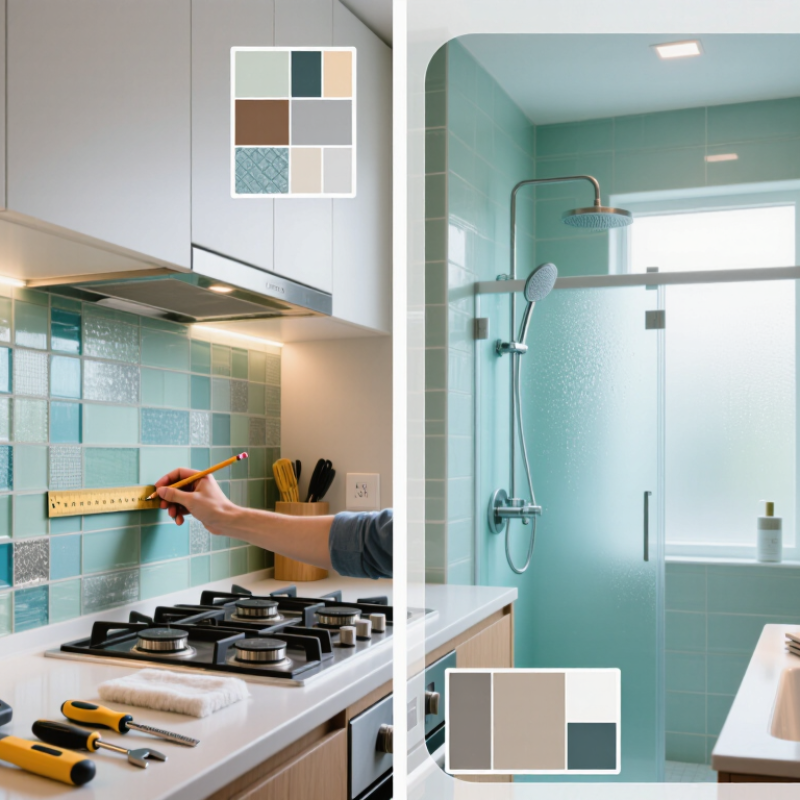
Choosing stained glass tile sheets starts with a clear picture of the room. A calm bathroom may suit translucent blue-green pieces with soft variation. A kitchen backsplash often benefits from warmer tones and a surface that hides splashes. Study your cabinets, lighting, and grout color together. They can change the glass dramatically.

I once selected a sample under bright showroom lights. At home, it looked gray and flat. That mistake taught me to inspect samples beside the actual wall. Measure the installation area before ordering sheets. Tile dimensions affect alignment, waste, and the number of visible joints. Small sheets work well around outlets, curved edges, and narrow borders. Larger sheets create a faster rhythm across broad walls. Check individual tile size, sheet size, and mesh spacing. They are not the same measurement.

Installation requirements should guide the final choice, not follow it. Confirm whether the sheets suit wet areas, heat exposure, and your substrate. A flat, clean surface matters more than expensive tile. Use the recommended adhesive and compatible grout. Some transparent glass reveals uneven adhesive lines. Dry-lay several sheets first. This exposes color shifts and awkward seams. For a first project, avoid overly delicate cuts. Even experienced installers can chip glass at tight corners. Read technical data, request a physical sample, and test one small section. The plan may still need adjustment.

Compare Stained Glass Tile Sheet Materials and Construction

When comparing stained glass tile sheets in 2026, inspect the glass before judging its color. Clear glass reflects light sharply, while opalescent glass spreads light through milky areas. Translucent sheets can brighten a dim backsplash, but they may reveal uneven adhesive beneath. Recycled glass often contains small color shifts and tiny bubbles. Those marks are not always defects. They can create a more natural surface.

Construction matters as much as the glass itself. Mesh-backed sheets are flexible and allow mortar to pass between tiles. They work well around gentle curves, though the mesh can affect alignment. Paper-faced sheets place the paper on the tile surface, keeping the front perfectly arranged during installation. The paper must be removed carefully after the adhesive firms. A rushed removal can pull tiles out of line. Small sheets with thicker tiles usually feel more stable, but they require more grout and cleaning.

From hands-on installation, I check tile thickness, backing strength, and edge consistency first. Hold a sheet against a window. Uneven transparency becomes obvious. Tap several pieces lightly; loose tiles may signal weak assembly. I once selected a beautiful sheet with inconsistent thickness, and the finished wall looked slightly rippled. It was attractive, but not ideal. I would now order a sample and test one square with the intended adhesive before buying enough material. Surface texture, moisture exposure, and cleaning habits should guide the final choice.

Evaluate Color, Transparency, Texture, and Light Reflection

How to Choose Stained Glass Tile Sheets in 2026?

Evaluate Color, Transparency, Texture, and Light Reflection

Color should support the room’s natural light, not compete with it. I compare samples beside the wall during morning, afternoon, and evening. A blue sheet may look calm in a showroom but appear gray under cool lighting. Warm colors can become intense near windows. Place samples beside cabinets, flooring, and grout before deciding. Small differences become obvious across a large backsplash.

Transparency controls depth and visual movement. Clear tiles reveal shadows behind the sheet, while opaque tiles create a stronger, flatter surface. Semi-transparent options often balance privacy and brightness. Hold each sample against daylight and artificial light. Look for uneven color density. My first sample choice was too bright, and the finished area felt restless. That mistake taught me to judge the full installation, not one attractive piece.

Texture affects touch, cleaning, and light reflection. Ripples, bubbles, and raised patterns can scatter light across a wall. Smooth surfaces reflect sharper highlights and show fingerprints more easily. Use a flashlight at an angle to study glare and surface variation. Also check the sheet’s installation guidance, cutting requirements, and moisture suitability. Reliable technical information matters more than a dramatic showroom display. Test a small section first. It may expose flaws that a sample cannot.

How to Choose Stained Glass Tile Sheets in 2026? - Evaluate Color, Transparency, Texture, and Light Reflection

Evaluation Dimension What to Check Typical Range or Rating Best Use Case Selection Guidance
Color intensity Compare the tile in both daylight and warm artificial light. Check whether the color remains consistent across the sheet. Low, medium, or high saturation; color may appear lighter when the tile is backlit. Low saturation: calm interiors; high saturation: feature walls and decorative panels. Request samples before ordering. Use a neutral grout when accurate color evaluation is important.
Visible transparency Observe how much light passes through the glass and whether objects behind the sheet remain visible. Clear: approximately 80–90% light transmission; translucent: approximately 35–80%; opaque: below approximately 35%. Clear and translucent sheets suit windows and illuminated features; opaque sheets suit splashbacks and privacy areas. Use a light source behind the sample to judge the actual effect. Transmission varies with thickness, color, and surface finish.
Surface texture Check whether the surface is smooth, rippled, frosted, hammered, or patterned. Smooth: low visual distortion; textured: medium to high distortion and stronger visual depth. Smooth surfaces are easier to clean; textured surfaces help conceal fingerprints and add privacy. For kitchens and bathrooms, balance appearance with cleaning requirements. Deep texture can retain more residue.
Light reflection View the sheet from several angles and identify glare, sparkle, and reflected highlights. Low, moderate, or high reflection; glossy surfaces generally reflect more direct light than frosted surfaces. High reflection brightens dark areas; low reflection is more comfortable near worktops and eye-level lighting. Avoid highly glossy sheets directly opposite strong windows if glare could be distracting.
Glass thickness Confirm the sheet thickness and whether the supporting wall or adhesive system can accommodate it. Decorative glass tiles commonly measure about 4–8 mm thick; exact thickness depends on construction. Thinner sheets simplify transitions; thicker sheets can provide a deeper visual effect. Plan for the finished surface height beside paint, trim, outlets, and adjoining tile.
Sheet format Review the sheet dimensions, tile layout, mesh backing, and spacing between individual pieces. Common sheet formats are approximately 300 × 300 mm or 305 × 305 mm, with smaller and larger formats also available. Larger sheets reduce installation time; smaller mosaics suit curves and detailed borders. Measure the usable area and include extra material for cuts, corners, and future repairs.
Grout interaction Place the sample beside several grout colors because grout changes perceived brightness and contrast. Light grout usually softens contrast; dark grout emphasizes individual tile shapes and joints. Light grout suits continuous surfaces; contrasting grout suits geometric patterns. Use a compatible, non-abrasive grout and follow the tile and grout manufacturers’ installation instructions.
Water and stain exposure Consider contact with water, cooking oils, soap, cleaning products, and changing humidity. Glass itself is generally non-porous, but grout lines and backing materials may absorb moisture. Suitable for many backsplashes and bathroom walls when installed with a suitable system. Seal grout when recommended, keep joints clean, and verify suitability for wet or exterior locations.
Safety and installation Check cut edges, substrate condition, adhesive compatibility, and whether the product is rated for the intended location. Cut glass can have sharp edges; installation requires suitable tools, eye protection, and careful handling. Professional installation is advisable for large areas, complex patterns, or high-visibility projects. Follow local building requirements and the product’s technical data sheet before installation.
2026 buying checklist Compare samples under the actual room lighting, not only in product photographs. Evaluate color, transparency, texture, reflection, thickness, sheet size, and maintenance together. Choose the appearance that supports the room’s function and lighting conditions. Order approximately 10% extra for standard layouts and more for complex patterns or extensive cutting.

Note: Light-transmission figures are general selection ranges rather than product specifications. Actual performance depends on glass composition, color, thickness, texture, backing, and lighting conditions.

Check Durability, Maintenance Needs, and Environmental Suitability

How to Choose Stained Glass Tile Sheets in 2026?

Durability starts with the installation environment, not the showroom color. For showers, choose sheets with stable mesh backing and documented resistance to moisture, cleaning chemicals, and thermal movement. Ask for test results covering bond strength, surface hardness, and thermal shock. A glossy finish can hide weak edges. Test the edges. Examine several sheets for uneven tesserae, cracked corners, and inconsistent spacing before purchase.

Maintenance should match the room’s daily abuse. Use a pH-neutral cleaner and a soft sponge on textured or iridescent glass. Avoid abrasive powders, metal pads, and harsh acidic products. Grout joints often collect soap faster than the glass itself, especially around shower niches. A practical installation check is simple: place a sample near the proposed light source and cleaning area for one week. Looks can mislead. Discoloration, haze, or difficult wiping may appear only after repeated exposure.

Environmental suitability also deserves evidence. The U.S. EPA’s 2020 Facts and Figures report recorded a 25.1% recycling rate for glass containers in 2018, showing that recycling access varies widely. Confirm local glass recovery options before treating recycled content as a complete sustainability claim. The 2024 Global Status Report for Buildings and Construction reports that buildings used 32% of global energy in 2022. Smaller tile sheets may reduce replacement waste, but excessive backing and packaging still matter. I would compare recycled content, service life, shipping distance, and repairability together.

Confirm Measurements, Budget, Suppliers, and Product Quality

Choosing stained glass tile sheets in 2026 starts with accurate measurements. Measure each wall twice, then record height, width, outlets, corners, and niches. Add ten percent for cuts and breakage, or more for diagonal patterns. I once underestimated a narrow backsplash and had to reorder one sheet. That delay changed the grout line. Do not trust room sketches alone. Dry-lay the sheets on a clean floor before installation. Check how light changes their color near a window.

Build your budget around tile, backing mesh, adhesive, grout, shipping, tools, and waste. A low sheet price can hide expensive freight or uneven sizing. Request written quotations with dimensions, coverage, lead time, replacement policy, and payment terms. Choose suppliers who answer technical questions clearly and provide current product data. Ask for a physical sample from the intended production batch. Online photos can mislead. Colors may look cooler or darker on your screen.

Tips: Inspect every sheet for chips, loose pieces, uneven spacing, and weak mesh. Confirm the recommended adhesive and grout for your wall conditions. For wet areas, request suitable performance documentation. Keep invoices, batch numbers, and sample photos. I would not skip this paperwork again. Small shade differences can become obvious across a large wall. If a supplier avoids basic quality questions, pause before ordering. Consider having an experienced installer review the layout, especially around corners and outlets.

Request More Information