How to Source Outdoor Xmas Lanterns in 2026?
Sourcing Outdoor Xmas Lanterns for 2026 requires more than attractive product images. Buyers must examine materials, lighting performance, safety documentation, packaging, and seasonal delivery capacity. A lantern may look charming online, yet fail after one rainy evening or a cold outdoor event.
Randall Whitehead, an architectural lighting designer and author, offers a useful principle: “The best lighting is the lighting you don’t notice.” This idea matters when selecting Outdoor Xmas Lanterns. The glow should feel warm, balanced, and comfortable, not harsh or distracting. Check color temperature, brightness, timer functions, battery life, and solar charging performance. Small details shape customer satisfaction.
Reliable sourcing also depends on direct experience. Request working samples before confirming large quantities. Test them outdoors, not only in a showroom. Inspect metal edges, handle strength, glass or acrylic clarity, and water-resistance claims. Ask suppliers for current test reports and clear product specifications. Requirements may differ by market, so local compliance checks remain essential.
In 2026, buyers should also review recycled materials, replaceable components, carton strength, and shipping timelines. A low unit price can become expensive after damaged deliveries or high return rates. Supplier communication may seem strong at first. Then delays appear. That possibility deserves attention.
The best sourcing plan leaves room for mistakes, testing, and seasonal changes. Compare at least three suppliers. Keep written records. Choose dependable performance over decorative promises.
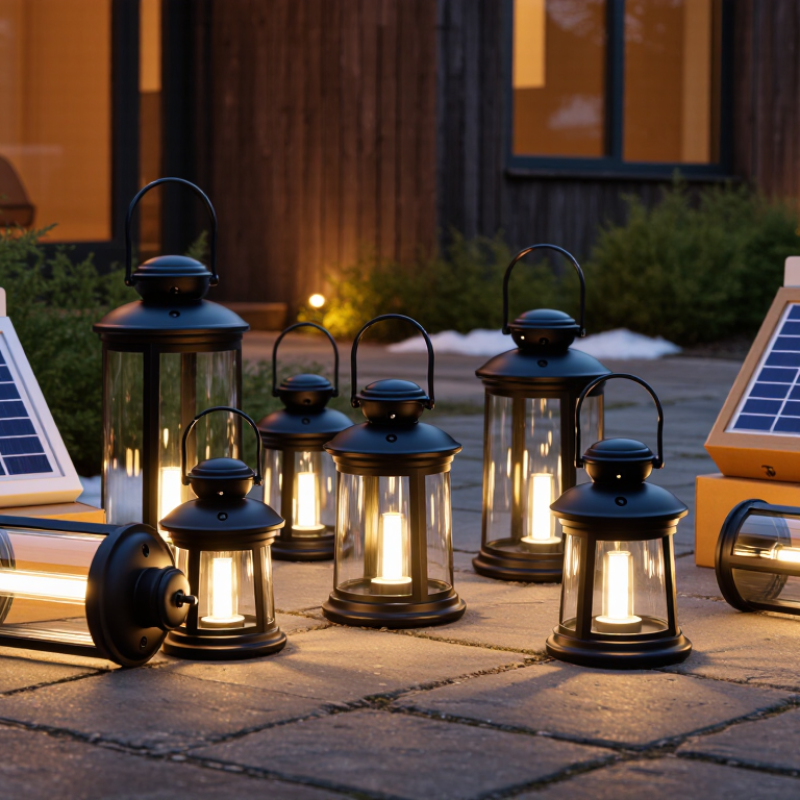
Define Your Outdoor Christmas Lantern Requirements
How to Source Outdoor Xmas Lanterns in 2026?
Define Your Outdoor Christmas Lantern Requirements
Before contacting suppliers, define where the lanterns will be used. A porch, garden path, and commercial entrance need different designs. Measure the available space, including hanging height and walkway clearance. Record the expected quantity and preferred lantern dimensions. Small lanterns suit tables, while larger units create stronger visual impact outdoors. Do not estimate everything by appearance. Write it down.
Weather resistance should be a fixed requirement, not a sales promise. Ask for the tested protection rating and supporting documents. Check how the lantern handles rain, frost, dust, and repeated temperature changes. For battery models, specify operating hours, charging time, and battery replacement access. Solar units need realistic performance data for cloudy winter days. Candle-style lighting may look warmer, but open flames require stricter placement controls.
Material choices affect both lifespan and maintenance. Powder-coated metal resists wear, while plastic can reduce weight and cost. Request sample units before placing a large order. Inspect hinges, handles, seams, paint coverage, and light diffusion.
I once approved a lantern from photographs alone. Its door felt loose during delivery testing. That mistake changed my inspection process.
Define color temperature, brightness, timer functions, packaging, and replacement parts early. Require clear user instructions and safety test records for the target market. Confirm that electrical components suit local voltage and plug requirements. A beautiful lantern can still fail if setup is confusing. Leave room for revision. Your first specification may be too ambitious.
Research Lantern Types, Materials, and Safety Standards
For 2026 sourcing, compare lantern types before comparing prices. Solar lanterns suit garden paths, while low-voltage plug-in models provide steadier brightness. Battery lanterns offer flexible placement but require clear replacement schedules. LED flame-effect units create warmth without an open flame. The U.S. Department of Energy reports that LEDs use at least 75% less energy and last up to 25 times longer than incandescent lighting. That difference matters during long holiday displays.
Material selection should match the environment. Powder-coated aluminum resists corrosion, but poor coating can peel near salty air. UV-stabilized polycarbonate is lighter than glass and handles impact better. Glass looks premium, yet cracked panels create obvious weather and handling concerns. Request samples after simulated rain, freezing cycles, and repeated switch operation. I would not trust a beautiful sample alone.
Safety documentation needs careful checking. Specify an outdoor-rated enclosure, such as IP44 for sheltered areas or IP65 where stronger dust and water protection is needed, according to IEC 60529. Confirm relevant seasonal-lighting requirements, including UL 588 or equivalent local standards. NFPA’s 2016–2020 report recorded about 790 home fires annually involving holiday decorations, excluding Christmas trees. That figure deserves attention. Ask for test reports, plug specifications, cable temperature ratings, and instructions in the destination language. Certification marks without traceable documentation are not enough. Suppliers should also disclose battery chemistry, charger protection, and replacement-part availability.
Evaluate Suppliers, Samples, Pricing, and Customization Options
How to Source Outdoor Xmas Lanterns in 2026?
Evaluate Suppliers, Samples, Pricing, and Customization Options
The National Retail Federation’s 2024 holiday forecast estimated U.S. holiday sales at $979.5–$989 billion. That broad retail figure is not a lantern-sales forecast, but it signals the scale of seasonal competition. Ask suppliers for recent production references, quality-control records, and documented lead times. Compare at least three quotes on the same specification sheet. Include packaging, shipping, and replacement parts in the landed cost, not just the unit price.
Request a working sample before approving a production run. Check stability on a damp patio, timer accuracy, light color, and whether the door closes cleanly. A polished photo proves little. The U.S. Department of Energy says LEDs use at least 75% less energy and last up to 25 times longer than incandescent lighting. Specify LED type, battery or power options, and weather-resistance claims, then ask how each claim is tested. A pretty sample can still deceive.
For customization, confirm minimum order quantities, tooling charges, color options, logo placement, and packaging proofs in writing. Ask how changes affect lead time and whether the supplier will approve a pre-production sample. Compare prices at several order volumes; a low quote may exclude a safer carton or spare parts. I would prioritize clear records over the cheapest offer. There is room for doubt: supplier promises are not test results. Keep approval samples and inspection criteria on file.
| Supplier Profile | Typical Strength | Indicative MOQ | Sample Plan | Indicative FOB Price* | Typical Production Lead Time | Customization Options | Checks Before Ordering |
|---|---|---|---|---|---|---|---|
| Established metal-lantern manufacturer Common sourcing base: China | Broad range of metal frames, finishes, and LED configurations; often suited to medium or large seasonal programs. | About 500–1,000 units per design; confirm color and packaging minimums. | Request 1–3 finished samples. Allow roughly 7–15 days; sample and courier charges may apply. | About US$8–18 per unit for a 30–40 cm LED metal lantern at volume. | About 30–50 days after sample and artwork approval. | Frame shape, paint or powder-coat color, printed packaging, logo, LED color, timer, and selected power options. | Check corrosion protection, welds, sharp edges, outdoor-use instructions, carton strength, and consistency of finish. |
| Export-focused seasonal décor factory Common sourcing base: China or Vietnam | May offer coordinated seasonal collections and export packaging; useful when ordering lanterns alongside other holiday décor. | About 300–800 units per design, depending on materials and components. | Ask for a pre-production sample using the intended finish and light source; allow roughly 1–3 weeks. | About US$9–22 per unit for comparable sizes; design complexity affects cost. | About 35–60 days during peak seasonal periods. | Seasonal colors, decorative cutouts, hanging hardware, gift boxes, instruction inserts, and selected LED features. | Confirm the lantern is intended for outdoor use; review packaging drop-test needs and obtain a dated production schedule. |
| Small-batch metal or craft workshop Common sourcing base: India or other regional craft hubs | Potentially suitable for hand-finished details, distinctive patterns, and smaller trial orders; production consistency can vary. | About 100–500 units per design, subject to material and workshop capacity. | Approve a finished sample and a written finish reference; allow roughly 2–4 weeks for development. | About US$12–30 per unit for comparable sizes, especially with labor-intensive detailing. | About 45–75 days; allow extra time for hand-finished work. | Hand-applied finishes, pierced patterns, dimensions, handle details, and packaging; electronic options may be more limited. | Verify repeatability across units, rust resistance, component sourcing, and the workshop’s ability to meet the full order quantity. |
| Solar-lighting specialist working with decorative housings Region varies by supplier | Useful when solar charging, rechargeable batteries, or dusk-to-dawn operation are central to the product brief. | About 500–1,000 units per configuration; battery and solar components may affect the minimum. | Test samples outdoors over several charge-and-discharge cycles; allow roughly 2–4 weeks for evaluation. | About US$12–28 per unit for a decorative lantern with an integrated solar module. | About 40–65 days after electrical and design approval. | Solar panel placement, light color, operating mode, battery capacity, housing design, and packaging. | Ask for battery specifications, charging guidance, runtime test conditions, replacement-part availability, and applicable transport documentation. |
| Trading company or sourcing agent May coordinate production across several factories | Can simplify communication and consolidate products from multiple manufacturers; may add a service margin. | Varies by factory; often about 300–1,000 units per design. | Confirm who made the sample and whether the production factory will be the same; allow roughly 1–3 weeks. | About US$10–25 per unit for comparable products, depending on specification and service scope. | About 35–65 days, including coordination and approval time. | May coordinate colors, packaging, logos, and multiple product styles through its factory network. | Identify the actual manufacturer, confirm the agent’s responsibilities and fees, and agree on inspection and defect-handling terms. |
Planning assumptions: Price ranges are illustrative FOB estimates, not verified 2026 quotations, for a roughly 30–40 cm decorative lantern with an LED light source. Final costs depend on material, order quantity, electrical components, finish, packaging, shipping terms, and testing requirements. Request current written quotations and confirm applicable destination-market safety and labeling requirements before placing an order.
Verify Certifications, Quality Control, and Weather Resistance
How to Source Outdoor Xmas Lanterns in 2026?
A certificate is only useful when it matches the exact lantern, wiring, and intended use. Ask suppliers for the test report, certificate number, issuing laboratory, and model list. Then verify the document with the issuing body. For seasonal decorative lighting, check whether UL 588 or an equivalent standard applies in your target market. For ingress protection, confirm the stated IP rating against IEC 60529. Paperwork alone is not enough.
Inspect production samples, not just polished sales units. Check solder joints, cable strain relief, sealed battery compartments, and gasket fit. Ask for documented checks at incoming inspection and during assembly. Request evidence of water-spray, temperature-cycle, UV, and corrosion testing, where relevant. A lantern may pass a brief splash test yet fail after repeated exposure. Look for test conditions and results, not just the word “waterproof.”
Weather performance deserves real scrutiny. NOAA’s 2023 U.S. Billion-Dollar Weather and Climate Disasters report recorded 28 events, with estimated losses of $92.9 billion. Those figures do not predict a product’s service life, but they underline why outdoor equipment faces varied, harsh conditions. Ask how the supplier tests a fully assembled lantern after aging and moisture exposure. I would still order a small batch first; sample testing cannot reveal every weak point.
Outdoor Christmas Lantern Sourcing: Water-Jet Test Benchmarks
Compare the nominal water flow rates used in IEC 60529 IPX5 and IPX6 water-jet tests.
IPX5 uses a nominal flow rate of 12.5 L/min; IPX6 uses 100 L/min. These are different test levels, not a guarantee of suitability for every installation. Before purchasing, verify the exact lantern model’s test report and certification, inspect production quality-control records, and match the ingress rating to its expected exposure.
Reference: IEC 60529, degrees of protection provided by enclosures (IP Code). Flow rates shown are nominal values.
Plan Orders, Shipping, Storage, and Seasonal Delivery Timelines
For 2026, start planning outdoor Christmas lantern orders several months before peak production. Ask suppliers for sample units, carton dimensions, packed weights, and realistic production dates. Test samples outdoors after dark; check stability, finish, and how securely the packaging protects delicate panels. Small checks matter.
Build a calendar backward from the date stock must reach your warehouse. Include sample approval, production, freight booking, transit, and local delivery, with extra time for busy ports or weather delays. For ocean freight, confirm the estimated departure and arrival windows in writing, then check for schedule changes regularly. But dates shift. Avoid planning around a single best-case arrival date.
Keep cartons dry, off concrete floors, and away from direct sunlight while awaiting seasonal distribution. Label pallets by product type and delivery week, so urgent orders are easy to locate. Book warehouse labor and final-mile delivery before November demand rises. A perfect spreadsheet will not prevent every delay; review the plan with your supplier and logistics provider as conditions change.
