Top Air Cooled Chiller Unit Suppliers in China?

Choosing a reliable Air Cooled Chiller Unit supplier in China takes more than comparing prices or catalog photographs. Buyers need to examine cooling capacity, energy performance, component choices, and service arrangements. A unit may look compact on paper, yet require more installation space once technicians allow for airflow and maintenance access. Small details matter.

Energy efficiency deserves particular attention. Energy analyst Amory Lovins is widely associated with the reminder, “The cheapest energy is the energy you don’t use.” For chiller buyers, that idea points toward practical questions: What are the unit’s rated conditions? How does it perform under local summer temperatures? Can the supplier provide test data for the proposed configuration? Ask for documented answers, not only broad efficiency claims. A trusted supplier should also explain compressor options, fan control, refrigerant choice, warranty terms, and spare-parts availability. Clear technical documents are useful. So are direct answers from engineers.

This guide introduces Chinese suppliers and the factors that can help buyers compare them fairly. It considers manufacturing experience, product range, quality procedures, export support, and evidence behind performance claims. A shortlist is only a starting point. Supplier capabilities can vary by model, factory, and project; one company’s strengths may not fit every application. That is easy to overlook. Before requesting a quotation, prepare the operating conditions, required capacity, and site constraints. Then ask each supplier to respond against the same specification. One limitation remains: public information cannot replace factory audits or project-specific technical review. A careful comparison can narrow the field, but buyers should verify the details before making a decision.
Top Air Cooled Chiller Unit Suppliers in China?

Understanding Air-Cooled Chiller Units and Their Industrial Applications

Top Air Cooled Chiller Unit Suppliers in China?

Understanding Air-Cooled Chiller Units and Their Industrial Applications

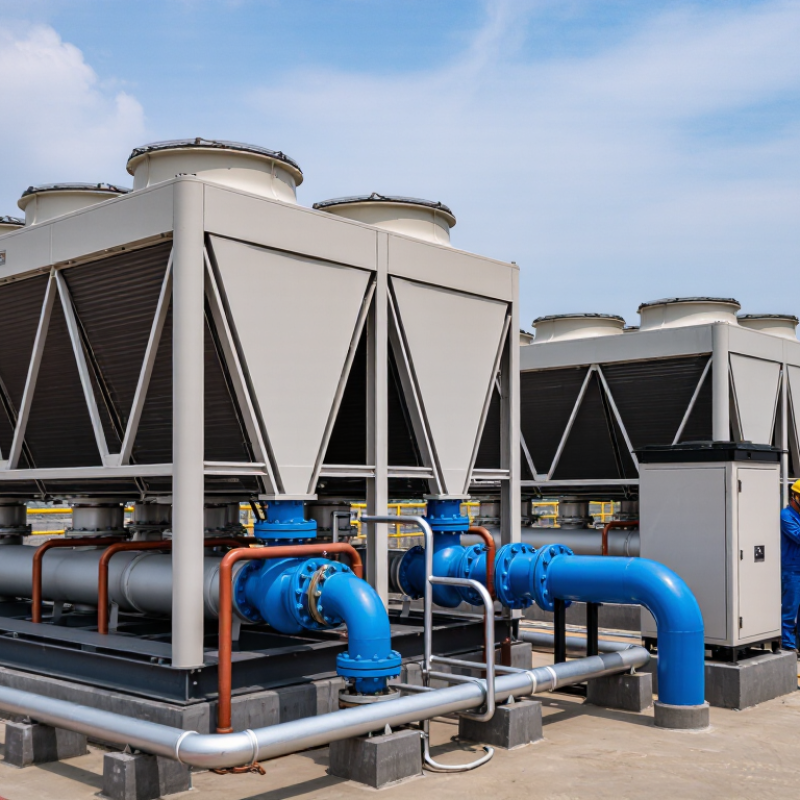
An air-cooled chiller removes heat from process water and releases it outdoors through fans and condenser coils. Inside, refrigerant carries heat between the evaporator and condenser. The cooled water then circulates to equipment or production lines. No cooling tower is needed. This can simplify installation where water is limited or maintenance access is tight.

Factories use these units to cool plastic molding machines, laser equipment, food-processing lines, and commercial buildings. A workshop with several machines may need steady cooling through long shifts, even when outdoor temperatures rise. Correct sizing depends on heat load, operating hours, ambient conditions, and required water temperature. A unit that seems adequate on paper may struggle during peak production. Real sites are messier.

Tips: Check airflow around the unit and keep condenser coils clean; dust and blocked vents reduce heat transfer. Ask for measured cooling capacity at your expected outdoor temperature, not just a nominal rating. Leave room for service access, too. That detail is easy to overlook.

Criteria for Evaluating Air-Cooled Chiller Suppliers in China

Evaluating air-cooled chiller suppliers in China starts with matching the unit to real operating conditions. Ask for cooling capacity at your design ambient temperature and chilled-water inlet and outlet temperatures. A rating at mild conditions may not reflect performance on a hot rooftop. Request part-load efficiency data, sound-pressure levels, and documented test results. Numbers need context.

Look closely at factory quality controls and component traceability. A capable supplier should explain how coils, compressors, electrical panels, and refrigerant circuits are inspected before shipment. Ask for production lead times, packing details, and spare-parts availability for your destination. If possible, review a recent test report and speak with customers using similar equipment. Ask for proof. A polished brochure is not proof by itself.

After-sales support deserves equal weight with purchase price. Confirm who handles commissioning, what remote troubleshooting is available, and how warranty claims are processed. Check whether service staff can respond in your time zone and whether common parts can ship promptly. Compare quotations on equal technical specifications, not just nominal capacity. I would not trust a single supplier scorecard completely; site visits and references can still reveal gaps that spreadsheets miss.

Manufacturing, Certification, and Service Capabilities to Compare

A reliable air-cooled chiller supplier should explain how each unit is built, not just list its cooling capacity. Ask about condenser coil materials, fin spacing, compressor assembly, and factory leak testing. Request inspection records for pressure tests and electrical checks. Details matter. If possible, review a sample quality report and trace it to a specific production batch. A polished factory tour is useful, but documented controls are stronger evidence.

Certification needs careful checking. Confirm that certificates and test reports cover the exact model and configuration you plan to buy. Requirements can differ by destination, so ask which standards apply to your installation and verify documents with the relevant issuing body. Ask service teams about commissioning, response times, spare-parts availability, and technician training. Get warranty conditions and maintenance intervals in writing. Ask for a parts list, too. It sounds basic, yet missing fan motors or control components can delay repairs. No checklist catches everything; comparing these details helps reveal where a supplier’s promises still need proof.

Notable Air-Cooled Chiller Unit Suppliers in China

China’s air-cooled chiller suppliers range from large industrial manufacturers to specialist engineering firms. Notable suppliers tend to offer more than a standard unit: they can match cooling capacity, ambient temperature, and water-flow requirements to a project. Ask for the selection sheet and operating limits, not just the headline capacity. A unit rated at mild conditions may perform differently during a hot summer afternoon.

Look closely at construction and service details. A well-documented proposal should specify compressor type, condenser-coil material, fan arrangement, refrigerant, and sound data. Check whether the supplier can provide wiring diagrams, installation clearances, and a parts list. These details matter when a chiller must fit beside a factory wall or connect to existing pumps. Small gaps can become costly delays.

After-sales support deserves equal attention. Ask how quickly the supplier can provide replacement parts and whether technicians can guide commissioning remotely or on site. Request references for projects with similar loads and climates, then verify them where practical. A polished brochure is useful, but it cannot answer every field question. Some specifications still need clarification. That is not automatically a warning sign; the response quality often reveals how carefully the supplier understands the application.

Top Air-Cooled Chiller Unit Suppliers in China: Refrigerant GWP Reference

A supplier-neutral comparison of the approximate 100-year global warming potential (GWP) of selected refrigerants. GWP is one factor to consider alongside chiller capacity, efficiency, safety, and local regulations.

Approximate GWP values: R410A 2,088; R32 675; R454B 466; R1234ze(E) 7. Values are reference figures; verify the applicable refrigerant data and local requirements when evaluating equipment.

Matching Supplier Strengths to Project Requirements

Matching Supplier Strengths to Project Requirements

Selecting an air-cooled chiller supplier in China starts with the site, not the catalogue. The IEA’s 2018 Future of Cooling report projects that global energy demand for space cooling will more than triple by 2050. It also estimates global air-conditioner stock will grow from 1.6 billion units to 5.6 billion. This growth makes efficient equipment and dependable service increasingly important. Still, a large stated capacity does not guarantee performance in a hot, dusty plant room. Compare suppliers’ selection data at your actual outdoor design temperature, chilled-water supply temperature, and load profile. Details matter.

Request part-load performance figures, sound-pressure data, corrosion-protection options, and control-system compatibility. For a coastal site, ask how coils and electrical enclosures resist salt and moisture. For a tight urban roof, verify access clearances, operating noise, and heat discharge. Check whether the supplier can provide commissioning, local technicians, and critical spare parts within a practical timeframe. An air-cooled unit may simplify installation, but its efficiency can fall during hot afternoons. Ask for performance curves, not just a headline rating. Factory testing helps, yet it cannot reproduce every site condition. A neat spreadsheet still cannot predict every awkward installation detail. That deserves a second look.

Top Air Cooled Chiller Unit Suppliers in China? - Matching Supplier Strengths to Project Requirements

Selection guide: The supplier profiles below describe common product and engineering strengths, not named companies or verified rankings. Capacity bands are indicative; confirm operating conditions, certified performance data, local service coverage, and applicable standards with each shortlisted supplier.

Supplier Profile Typical Capacity Band Common Product Strengths Best-Fit Project Requirements Key Checks During Evaluation Relevant Evidence to Request
Packaged scroll-chiller specialist Approximately 20–200 kW per unit; actual ranges vary by model and configuration. Compact packaged equipment, multiple scroll compressors on larger models, and relatively straightforward installation. Small commercial buildings, retail spaces, clinics, and projects needing a simple, factory-assembled system. Part-load performance, operating sound levels, leaving-water-temperature limits, and whether standby capacity is required. Model-specific capacity and power data at the project’s design conditions; dimensional drawings; sound data; commissioning checklist.
Modular scroll-system supplier Often assembled from modules of roughly 30–200 kW; total plant capacity depends on the number of modules. Staged capacity, incremental expansion, and the option to keep some modules operating during maintenance. Projects with phased construction, variable loads, restricted plant-room access, or a preference for distributed equipment. Module sequencing, minimum system water volume, control compatibility, hydraulic layout, and performance at low load. Module combination tables; control-sequence description; recommended water-flow limits; installation and service clearances.
Screw-chiller supplier Commonly selected for larger single-unit duties, often several hundred kilowatts and above; verify each model’s published range. Higher capacity per unit and options designed for continuous commercial or industrial cooling duty. Large commercial buildings, process cooling, and projects seeking fewer, higher-capacity units. Full-load and part-load power, compressor operating envelope, redundancy strategy, service access, and the effect of high outdoor temperatures. Selection software output or certified performance schedule; electrical data; operating-envelope chart; maintenance requirements.
Low-ambient-temperature application specialist Capacity varies by product family; confirm the required duty at both design summer and low-ambient conditions. Controls and optional components configured for cooling operation in colder outdoor conditions. Data rooms, industrial processes, and other applications that may require cooling during winter weather. Minimum operating ambient, wind and snow exposure, condenser-air recirculation risk, and controls for low-load operation. Published operating limits; low-ambient selection data; installation guidance for airflow and weather exposure.
High-temperature leaving-water application specialist Model-dependent; available capacity and efficiency can change materially as leaving-water temperature rises. Configurations intended for chilled-water duties above common comfort-cooling conditions. Industrial processes or retrofit projects with higher chilled-water setpoints or unusual temperature requirements. Capacity and power at the exact leaving-water and outdoor-air temperatures; water-side pressure drop; allowable temperature range. Selection data at the specified entering and leaving water temperatures; performance limits; written confirmation of operating conditions.
Project-engineering-focused supplier Depends on selected compressor and unit platform; evaluate by the project’s required duty rather than a general catalogue range. Application-specific selections, system integration support, and coordination of controls or hydraulic interfaces. Retrofits, multi-unit plants, projects with non-standard interfaces, or sites with strict documentation requirements. Scope boundaries, engineering response time, control-point list, submittal completeness, and responsibility for commissioning support. Equipment schedule; interface drawings; control documentation; installation, operation, and maintenance manuals; commissioning scope.
Export-project-oriented supplier Varies by product range and destination-market configuration. Experience preparing export documentation and adapting equipment configurations to project specifications. Projects outside the supplier’s domestic market or requiring specific electrical, safety, or documentation provisions. Destination-country compliance, electrical frequency and voltage, language of documentation, spare-parts availability, and warranty process. Applicable conformity documents for the destination; country-specific technical submittals; warranty terms; spare-parts and service plan.

Request More Information