7 Best China Pendant Lamps Suppliers for Global Buyers
Pendant lamps shape more than a room’s appearance. Their light affects comfort, atmosphere, and everyday energy use. The International Energy Agency has reported that lighting accounts for roughly 15% of global electricity consumption and about 5% of greenhouse gas emissions. These figures cover lighting broadly, not pendant lamps alone, and estimates vary by scope. Still, they explain why buyers increasingly compare light sources, product efficiency, and build quality—not just price. Small details matter: a shade’s inner finish, a ceiling canopy’s fit, or a cord that feels thinner than expected.
China offers global buyers a wide range of pendant designs, materials, and production capabilities. But a polished catalog proves little. Buyers need to check sample consistency, wiring specifications, packaging, lead times, and documentation suited to their destination market. Trade data can show broad export activity, yet it rarely confirms a factory’s workmanship or service standards. That gap deserves attention. This guide introduces seven China Pendant Lamps Supplier options for international buyers, with practical factors to consider when comparing them. Treat any shortlist as a starting point, not a guarantee. Request current product details, inspect samples where possible, and confirm expectations in writing before placing an order. The right supplier should make those checks easier, not rush past them.
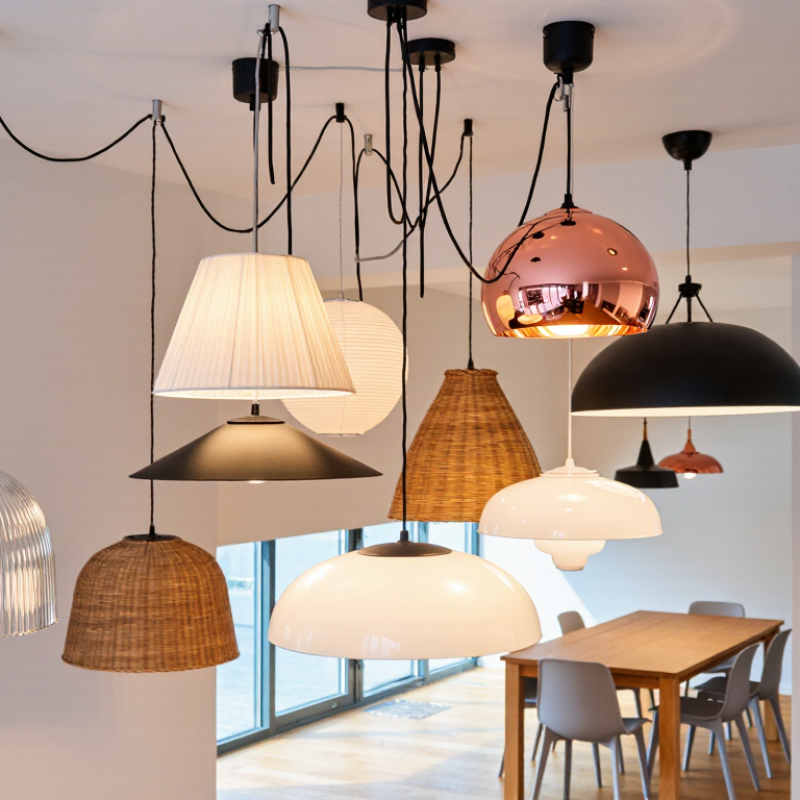
What Pendant Lamps Are and How They Are Made
A pendant lamp is a ceiling-mounted light suspended by a cord, chain, or rigid stem. Its visible shade directs or softens light, while the canopy covers the ceiling connection. Inside, a socket or LED module connects to wiring and supports the light source. Shape matters: a deep metal shade can focus light downward, while a frosted glass diffuser spreads it more gently.
Manufacturing depends on materials. Metal shades may be spun or stamped, then polished, coated, and fitted with electrical parts. Glass shades are shaped in molds or by hand, cooled, and checked for cracks. Ceramic versions are cast, fired, and glazed. Workers then assemble the suspension, wiring, and shade, followed by electrical and visual checks. Small details matter. The U.S. Department of Energy reports that LEDs use at least 75% less energy and can last up to 25 times longer than incandescent lighting; that comparison concerns light sources, not pendant fixtures themselves. A careful buyer should still ask suppliers about LED compatibility, finish durability, and inspection records. Some variation in handmade glass is normal, but inconsistent wiring is not.
Tips: Request a cross-section or assembly photo, not just a finished-product image. Confirm canopy size, cable length, bulb type, and packaging protection before ordering. A glossy sample can look convincing; it may not represent every production batch.
How to Evaluate China-Based Pendant Lamp Suppliers
When evaluating China-based pendant lamp suppliers, look beyond catalog photos. Ask for drawings that show dimensions, canopy size, cord length, and finish options. A detailed specification sheet should identify materials and electrical components. Request a sample before approving a large order. Check its weight, surface finish, wiring, and assembly instructions under ordinary working conditions. Small details matter.
Ask how the supplier checks quality during production, not only before shipment. Request dated inspection photos and a written description of the checks performed. For electrical products, confirm that test reports and certifications match the exact model and the requirements of your destination market. Verify documents independently when possible. A certificate for a similar lamp is not enough. Packaging deserves attention, too: ask how glass shades, metal parts, and cords are protected in transit.
Compare quotations line by line, including tooling, sample charges, minimum quantities, lead times, and replacement terms. Ask who will manage your order and how quickly they respond to technical questions. Clear answers are a useful sign, though not proof of reliable production. A polished catalog can still hide weak process control. I would treat an unusually low price as a prompt to ask more questions, not as a bargain. One overlooked finish mismatch can make a whole shipment feel less consistent.
Seven China Pendant Lamp Suppliers for Global Buyers
Choosing among seven China pendant lamp suppliers gives global buyers a practical comparison, not a guaranteed ranking. Look for clear product drawings, material specifications, and sample policies. Ask each supplier about canopy dimensions, cord length, socket type, and finish options. Small details matter. A brushed brass sample can look warmer under showroom lights than it does beside a window.
Compare different strengths across the seven candidates: custom metalwork, hand-blown glass, wood components, commercial lighting, hospitality projects, smart controls, and small-batch production. These are useful areas to investigate, not proof that every supplier specializes in them. Request close-up photos of welds, glass edges, and cable entries. For larger orders, confirm packaging dimensions and ask how fragile shades are protected during transit.
Communication is part of the product. A reliable supplier should answer technical questions directly and flag limits before production begins. Check lead times against a written schedule, and keep approved samples for color and finish reference. I would not choose on price alone; a low quote may leave freight packing or customization unclear. Even careful checks can miss a defect, so define inspection points before goods are dispatched.
How Suppliers Compare in Design, Customization, and Compliance
Design separates pendant-lamp suppliers before price does. Compare canopy size, cord length, finish consistency, and how closely production samples match approved drawings. A brushed brass finish can look warm in a showroom yet vary under cooler warehouse lighting. Ask for finish samples and dimensional drawings. Small details matter.
Customization is more than choosing a shade color. Strong suppliers can explain how changes affect tooling, lead time, heat management, and replacement parts. The U.S. Department of Energy’s Energy Saver guidance says LEDs use at least 75% less energy and last up to 25 times longer than incandescent lighting. That benchmark makes LED compatibility and thermal design practical questions, not decorative extras. Still, a custom fitting may complicate repairs. Worth checking.
Compliance should be verified for the destination market, not assumed from a supplier’s general claims. Request applicable test reports, material declarations, and traceable model numbers; confirm that documents match the exact lamp configuration. IEC 60598-1 provides general safety requirements for luminaires, but destination-specific requirements may also apply. A polished certificate alone is not proof of a complete, current file. Buyers should review the paperwork with a qualified compliance professional, especially when changing drivers, wiring, or finishes after testing.
How to Select and Verify a Supplier for Your Market
When comparing pendant lamp suppliers, look beyond polished catalog photos. Ask for drawings, material specifications, and clear details about canopy size, cord length, finish, and light source compatibility. A sample can reveal uneven coating, sharp edges, or a canopy that feels too light. Small details matter.
Check whether the supplier can provide current test documents for the exact product model, and confirm that the issuing laboratory and document details can be independently verified. Requirements vary by destination market, so ask a qualified local professional what applies before placing a large order. Request a live factory walkthrough or recent production photos, then compare them with the sample. A good presentation is not proof of consistent quality.
Discuss minimum order quantities, production lead times, packaging, spare parts, and how defects are handled. Put agreed specifications and tolerances in writing. Ask for references from buyers with similar order sizes, but remember that references can be selective. No checklist catches everything. I would also test a small batch before committing to a full shipment; it takes time, and it may not expose every issue, but it gives you a more grounded view of communication and packing quality.
China Pendant Lamp Supplier Verification Checklist
Recommended evidence items to review before selecting a supplier for your market
The bars count the evidence items in this suggested buyer checklist, not supplier ratings or market statistics. Confirm applicable product tests, certifications, and labeling requirements for your destination market.
