Top Bug Specimen Suppliers for Global Buyers?
Choosing the right Bug Specimen supplier requires more than comparing photographs and prices. Global buyers need consistent quality, lawful sourcing, accurate identification, and dependable communication. A specimen may look impressive under glass, yet its value decreases without clear collection records. Location, collection date, species information, preservation methods, and ownership documents should remain available for review.
Details matter.
Experienced suppliers understand how fragile specimens behave during packing and international transport. They use suitable mounts, protective materials, humidity control, and sturdy outer packaging. They also explain whether specimens are captive-bred, ethically collected, naturally deceased, or sourced from licensed channels. This information supports responsible purchasing and reduces avoidable customs problems. Requirements differ between countries, so buyers should verify import rules with relevant authorities before ordering. No supplier can promise universal clearance.
This guide examines leading suppliers for museums, educators, researchers, designers, and private collectors. It considers specimen authenticity, catalog accuracy, packaging standards, customer support, and documentation practices. Experience helps, but it does not replace evidence. Buyers should request current images, invoices, scientific names, and applicable permits when needed. Some suppliers offer beautiful displays but provide limited provenance details. That is a weakness worth noting. Even established businesses can make identification errors or experience shipping delays. Careful buyers should ask questions before payment and inspect deliveries promptly. Responsible sourcing protects biodiversity, strengthens professional collections, and supports suppliers who follow accepted ethical standards. The best choice is not always the cheapest. It is the supplier that communicates clearly, documents responsibly, and admits uncertainty when the evidence is incomplete.
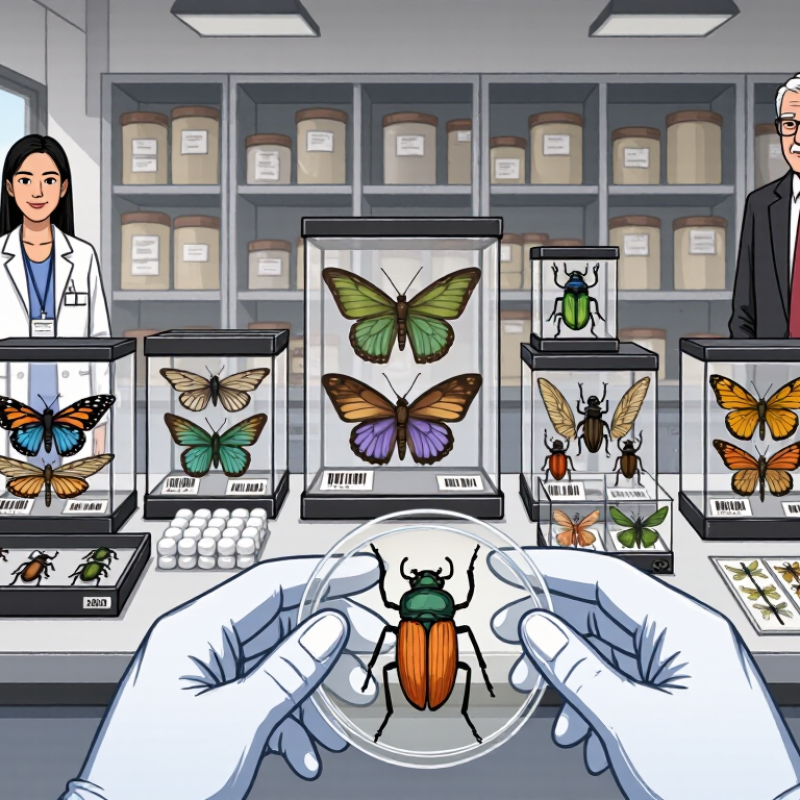
What Defines a Reliable Bug Specimen Supplier?
A reliable bug specimen supplier proves origin, condition, and identification. Every specimen should carry a scientific name, collection date, locality, collector record, and preservation method. These details turn a display item into usable evidence. The 2019 IPBES Global Assessment warned that around one million species face extinction risks, many within insect-rich habitats. Careless collecting can worsen that pressure. Responsible suppliers therefore explain permits, transport documents, and conservation checks before shipment.
Technical skill matters too. Experienced staff should identify specimens using current taxonomic references, not visual guesses alone. They should disclose damaged wings, faded colors, missing limbs, and uncertain classifications. The IUCN Red List reported more than 166,000 assessed species in 2024, with over 46,000 threatened. That figure reminds buyers that availability does not prove ethical sourcing. A supplier following documented quality procedures, such as ISO 9001 principles, can offer clearer traceability and complaint handling. Still, certification alone is not enough.
Tips: Request specimen-level records, recent photographs, packing details, and a written replacement policy. Ask how uncertain identifications are reviewed. Check whether labels survive humidity and vibration. Small omissions matter. A polished catalog can hide weak documentation. I would also test one small order before committing to a large collection. No checklist is perfect, especially when taxonomy changes. Reliable suppliers admit uncertainty, correct records, and keep improving their process.
Major Types of Bug Specimen Suppliers Worldwide
Top Bug Specimen Suppliers for Global Buyers?
Global buyers usually work with several major types of bug specimen suppliers. Educational specimen houses provide pinned beetles, butterflies, moths, and display-ready insects. Their collections often include labels showing species, location, date, and preservation method. This information supports classroom study and serious collecting.
Captive-breeding farms are another important source. They raise selected species in controlled environments, reducing pressure on wild populations. Their specimens may show consistent size, color, and condition. However, quality can vary between seasonal batches. Some suppliers also work with licensed field collectors. These providers may offer regional species with stronger locality records, but documentation must be checked carefully.
Research-oriented suppliers serve universities, museums, and private laboratories. They typically focus on accurate identification, stable preservation, and traceable handling. Wholesale exporters may combine specimens from several sources, making purchasing efficient but less personal. Ask whether the supplier provides invoices, origin records, scientific names, and export documents where required. Packaging matters too. A rigid box, dry padding, and moisture control can prevent broken legs or faded wings during transit.
Small details matter. Very much.
Reliable communication is useful when a specimen arrives damaged or mislabeled. Buyers should compare images with the actual batch, not only with catalog photographs. Regulations differ by country, and protected species may require permits or may not be available for trade. Even experienced buyers can overlook changing rules. A careful supplier explains limits clearly instead of promising every species.
How to Evaluate Specimen Quality, Authenticity, and Preservation
Evaluating bug specimens starts with traceable evidence, not attractive display cases. Ask for collection location, date, collector, preparation method, and legal documentation. A reliable supplier should provide matching labels and high-resolution photographs. GBIF’s public data dashboard reports more than three billion biodiversity occurrence records, showing why precise locality data matters for research and verification. A vague label is a serious weakness.
Inspect the specimen under neutral light. Check intact legs, antennae, wings, genital structures, and natural coloration. Excessive gloss may indicate resin, repainting, or chemical treatment. For authenticity, compare the specimen with a current taxonomic reference and request expert identification. I have seen beautifully mounted insects with outdated names. That mistake is easy to overlook. It still damages research value. IUCN Red List statistics also show that tens of thousands of assessed species face extinction risk, so suppliers must screen species carefully and provide lawful sourcing evidence.
Tips: Request a sample specimen before a large order. Measure humidity during storage, ideally with a small data logger. Use acid-free labels, sealed boxes, and silica gel. Ask how pests are detected without damaging the specimen. A broken tarsus can reveal careless handling. Also, preservation is not permanent; color fades, glue fails, and labels disappear when storage conditions drift. Keep an audit trail for every specimen, including photographs, invoice records, and inspection notes.
International Sourcing, Packaging, and Shipping Considerations
Top Bug Specimen Suppliers for Global Buyers?
International Sourcing, Packaging, and Shipping Considerations
Reliable suppliers should provide clear specimen identities, collection records, and lawful sourcing documents. Ask for the scientific name, collection region, collection date, and preservation method. Ethical collection matters. It protects biodiversity and supports responsible research.
Packaging must match the specimen. Pinned insects need rigid boxes, soft internal supports, and vibration protection. Fluid-preserved samples require leak-resistant vials, absorbent material, and sealed secondary packaging. Desiccants can reduce moisture damage during humid shipments. Small details matter.
Shipping remains complicated. Import rules may differ by species, country, and specimen condition. Some destinations require permits, health declarations, or wildlife documentation. Check customs requirements before payment. Never rely only on a supplier’s verbal assurance. Written confirmation is safer.
Use a courier that accepts preserved biological specimens and provides tracking. The outer label should match the commercial invoice and packing list. Incorrect descriptions can cause delays or seizure. That risk is avoidable.
In practice, even careful suppliers can miss a document. I have found that one unclear species name can create costly questions at customs. A pre-shipment document review helps, although it is not perfect. Buyers should also inspect delivered specimens quickly, photograph damaged packaging, and record temperature or moisture issues when relevant. Some packaging choices look professional but still fail after long transit. Testing a small shipment first is often wiser than placing a large order.
Top Bug Specimen Suppliers for Global Buyers? - International Sourcing, Packaging, and Shipping Considerations
| Supplier Profile | Typical Specimen Categories | Common Buyer Applications | International Sourcing Considerations | Recommended Packaging | Key Shipping Documents | Indicative Transit Profile |
|---|---|---|---|---|---|---|
| Museum and educational specimen supplier | Pinned butterflies, beetles, moths, grasshoppers, cicadas, and preserved arthropods | Classroom collections, museums, displays, and taxonomy training | Confirm species identification, legal collection status, country-of-origin rules, and destination import restrictions before purchase | Rigid specimen box, archival paper, pin protection, desiccant, and cushioning against vibration | Commercial invoice, packing list, scientific names, origin statement, and any required wildlife or quarantine permits | Usually suitable for tracked parcel service; customs clearance may add several business days |
| Research-grade entomology supplier | Pinned adults, larval stages, taxonomic vouchers, and preserved specimens in ethanol | Biodiversity studies, morphology, genetics, and reference collections | Request collection locality, collection date, collector details, preservation method, and chain-of-custody information | Leak-proof primary container for liquid-preserved material, absorbent secondary packaging, and rigid outer packaging | Material transfer documentation, specimen inventory, safety information for preservatives, and permits where applicable | Courier selection depends on specimen medium; liquid shipments require carrier and destination acceptance checks |
| Taxidermy and display specialist | Large beetles, stick insects, mantids, scorpions, tarantulas, and framed insect art | Interior displays, collectors, educational exhibits, and retail décor | Check whether the species is protected, invasive, venomous, or subject to animal-health controls in the destination country | Custom foam inserts, moisture barrier, corner protection, and impact-resistant outer carton | Invoice, packing list, species declaration, treatment statement if used, and import authorization when required | Fragile framed items generally need tracked air freight and careful dimensional-weight planning |
| Biological control and agricultural research supplier | Beneficial parasitoids, predatory insects, sterile insects, and laboratory colonies | Crop protection, controlled trials, integrated pest management, and laboratory research | Import approval, plant-health authority review, containment procedures, and release restrictions are often essential | Ventilated escape-resistant containers, temperature protection, food or hydration medium, and clear handling labels | Phytosanitary or veterinary documentation where applicable, import permit, handling instructions, and emergency contact details | Time-critical express transport; delivery timing should avoid weekends, holidays, and extended customs holds |
| Ethically sourced specialty collector supplier | Regionally collected butterflies, beetles, mantids, and other non-endangered arthropods | Private collections, specialist education, photography, and small exhibit projects | Ask for transparent sourcing records and avoid specimens lacking reliable species, locality, or legal-origin information | Dry, insect-resistant specimen box with pin retention, tissue support, desiccant, and moisture-resistant mailer | Invoice, packing list, scientific names, country of origin, and CITES documentation if the species is listed | Standard tracked parcel may be adequate for dried specimens if destination customs rules permit entry |
| Custom specimen preparation service | Pinned, spread, labeled, dissected, slide-mounted, or microscope-ready specimens | University teaching, diagnostic work, microscopy, and curated reference sets | Define labeling standards, specimen condition, preparation method, order quantity, and acceptable replacement criteria | Custom trays, slide cases, archival labels, shock protection, and humidity control for long-distance transport | Detailed inventory, preparation specification, invoice, packing list, and applicable import or research permits | Lead time depends on preparation complexity; consolidated shipments can reduce handling and freight costs |
| Bulk educational kit assembler | Mixed non-living insect sets, labeled teaching trays, life-cycle examples, and activity kits | Schools, science centers, distributors, and public outreach programs | Verify consistent species lists, repeatable quality, replacement policy, carton dimensions, and destination-market labeling | Stackable trays, divider inserts, moisture protection, barcode labels, and export-grade master cartons | Commercial invoice, packing list, product descriptions, country of origin, and customs tariff classification support | Economical by air or consolidated freight; larger orders require carton and pallet planning |
How Global Buyers Can Compare and Select Suitable Suppliers
Top Bug Specimen Suppliers for Global Buyers?
Global buyers should compare suppliers through evidence, not attractive catalog photos. The IPBES Global Assessment estimates that around one million species face extinction risk. Traceability is therefore essential, even for educational specimens. Ask for scientific names, collection dates, locations, permits, and chain-of-custody records. CITES documentation may apply to some species or shipments. Import rules can also differ by destination.
Practical inspection reveals details that catalogs rarely show. Check whether labels match the specimen and its invoice. Examine pin stability, wing damage, color fading, and humidity protection. A reliable supplier should provide batch photographs and consistent taxonomic references. GBIF’s 2023 reporting recorded more than three billion biodiversity occurrence records. Buyers can use recognized databases to verify names and distribution records. This step catches vague or outdated identifications.
Do not compare unit prices alone. Calculate packaging, insurance, customs handling, replacement policy, and delivery time. Review response speed with a small trial order. It exposes weak packing quickly. A polished website proves little. I still see buyers overlook documentation because the specimen looks perfect. That is an expensive habit. Supplier scoring should include legality, specimen condition, data accuracy, and after-sales accountability. A simple weighted spreadsheet works better than instinct, although it can never replace expert review.
