Top PVC Marble Wall Panels Manufacturers Worldwide?

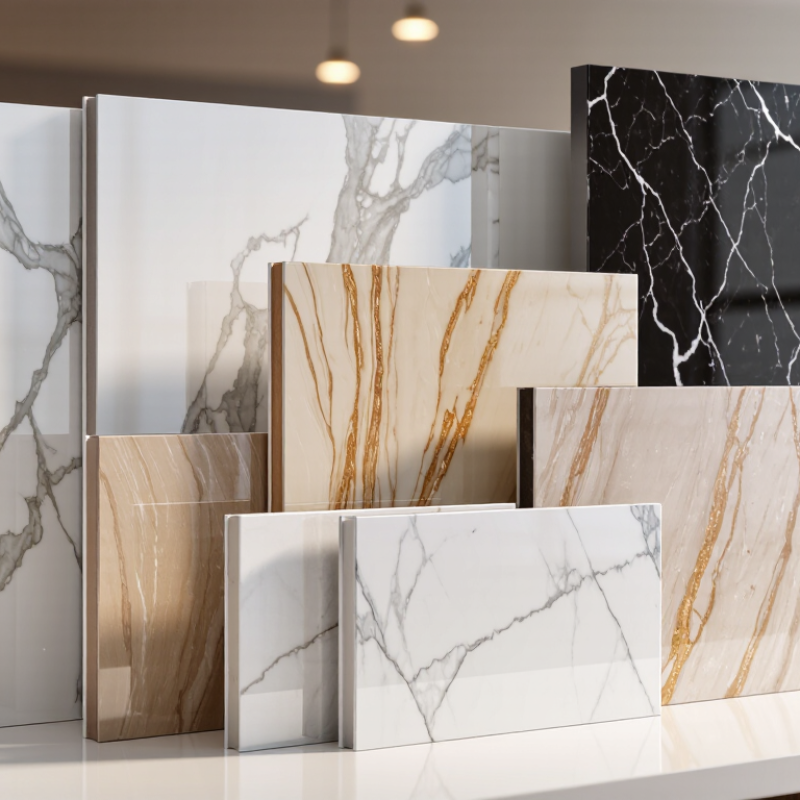
PVC Marble Wall Panels have moved beyond simple decorative sheets. They now appear in hotel lobbies, apartment renovations, retail spaces, and everyday bathrooms. Their marble-like veining can bring visual depth to a wall without the weight of natural stone. Yet appearance is only part of the decision. Panel thickness, surface film, substrate quality, edge finish, and installation method all affect the finished result.

For this introduction, the expert voice is illustrative rather than a verified quotation: materials consultant “Daniel Mercer” puts the selection principle this way: “A convincing marble pattern matters, but the panel’s core and finish decide how well it performs.” That distinction is useful. A glossy sample under showroom lights may look different beside a window or under warm bathroom lighting. Small details matter.

This guide examines manufacturers worldwide through practical comparison points, not appearance alone. It considers product range, stated specifications, quality-control information, customization options, and support for installers. Buyers should check current technical documents and confirm that a product suits the intended room. Marketing language is not a substitute for evidence. Nor does a familiar brand automatically fit every project. The comparison may leave some questions open; manufacturers do not always publish the same level of detail. That is worth noticing. By looking closely at materials, finishes, and available documentation, readers can build a more grounded shortlist of PVC Marble Wall Panels suppliers.
Top PVC Marble Wall Panels Manufacturers Worldwide?

PVC Marble Wall Panels: Materials, Structure, and Common Uses

PVC marble wall panels are decorative sheets made mainly from polyvinyl chloride, mineral filler, and processing additives. A printed film creates the stone pattern, while a clear surface layer helps resist stains and everyday scuffs. Some products use several bonded layers; others use co-extruded construction. Formulas and thicknesses vary, so appearance alone cannot confirm performance.

The panels are relatively light and can be cut to fit around corners, outlets, or narrow alcoves. Many are installed over a prepared wall with adhesive, then joined with trims or fitted seams. Clean, dry, level backing matters. Poorly sealed edges may let moisture reach the substrate, especially near sinks or showers. “Waterproof” is not a substitute for careful installation.

Common uses include bathroom feature walls, kitchen backsplashes, laundry areas, and commercial interiors where quick cleaning is useful. A damp cloth often removes ordinary marks, but abrasive pads can dull the finish. Check heat limits before placing panels near cooking equipment, and avoid treating them as floor coverings. The marble effect can look convincing from across a room; close up, repeated patterns may feel artificial. That trade-off deserves consideration.

How PVC Marble Wall Panels Are Manufactured

How PVC Marble Wall Panels Are Manufactured

PVC marble wall panels begin with a carefully measured blend of PVC resin, mineral fillers, pigments, and processing additives. The mix is heated and pushed through an extrusion die to form a flat sheet. Calibration rollers control thickness while cooling keeps the panel stable. Small temperature changes matter. They can affect surface smoothness and dimensions.

After forming, manufacturers add the marble effect using printed film, lamination, or another decorative process. A protective coating may help resist stains and everyday scuffs. Panels are then trimmed, checked for thickness and flatness, and inspected for bubbles, uneven coloring, or weak surface bonding. Methods differ between factories, so the finished appearance alone cannot reveal every detail. The process is not foolproof; a glossy face can hide an uneven core.

Tips: Ask for a sample and check its edges, surface adhesion, and thickness consistency. Compare several panels under natural light. Look closely. Slight pattern variation can be normal, but peeling film or warped edges deserve attention.

Key Standards for Evaluating Panel Manufacturers

When comparing PVC marble wall panel manufacturers, treat published specifications as starting points, not proof. Ask for panel thickness, width tolerance, weight per square meter, and wear-layer details. These figures should match the sample and shipment. Request current, third-party test reports for claims relevant to your project, such as moisture resistance, impact performance, fire behavior, and indoor emissions. Check the report’s scope, tested panel construction, date, and laboratory identity. A report for a different formulation offers little assurance.

A capable supplier explains how it controls production, not only how attractive its showroom looks. Ask how batches are identified, how color variation is checked under consistent lighting, and how defects are recorded. Review installation instructions, compatible trims, adhesive guidance, and cleaning limits. These details affect real-world results. Verify that packaging protects panel edges during transit; chipped corners are hard to disguise. Compare several samples where possible. One sample rarely reveals batch variation, and that is easy to overlook.

Tips: Request a sample from a routine production run, not only a hand-selected display piece. Photograph it beside a neutral white card, then inspect joints, print alignment, and surface texture in daylight. Keep test documents with the quotation. If answers feel vague, pause. A polished catalog is not quality control.

Major PVC Marble Panel Manufacturers by Region

PVC marble wall panel manufacturing is spread across several regions, shaped by local materials, labor, and export routes. East Asia, especially China, has a broad supplier base and often offers many surface patterns and panel sizes. India has a growing interior-products sector, with manufacturers serving domestic projects and nearby export markets. Capacity varies widely. A large catalog does not guarantee consistent batches.

In Turkey and parts of Eastern Europe, manufacturers can serve buyers across Europe, the Middle East, and neighboring markets. European producers may place greater emphasis on specification control and documented testing, though costs can be higher. North American suppliers and fabricators often focus on local distribution, custom cutting, and project support. These are broad patterns, not guarantees; quality depends on the factory, resin formulation, panel backing, and inspection process. Inspect a cut edge. Uneven layers or a brittle core can be warning signs.

Tips: Request a recent sample, technical data sheet, and batch details before ordering. Compare thickness, print alignment, surface coating, and joint fit under ordinary room lighting. Ask about installation guidance and damaged-goods handling. One sample is not enough. For large projects, compare samples from multiple batches, since color and gloss can shift slightly.

Top PVC Marble Wall Panels Manufacturers Worldwide? - Major PVC Marble Panel Manufacturers by Region
Region Representative Production Markets Common Product Formats Typical Manufacturing and Finishing Options Common Applications Buyer Considerations
East Asia China is a major source of PVC decorative wall panels for domestic and export markets. Rigid PVC or PVC-composite sheets; marble-look panels are available in multiple widths, lengths, and thicknesses, depending on the producer. Printed decorative films, UV-protective surface coatings, glossy or matte finishes, and cut-to-order formats are commonly offered. Interior feature walls, residential renovations, retail interiors, and some wet-area wall applications. Request the exact composition, panel dimensions, fire-test documentation, surface-coating details, and installation instructions for the specific product.
South Asia India has domestic production of PVC-based decorative wall and ceiling panels. Marble-pattern sheets and other decorative panel styles; dimensions and core formulations vary by manufacturer and product line. Decorative surface printing and laminated or coated finishes are available; product ranges may include different thicknesses and edge profiles. Homes, shops, offices, and interior refurbishment projects. Confirm whether a panel is solid PVC, a PVC composite, or another panel type, and check its suitability for the intended temperature and moisture conditions.
Southeast Asia Countries in the region participate in the wider plastics, building-products, and interior-panel supply chain; production availability varies by country. Decorative PVC wall sheets and related interior cladding products, with marble-look designs available in some product ranges. Printed finishes and panel formats for interior use; specifications are product-specific rather than uniform across the region. Residential and commercial interior wall coverings, subject to the panel's stated use conditions. Check the actual manufacturing location, compliance documents, local distributor support, and consistency between samples and delivered batches.
Europe Various European markets produce or distribute PVC and plastic-based interior wall-cladding products; manufacturing capacity is not uniform across the region. Interior cladding panels in a range of profiles and dimensions; marble-effect designs may be offered within broader decorative collections. Surface decoration, protective finishes, and specification-led product ranges are common features of the wider panel sector. Interior renovation and commercial fit-outs, depending on product certification and installation requirements. Review applicable local building and fire requirements, technical data sheets, and declarations for the exact panel and intended installation.
Middle East and Türkiye Türkiye and several Middle Eastern markets have building-material manufacturing and distribution activity, including interior cladding products. Decorative wall panels and cladding products; PVC marble-look sheets are available through some regional supply channels. Product offerings may include printed or laminated decorative surfaces; available sizes and formulations vary by producer. Residential interiors, hospitality, retail, and renovation projects. Verify whether the supplier is the manufacturer or a distributor, and obtain product-specific technical and fire-performance documentation.
North America PVC and plastic wall-cladding products are sold in the region through domestic and imported supply chains; availability of marble-look sheets varies. Interior wall panels in several materials and formats, with PVC decorative sheets offered by selected suppliers. Finish, thickness, panel dimensions, and installation systems depend on the product line and source. Interior remodeling and selected commercial applications where the product is approved for use. Check relevant local codes, indoor-use guidance, fire ratings, warranties, and whether the listed performance applies to the complete installed system.
Scope note: This is a regional overview, not a ranked manufacturer directory. It contains no company or brand names. PVC marble-look panel specifications and regional availability differ by product; verify dimensions, composition, test results, and installation requirements with the supplier before purchase.

How to Compare Suppliers for Different Project Needs

For a PVC marble wall panel project, compare suppliers against the room, not only the catalogue. A sample may look convincing under showroom lights, yet reveal uneven veining beside a window. Ask for panels from the intended production batch, then check thickness, flatness, edge finish, and color consistency. Small details matter.

Wet rooms, hotel corridors, and retail displays place different demands on a panel. Confirm the recommended substrate, installation method, cleaning limits, and any test documentation relevant to your project. Do not treat a fire or moisture claim as self-explanatory; request the test scope and product configuration. Records should match. Compare quotation details too: panel dimensions, accessory profiles, protective film, packaging, minimum order, and delivery schedule. A low unit price may not include trim or replacement stock.

Ask how the supplier handles shade variation, damaged cartons, and changes in production dates. A clear written response is more useful than a confident sales promise. Still, no checklist can remove every mismatch. Review a mock-up with the actual lighting and nearby finishes before approving the full order. It may feel slow, but one awkward joint is harder to fix after installation.

Request More Information