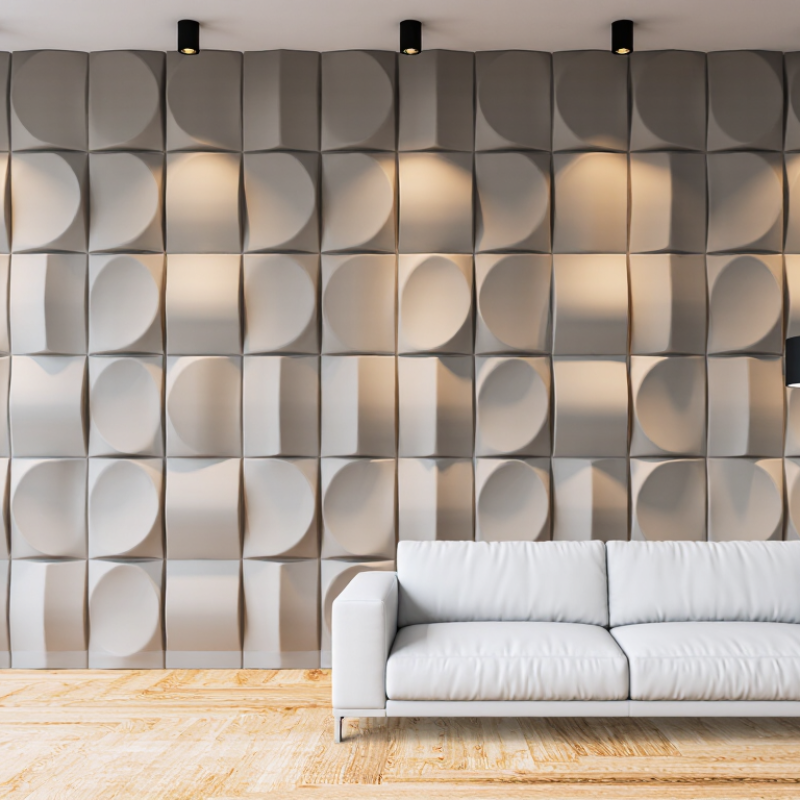
What Is a WPC 3D Wall Panel?

A WPC 3D Wall Panel combines wood fibers and thermoplastic resin to create a decorative surface with raised patterns. It can bring depth to a flat wall, from a subtle linear texture behind a bed to a bold geometric feature in a living room. WPC generally resists moisture better than untreated wood, but performance varies by composition, installation, and room conditions. It is not automatically waterproof.

“Texture should add character without making installation or maintenance an afterthought.” This is an original editorial observation, not a verified quotation from a named industry expert. A reliable named quotation was not provided, and attributing invented words to a real specialist would be misleading. That matters when evaluating claims about durability, indoor use, or product quality.

This guide explains what a WPC 3D Wall Panel is, how its materials and surface design work, and what to check before choosing one. Look closely at panel thickness, edge fit, finish consistency, and the manufacturer’s installation guidance. A sample helps. So does a little skepticism: product photos rarely show how seams, shadows, and color shifts appear across an entire wall.

What Is a WPC 3D Wall Panel?

Definition and Basic Structure of a WPC 3D Wall Panel

What Is a WPC 3D Wall Panel?

A WPC 3D wall panel is a decorative wall covering made from a wood-plastic composite. The material commonly combines wood fibers or flour with thermoplastic resin. Small amounts of additives may improve processing, color stability, or moisture resistance. Its raised surface creates visible patterns, such as narrow ridges or geometric blocks. It is not solid wood.

The basic structure varies by product. Most panels have a molded front face, a thicker composite body, and a rear surface designed for fixing to a wall. Some have grooves or connecting edges; others require separate clips or adhesive. The relief is formed during manufacturing, so its depth and spacing affect both appearance and shadow. A sample viewed under room lighting can look different from a catalog image. Details matter.

Tips: Check the panel’s thickness, weight, and fixing method before installation. Leave suitable expansion space where the manufacturer recommends it. Keep the wall dry and reasonably even. WPC can resist everyday moisture better than untreated wood, but it is not automatically waterproof. That distinction is easy to miss.

Materials Used in WPC 3D Wall Panels

What Is a WPC 3D Wall Panel?

Materials Used in WPC 3D Wall Panels

A WPC 3D wall panel combines wood particles with a thermoplastic resin, then forms the mixture into a textured profile. The wood component may be fine flour or short fibers; the resin commonly includes polyethylene, polypropylene, or PVC. These material families are described in Clemons’s technical review of wood-plastic composites in Forest Products Journal (2002). The precise recipe varies. There is no universal blend.

Manufacturers may add pigments, stabilizers, and coupling agents to improve color consistency, processing, or bonding between wood and plastic. Some panels are hollow behind the raised face, which reduces material use but can make cutting edges look less finished. Look closely at a sample: a warm, grain-like surface may still feel more uniform than natural timber. Grand View Research valued the global WPC market at about US$7.26 billion in 2023 and projected an 11.0% annual growth rate from 2024 to 2030. That market estimate indicates demand, not a guarantee of panel quality. A limitation worth noting: published market figures rarely disclose the exact formulation of individual wall panels.

How Three-Dimensional Patterns Are Created

A WPC 3D wall panel gets its depth from shaped tooling, not from a printed image. Its wood fibers and thermoplastic resin are heated, blended, and pushed through a profile die. The USDA Forest Products Laboratory’s technical review reports that wood content in WPC formulations commonly ranges from about 30% to 70% by weight. That variation affects flow, surface detail, and how consistently a pattern forms.

During production, a patterned roller can press grooves, grain lines, or shallow ridges into the warm surface. Some profiles are shaped directly by a mold or die. Small changes in pressure, temperature, or fiber distribution can soften sharp details. Not magic. It is controlled forming, with material behavior that still needs monitoring. A neat wood-grain texture may look regular under showroom lights, yet reveal uneven ridges when sunlight crosses the panel.

Manufacturers check the relief depth, panel thickness, and surface finish across production runs. Deep grooves can collect dust, while very fine patterns may disappear after finishing. Grand View Research estimated the global WPC market at about US$7.4 billion in 2023, but that broad market figure does not indicate how precisely any individual panel is made. A sample viewed at an angle is still worth inspecting.

Key Properties and Performance Characteristics

A WPC 3D wall panel combines wood flour or fibers with thermoplastic resin, then forms a raised surface through molding or extrusion. Its performance depends on the recipe, panel thickness, and backing—not texture alone. A deep groove may look crisp, but it can collect dust or hold moisture if poorly installed.

Moisture resistance is useful, but “waterproof” is too broad a promise. The USDA Forest Products Laboratory’s Wood Handbook places wood’s fiber saturation point near 30% moisture content; this describes wood, not a finished WPC panel. Still, wood content helps explain why composite panels can swell when moisture reaches exposed edges. ASTM International’s D7031 guide identifies physical and mechanical testing for wood-plastic composites, including water absorption and flexural properties. Ask for measured results, rather than relying on a generic product label.

Heat and fire performance also need product-specific evidence. Panels can expand or soften under sustained heat, while color may fade in strong sunlight. For fire behavior, an ASTM E84 test report can document flame-spread and smoke-developed indices. It does not make every installation equally safe. Check the tested panel’s thickness and mounting method against the intended use. A useful specification lists test methods, results, and conditions. Some product sheets omit those details. That gap deserves scrutiny.

What Is a WPC 3D Wall Panel? — Key Properties and Performance Characteristics

WPC (wood-plastic composite) panels combine wood fibers, thermoplastic polymer, and additives. The chart shows an illustrative formulation by mass; actual recipes vary by product and manufacturer.

Wood fibers contribute a wood-like appearance and texture, while the polymer binds the material and additives can support processing, color, or durability. Composition alone does not establish a panel’s moisture resistance, fire performance, or strength; check product-specific test data for those properties.

Common Applications and Installation Methods

WPC 3D wall panels are molded or extruded wall coverings made from wood fibers and thermoplastic. Their raised ribs, flutes, or geometric faces add texture without heavy plasterwork. Common applications include living-room feature walls, bedroom headboards, office reception areas, and retail interiors. In busy spaces, textured panels can help disguise minor scuffs, though dust may collect in deep grooves. They are not automatically suitable for showers or persistently wet walls; check the product’s moisture rating and installation instructions.

The market is growing, but the figures need context. Grand View Research estimated the global wood-plastic composites market at USD 7.4 billion in 2022 and projected an 11.4% compound annual growth rate from 2023 to 2030. That report covers several product categories, not 3D wall panels alone. For installation, start with a clean, dry, flat substrate. Measure from a level reference line, then cut panels carefully around sockets and corners. Depending on the panel system, use compatible adhesive, mechanical fasteners, or both. Leave the specified expansion gap and finish exposed edges with matching trim. Small wall irregularities can still show through. A careful dry fit often prevents awkward seams.

What Is a WPC 3D Wall Panel? - Common Applications and Installation Methods
Topic Typical Use or Feature Common Installation Method Practical Considerations
What the panel is A decorative wall covering made from wood-plastic composite (WPC), formed with a raised or sculpted surface to create a three-dimensional effect. Panels are fixed to a suitable wall or supporting framework using a method compatible with the panel design. Composition, thickness, finish, and profile vary by product. Check the product documentation before selecting fixings or adhesives.
Living rooms and feature walls Used to add texture behind a sofa, television, or focal point in an indoor living space. Adhesive may be suitable on a clean, dry, flat, sound wall when the panel instructions permit it. Mechanical fixings can provide additional support. Plan the panel layout and cut-outs before installation. Confirm that the wall can support the panels and any attached items.
Bedrooms and headboard walls Creates a decorative backdrop behind a bed or across a selected wall area. Panels may be bonded to a prepared wall or secured to battens, depending on panel weight, wall condition, and installation guidance. Keep panels clear of heat sources and electrical fittings unless the relevant clearances and installation details have been confirmed.
Offices and reception areas Adds a textured finish to meeting rooms, reception walls, and other interior spaces. For larger areas or walls that are not even, a batten framework with mechanical fixings can help create a consistent mounting plane. Consider access to wiring, maintenance requirements, and the room’s fire-safety specifications.
Retail and hospitality interiors Used as an accent finish on selected walls in shops, cafés, and similar indoor settings. Adhesive, screws, or a concealed fixing system may be used if approved for the panel and substrate. Choose a finish and fixing approach suited to expected cleaning, impact, and traffic. Verify applicable building and fire requirements.
Bathrooms and other humid areas May be considered for suitable interior locations, but moisture resistance depends on the specific panel and its installation details. Use only where the product is rated for the exposure; seal joints and edges as directed by the manufacturer. Do not assume that a WPC panel is waterproof or suitable for a shower or continuous water exposure. Follow product guidance and local requirements.
Adhesive fixing Often used for lightweight panels on stable, smooth interior surfaces. Apply a compatible construction adhesive in the pattern and quantity specified for the panel, then position and support the panel as instructed while it bonds. The substrate must be clean, dry, sound, and suitable for bonding. Adhesive alone may not be appropriate for every panel or wall.
Screw fixing to battens Useful when the wall is uneven, when a service space is needed, or when additional mechanical support is appropriate. Level the battens, locate suitable structural fixing points, and secure the panels with compatible screws at the recommended positions. Check batten spacing, screw type, and fixing locations against the panel instructions. Avoid overtightening or damaging the panel surface.
Clips or interlocking systems Available with some panel profiles to help align adjoining panels or conceal fixings. Fit the specified clips or engage the panel joints in sequence, fixing the system to a suitable substrate or framework. Use only the compatible fixing system. Keep joints aligned and allow for any movement clearances required by the product instructions.
Preparation and finishing Applies to most installation approaches and helps improve fit and appearance. Measure and mark the layout, cut panels with suitable tools, dry-fit where practical, and finish exposed edges with compatible trims if required. Allow panels to acclimatize when the product instructions call for it. Follow specified expansion gaps, ventilation details, and cleaning guidance.

Request More Information