What Is a Window Aluminium Profile and How Is It Used?

A Window Aluminium Profile is the shaped aluminium framework surrounding glass in a modern window system. It forms the head, sill, jambs, sash, and connecting sections. The profile may look simple, but its internal chambers often hide important engineering decisions.

Fenestration specialist Dr. Helen Sanders has noted, “Windows are an integral part of the building envelope.” This principle explains why aluminium profiles deserve closer attention. They influence thermal performance, weather resistance, structural strength, appearance, and long-term maintenance. A well-designed profile can hold double or triple glazing securely. It can also include a thermal break, which reduces heat transfer through the metal frame.

In practical use, manufacturers cut profiles to precise lengths. They then join the corners, install gaskets, add hardware, and fit the glass. The finished window may have a slim black frame, a powder-coated white surface, or an anodised metallic appearance. Small drainage paths guide rainwater away from the glazing cavity. That detail matters during heavy rain.

A Window Aluminium Profile is not the complete window. It works with glass, seals, locks, hinges, and installation materials. Poor alignment can cause air leakage, water entry, or difficult operation. Even a strong profile can perform badly when installed carelessly. This point is easy to overlook.

This guide explains profile types, construction methods, thermal breaks, finishes, applications, and selection factors. It also considers a practical question: should buyers focus only on appearance? Probably not. The best choice balances design, climate, glazing weight, energy goals, and expected service life.
What Is a Window Aluminium Profile and How Is It Used?

What Is a Window Aluminium Profile?

A window aluminium profile is the shaped metal framework around a window. It forms the sash, frame, mullions, and connecting edges. Aluminium is commonly selected because it is light, rigid, and resistant to everyday corrosion. Its slim structure can support wide glass panels without creating a heavy appearance.

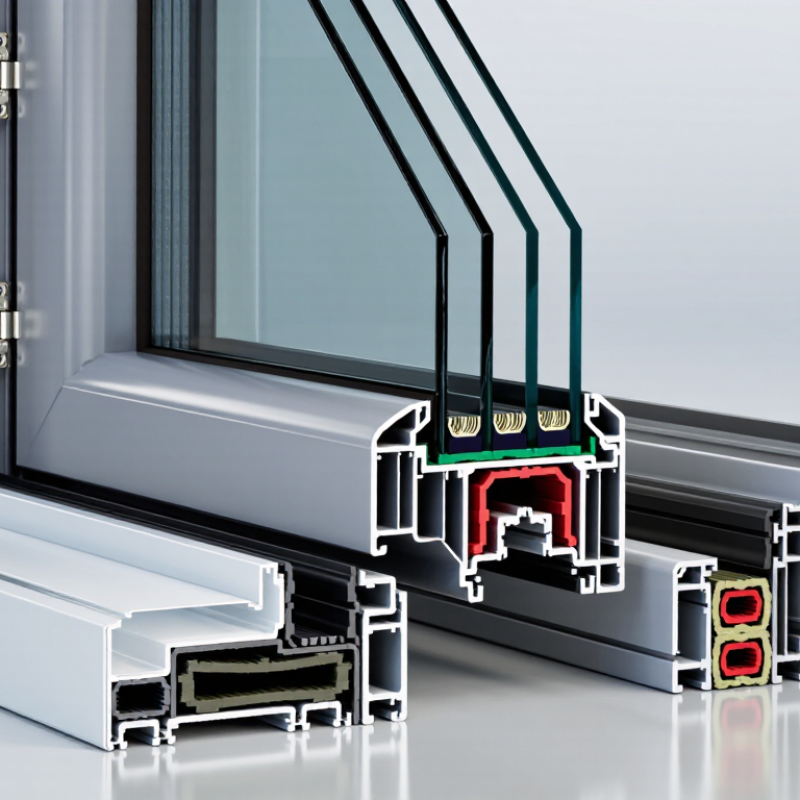
The profile usually contains separate chambers inside its hollow shape. These chambers improve strength and help manage heat transfer. Some systems include a thermal break made from insulating material. This reduces the direct path between outdoor and indoor aluminium surfaces. Gaskets fit into prepared grooves and help limit air, water, and dust entry. Proper drainage channels are also essential. Without them, rainwater may collect inside the frame.

In practical installation, the profile is cut, joined, finished, and fitted with glass and hardware. Accurate measurements matter more than impressive appearance. A small error can create uneven gaps or difficult operation. I have found that corners often deserve extra inspection, especially after transport. Aluminium does not usually require frequent painting, but its surface still needs regular cleaning. Harsh tools can damage the finish. Performance also depends on wall alignment, glass selection, seals, and installation quality. The profile alone cannot solve every window problem. A well-designed section may still perform poorly when fitted carelessly.

What Materials and Designs Define Aluminium Window Profiles?

Aluminium window profiles are extruded sections that form the frame, sash, and connecting parts. The alloy usually contains aluminium, magnesium, and silicon for strength, corrosion resistance, and workable production. Recycled aluminium can reduce material impact, but its quality still requires controlled processing. A thermal break made from polyamide separates the inner and outer aluminium surfaces. This reduces heat transfer through the frame. Details matter.

Profile design controls how a window performs and operates. Multi-chamber sections improve insulation by limiting air movement inside the frame. Casement profiles support hinged sashes, while sliding profiles use narrower tracks and reinforced rails. Glazing channels must fit the selected glass, gaskets, and pressure plates accurately. Drainage paths also guide rainwater away from the interior seal.

In real projects, fabricators match profile depth with glass weight, wind exposure, and opening size. Installers must check corner joints, fasteners, seals, and frame alignment on site. A narrow frame looks elegant, but it may flex when the opening is large. It may also provide less space for insulation. Weather tests for air leakage, water penetration, and wind resistance offer useful evidence. Still, laboratory results cannot replace careful installation. No profile is perfect. Good selection depends on climate, building use, maintenance expectations, and verified technical data.

How Are Aluminium Profiles Manufactured for Windows?

A window aluminium profile begins as a cylindrical billet, usually an aluminium alloy selected for strength, weight, and corrosion resistance. In a modern extrusion press, the billet is heated until it becomes workable, not liquid. A hydraulic ram pushes it through a precision steel die. The opening shapes the frame section in one continuous length. This is the critical moment. Small die errors can create uneven walls, twisting, or visible lines along the profile. Operators monitor temperature, pressure, and extrusion speed during production. Experience still matters, because identical settings can behave differently between batches.

After leaving the die, the hot profile is cooled with controlled air or water. It is then stretched to correct minor bowing and cut into standard lengths. Heat treatment, often called artificial aging, improves the alloy’s hardness and dimensional stability. Technicians inspect straightness, wall thickness, surface condition, and corner fit. Samples may undergo tensile tests and coating checks before release. Not every defect is obvious. A profile can look clean yet fail to seat correctly during assembly.

Fabricators machine the lengths by cutting, drilling, milling, and routing drainage paths. Thermal-break designs may receive reinforced polymer strips between inner and outer aluminium sections. For surface protection, profiles can be anodized or powder coated after careful cleaning and pretreatment. The finish must cover edges, grooves, and handling marks evenly. In practice, installation tolerances deserve equal attention. A perfectly extruded profile can still perform poorly if the frame is forced into an uneven opening. Manufacturing specifications should be checked against climate, glazing weight, and test requirements, rather than copied without reflection.

What Is a Window Aluminium Profile and How Is It Used? - How Are Aluminium Profiles Manufactured for Windows?

Data Dimension Typical Information Practical Description for Window Systems
Definition Extruded aluminium section A window aluminium profile is a shaped section made by forcing a heated aluminium billet through a steel die. Its cross-sectional geometry is designed to form part of a window, door, curtain wall, or glazing system.
Common Aluminium Alloys 6060 and 6063 These heat-treatable alloys are widely used for architectural profiles because they offer good extrudability, surface finish, corrosion resistance, and adequate strength for many window applications.
Typical Temper Conditions T5 or T6 T5 profiles are cooled after extrusion and artificially aged. T6 profiles receive a solution heat treatment followed by artificial aging, generally providing higher mechanical strength than T5.
Basic Window Components Frame, sash, mullion, transom, glazing bead, and interlock Different profiles perform different structural or functional roles. Frames hold the window in the opening, sashes hold movable glass panels, and glazing beads secure the glass and gaskets.
Manufacturing Stage 1 Billet preparation Aluminium billets are cut to length and heated to a controlled extrusion temperature. The billet must be sufficiently soft for forming while maintaining suitable metallurgical properties.
Manufacturing Stage 2 Die design and production A hardened steel die creates the required hollow or solid cross-section. Bridge, porthole, and seam-welded dies may be used for profiles containing internal cavities.
Manufacturing Stage 3 Hot extrusion The press pushes the heated billet through the die. The emerging profile is guided, cooled, stretched to reduce distortion, and cut into standard production lengths.
Manufacturing Stage 4 Heat treatment and aging Depending on the specified temper, the profile may be artificially aged to improve hardness, yield strength, dimensional stability, and resistance to deformation during use.
Surface Finishing Anodizing, powder coating, or liquid coating Anodizing creates a controlled oxide layer, while powder coating applies a durable polymer finish. Surface treatment improves appearance and provides additional protection against weathering and corrosion.
Typical Profile Wall Thickness Approximately 1.2–2.5 mm for many window sections The actual thickness depends on structural loads, profile geometry, span, glass weight, wind pressure, and the applicable design standard. Heavy-duty systems may use thicker sections.
Thermal Performance Non-thermal-break or thermally broken Standard aluminium conducts heat efficiently. A thermal-break system uses a low-conductivity polyamide strip between the interior and exterior aluminium sections to reduce heat transfer and surface condensation.
Thermal-Break Material Glass-fibre-reinforced polyamide Polyamide strips are mechanically locked into specially designed aluminium sections. The width of the thermal break varies by system and affects insulation performance.
Window Opening Types Fixed, casement, awning, sliding, tilt-and-turn, and folding Profile geometry is adapted to the movement and hardware requirements of each opening type. Sliding systems commonly use tracks, rollers, interlocks, and dedicated meeting stiles.
Glazing Compatibility Single, double, or triple glazing Glazing rebates and beads must match the glass thickness and gasket arrangement. Modern systems may accommodate insulated glass units with air or inert-gas cavities.
Sealing Method EPDM, silicone, or other approved gaskets Gaskets create compression seals around the glass and between moving or fixed profile sections. Correct gasket placement is essential for air tightness and water resistance.
Key Performance Factors Strength, air permeability, water tightness, and wind resistance Window performance depends on the complete system, including profiles, corners, hardware, seals, glass, drainage paths, fabrication quality, and installation conditions.
Drainage Design Weep holes and internal drainage channels Small drainage openings allow infiltrated water to move through the profile and discharge to the exterior. Drainage paths must remain correctly positioned and free from blockage.
Dimensional Control Profile straightness, twist, wall thickness, and cut length Manufacturers inspect dimensions after extrusion and finishing to ensure that profiles fit corner joints, gaskets, hardware, glazing components, and installation tolerances.
Typical Finished Length Often around 5–7 metres Standard extrusion lengths vary according to press capacity, profile shape, transport requirements, and fabrication plans. Profiles are later cut to the dimensions required for assembly.
Primary Advantages Low weight, corrosion resistance, rigidity, and recyclability Aluminium profiles can provide slim sightlines and durable frames with relatively low maintenance. Aluminium can also be recycled repeatedly while retaining much of its material value.
Quality Checks Visual inspection, dimensional measurement, coating checks, and mechanical testing Common checks include surface appearance, colour consistency, profile dimensions, coating thickness, hardness, tensile properties, and the fit of assembled components.
Installation Considerations Anchoring, perimeter sealing, alignment, and thermal movement Frames must be correctly aligned and securely fixed. Perimeter joints require suitable weather seals, and allowances may be needed for the thermal expansion of aluminium.
Note: Actual profile dimensions, alloy temper, thermal performance, and test results vary according to the system design, glazing specification, fabrication method, and applicable local building standards.

How Are Window Aluminium Profiles Used in Building Systems?

Window aluminium profiles are shaped sections that form the frame around glass panels. They are commonly made from extruded aluminium, then cut, joined, and finished for construction use. In building systems, these profiles connect windows to walls, glazing, seals, hardware, and drainage paths. Their slim appearance is useful, but appearance alone is not enough.

On site, installers first check opening dimensions, wall alignment, and fixing points. A small measurement error can create pressure on the glass or leave uneven gaps. Thermal-break profiles help reduce heat transfer between indoor and outdoor surfaces. Gaskets and sealants limit air and water leakage. Drainage channels guide rainwater toward controlled outlets. The profile must also support the glass weight and resist wind loads without excessive movement.

I have seen well-finished frames fail because the sill drainage was blocked. Details matter. Engineers usually review span, glass thickness, exposure, fastener spacing, and fire requirements before selecting a section. Factory fabrication can improve accuracy, although transport and handling may still cause damage. A protective film does not replace careful inspection. During installation, teams should test opening operation, seal continuity, and water management. Some designs look efficient on drawings but become difficult to clean or repair. That weakness deserves attention before the system reaches the building.

Typical Aluminium Profile Depths in Window Building Systems

Aluminium profiles form the structural and functional parts of windows, including frames, sashes, mullions, transoms and sills.

The chart shows commonly used approximate profile-depth ranges in millimetres. Frame and sash profiles provide perimeter support, while mullions and transoms divide larger glazed areas. Sills are often deeper to manage drainage and weather protection. Actual dimensions vary according to wind loads, glazing thickness, thermal-performance requirements and the selected building-system design.

What Are the Benefits and Limitations of Aluminium Window Profiles?

A window aluminium profile is the shaped frame section surrounding glass and supporting window hardware. It forms the main structure of a window unit. Manufacturers shape aluminium through extrusion, creating precise channels for seals, locks, drainage, and glazing. A thermal break separates the inner and outer metal sections. This reduces heat transfer through the frame. Installers use these profiles in homes, offices, shops, and high-rise buildings.

Aluminium profiles offer strong structural performance with relatively slim sightlines. They allow more glass and can bring additional daylight indoors. The material resists warping, cracking, and insect damage. It also needs limited maintenance when its coating remains intact. Large windows benefit from aluminium’s stiffness. They stay stable under wind pressure when correctly designed and anchored. Aluminium is also recyclable, which supports responsible material planning. The finish matters.

However, aluminium conducts heat more readily than timber or some reinforced plastics. Poorly designed profiles may create cold internal surfaces and condensation. Thermal-break quality, glass selection, and installation accuracy all affect real performance. Coastal air can also attack damaged coatings or exposed components. Regular inspection helps, especially around drainage openings and corner joints.

Aluminium expands with temperature changes. Installers must allow movement around the frame. Otherwise, stress can affect seals, fasteners, or wall connections. In site assessments, I have seen excellent profiles perform poorly because insulation gaps were left behind the frame. A technical specification may look impressive on paper. The installation still decides much of the result. Thin profiles are attractive, but they may limit hardware capacity or acoustic performance. Careful sizing remains essential.

Request More Information