What Is the Best Commercial Office Furniture in 2026?
Choosing the best commercial office furniture in 2026 is not simply a matter of selecting attractive desks and chairs. Modern workplaces must support focused work, collaboration, accessibility, employee comfort, and responsible purchasing. A chair may look impressive under showroom lighting, yet feel uncomfortable after three hours of daily use. Practical testing matters more than polished photographs.
This guide examines commercial office furniture through an evidence-based and workplace-focused lens. It considers ergonomic adjustment, material durability, maintenance needs, acoustic performance, flexibility, and long-term value. Height-adjustable desks, supportive task chairs, modular storage, and adaptable meeting tables can improve how teams use limited space. However, every office has different employees, workflows, budgets, and building constraints. There is no universal winner.
Real experience often reveals overlooked details. Casters may struggle on thick carpet. Glossy surfaces can reflect harsh lighting. Lightweight partitions may not control sound effectively. These small problems become expensive when repeated across an entire workplace. Reliable decisions should combine manufacturer specifications, warranty terms, user feedback, and hands-on evaluation.
Sustainability also deserves careful attention. Recycled content is useful, but it does not automatically prove responsible production. Buyers should review repair options, material transparency, product lifespan, and disposal planning. Some promising designs still lack strong evidence. That deserves scrutiny.
The following discussion compares leading furniture categories and explains which features deserve priority in 2026. Comfort, performance, and accountability should work together, even when compromises remain unavoidable.
Defining the Best Commercial Office Furniture in 2026
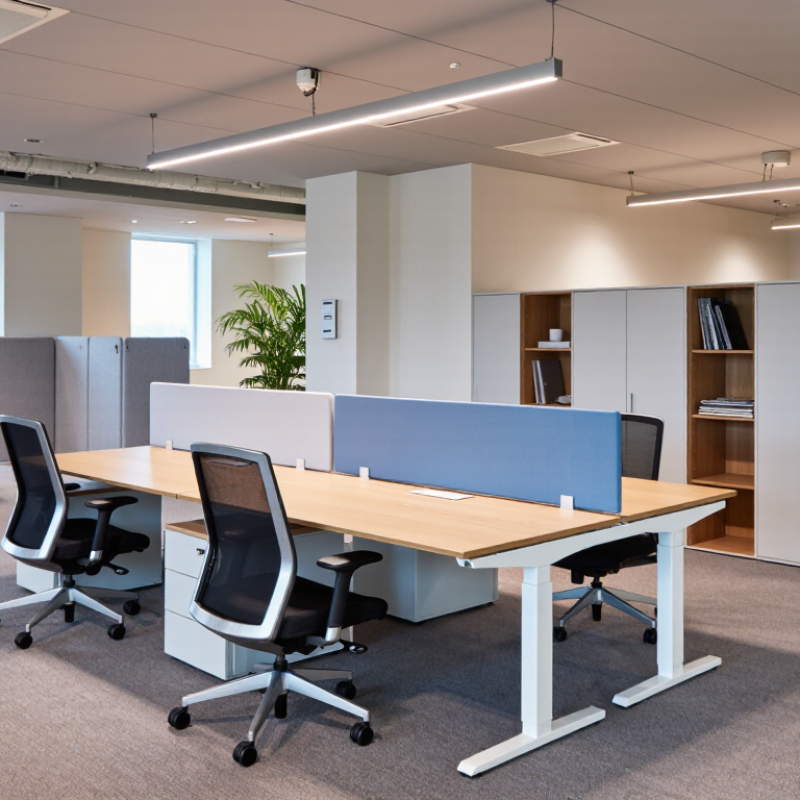
The best commercial office furniture is not the most expensive option. It is furniture that supports different bodies, tasks, and working patterns. In real office assessments, adjustable desks and chairs often reduce awkward postures. A chair should provide adjustable seat depth, lumbar support, and stable armrests. Desk surfaces need enough space for monitors, documents, and occasional collaboration. Comfort matters. So does movement.
Modular tables, mobile screens, and stackable seating help teams reshape rooms quickly. Built-in cable management prevents loose wires from becoming daily hazards. Acoustic panels can soften conversations without making the office feel sealed off. Accessible clearances should support wheelchair users and people with limited mobility. Good planning includes everyone.
Look for durable surfaces, replaceable components, and clear maintenance instructions. A low-cost chair may become expensive after repeated repairs. Sustainable claims should be supported by material disclosures and responsible manufacturing evidence. However, no checklist is perfect. A recycled finish may still feel cold, scratch easily, or discourage daily use. Staff feedback should guide final decisions. Test furniture at different heights and during realistic work sessions. The best choice is the one that remains comfortable, serviceable, and useful after the showroom impression fades.
Key Factors for Evaluating Commercial Office Furniture
When evaluating commercial office furniture in 2026, comfort should be measured, not guessed. I recommend testing chairs for at least 15 minutes before approving a large order. Check lumbar support, seat depth, armrest movement, and fabric temperature. A chair that feels impressive for two minutes may become painful after a full workday. Desk height matters too, especially for employees who alternate between sitting and standing.
Durability deserves equal attention. Inspect joints, drawer runners, edge finishes, and cable channels closely. In busy offices, furniture faces daily impacts, spilled drinks, and frequent rearrangement.
Materials should be easy to clean without becoming slippery or damaged. Ask for load ratings, replacement-part availability, and documented testing. These details reveal more than attractive showroom displays.
The best evaluation also considers room size, walking clearance, lighting, and noise. A large desk can reduce productivity when it blocks circulation.
Cost should include delivery, installation, maintenance, and eventual replacement. A lower purchase price may create higher expenses later. I once approved lightweight meeting tables that looked practical, but their unstable legs caused repeated service requests. That mistake changed my process. Now, I inspect samples in real working conditions and collect feedback from different users. No scorecard is perfect. Employee needs can conflict, and aesthetics still influence workplace pride. Reliable decisions come from combining technical evidence, hands-on testing, accessibility requirements, and honest feedback from the people using the furniture every day.
Top Commercial Office Furniture Types for Modern Workplaces
What Is the Best Commercial Office Furniture in 2026?
Modern workplaces need furniture that supports focus, teamwork, comfort, and frequent change. JLL’s 2024 Future of Work Survey reports that 87% of organizations have return-to-office policies. That shift increases demand for adaptable workstations, ergonomic chairs, and modular meeting tables. Height-adjustable desks help employees alternate between sitting and standing. Supportive chairs should include adjustable lumbar support, seat depth, and armrests. Small details matter.
Collaboration furniture is equally important. Acoustic booths, soft seating, mobile whiteboards, and compact conference tables can create practical zones without permanent walls. Gensler’s 2024 Global Workplace Survey found that 79% of workers consider the office important for completing their work. Yet, open layouts can become noisy and distracting. Acoustic panels and partial screens may improve concentration, although excessive separation can weaken team connection.
Storage should also be flexible. Lockable pedestals, shared cabinets, and personal shelves support hybrid schedules and reduce clutter. Choose durable surfaces that tolerate daily cleaning and repeated movement. In workplace planning practice, oversized furniture often looks impressive but wastes valuable floor area. That is an easy mistake. A better approach is to test circulation, screen sightlines, and cable access before purchasing. No furniture plan is perfect. Teams may still need adjustments after several weeks of real use.
What Is the Best Commercial Office Furniture in 2026?
Top commercial office furniture types for modern workplaces, compared by typical ergonomic working height.
Adjustable sit-stand desks provide the widest height range, while fixed desks and meeting tables are commonly designed around a seated working height of approximately 72–75 cm. Task chairs typically offer adjustable seat heights of about 40–52 cm. These figures are practical planning references based on established ergonomic guidance; actual specifications may vary by user requirements and local standards.
How to Choose Furniture for Different Office Environments
What Is the Best Commercial Office Furniture in 2026?
The best furniture depends on how people actually work. Open offices need acoustic screens, movable tables, and quiet focus corners. Private offices need adjustable desks, supportive chairs, and controlled lighting. Training rooms benefit from nesting tables that store quickly. Reception areas need durable seating, clear pathways, and easy cleaning.
Gallup’s State of the Global Workplace 2024 report found that only 23% of employees were engaged worldwide.
Furniture cannot solve every workplace problem. However, comfort, control, and flexibility can remove daily friction. The Gensler Research Institute’s 2024 workplace survey also emphasizes employee choice across individual and collaborative settings. A fixed desk layout may look efficient, but it can fail during busy team sessions. That weakness deserves honest review.
Tips: Match furniture to work modes, not job titles. Choose chairs with adjustable seat depth and lumbar support. Test desk heights with real users. Use acoustic panels near video-call zones. Leave enough circulation space for mobility devices. Measure noise before adding decorative solutions. OSHA’s computer workstation guidance supports neutral wrist positions, relaxed shoulders, and properly placed screens. These details feel small. They are not. Recheck the layout after four weeks, because real behavior often contradicts the original plan.
Trends Shaping Commercial Office Furniture in 2026
What Is the Best Commercial Office Furniture in 2026?
Trends Shaping Commercial Office Furniture in 2026
Commercial office furniture in 2026 must support movement, focus, and quick collaboration. Fixed desks are losing influence. Modular workstations, lightweight tables, and mobile screens allow teams to reshape rooms within minutes. The 2024 Global Workplace Survey found that employees value offices mainly for collaboration, learning, and social connection. Furniture should reflect those needs, not simply fill floor space.
Hybrid work also changes demand. Gallup’s State of the Global Workplace 2024 report found that 53% of exclusively remote employees would prefer hybrid work. This creates uneven office attendance. Shared desks need personal storage, cleanable surfaces, and simple reservation systems. Acoustic booths and small meeting tables can protect concentration when attendance rises unexpectedly.
Technology integration is becoming less visible but more important. The 2024 Work Trend Index reported that 75% of knowledge workers use artificial intelligence at work. Office furniture now needs accessible power, stable connectivity, and adjustable lighting. Ergonomics remains essential, especially with long screen hours. Adjustable seating and monitor support are practical choices.
Yet, more technology is not always better. That assumption deserves scrutiny. In real offices, complicated controls often remain unused. I would prioritize furniture that staff can understand immediately. The best setup may look less impressive, but work better daily.
What Is the Best Commercial Office Furniture in 2026? — Trends Shaping Commercial Office Furniture in 2026
An evidence-based comparison framework for selecting commercial office furniture for hybrid, flexible, healthy, and sustainable workplaces.
| Furniture Category | 2026 Workplace Trend | Recommended Specification or Benchmark | Business and Employee Value | Verification Method | 2026 Priority |
|---|---|---|---|---|---|
| Height-Adjustable Desks | Flexible workstations that support alternating postures and activity-based work. | Electric height adjustment with a stable seated and standing working range; include programmable height presets where multiple users share a desk. | Supports posture variation, desk sharing, and rapid workplace reconfiguration without replacing the workstation. | Check adjustment range, load capacity, stability at maximum height, noise level, cable management, and compliance with applicable office-table requirements such as EN 527-1. | High |
| Ergonomic Task Chairs | Personalized seating for long-duration computer work and varied employee body types. | Adjustable seat height, seat depth, back support, armrests, and recline tension; controls should be reachable while seated. | Improves individual fit, supports neutral working posture, and reduces the need for one-size-fits-all seating. | Evaluate adjustment range, lumbar support, seat-depth fit, five-star base stability, durability testing, and applicable ergonomic guidance such as ISO 9241-5. | High |
| Acoustic Work Booths and Screens | Greater demand for concentration zones and private virtual meetings in open-plan offices. | Use enclosed or semi-enclosed spaces with tested sound-absorption and speech-isolation performance; provide effective ventilation and lighting. | Creates dedicated areas for confidential conversations, video calls, and focused work without converting the entire office into private rooms. | Request laboratory acoustic results, ventilation data, lighting specifications, fire-performance documentation, and installation instructions. | High |
| Modular Collaboration Tables | Rooms that can shift between workshops, meetings, training, and project work. | Lightweight, reconfigurable components with lockable casters, nesting capability, integrated cable routing, and multiple layout options. | Extends the useful life of meeting areas and reduces the cost and disruption of future workplace changes. | Assess table stability, caster locks, folding or nesting cycles, cable access, maximum load, and reconfiguration time. | High |
| Integrated Technology Furniture | Furniture designed around hybrid meetings, charging, displays, and shared digital workflows. | Provide concealed cable management, replaceable power modules, accessible charging points, monitor mounting options, and serviceable components. | Reduces visual clutter, improves meeting start-up time, and allows technology to be upgraded without replacing the complete furniture system. | Check electrical certification, power-load limits, cable separation, access for maintenance, heat management, and compatibility with local building codes. | High |
| Low-Emission Furniture | Greater attention to indoor air quality and healthier interior materials. | Specify products with documented low-emitting materials and emissions testing aligned with recognized indoor-air-quality protocols, including CDPH Standard Method v1.2 where applicable. | Helps reduce exposure to volatile organic compounds and supports healthier occupied interiors. | Request emissions test reports, product declarations, adhesive and coating information, and documentation for composite wood and upholstery components. | High |
| Circular and Repairable Furniture | Longer product life, lower waste, and easier refurbishment are becoming purchasing requirements. | Replaceable parts, reversible assembly, material transparency, and repair documentation; avoid unnecessary permanent bonding between dissimilar materials. | Reduces replacement frequency, simplifies maintenance, and improves the potential for reuse, refurbishment, and recycling. | Review disassembly instructions, spare-part availability, warranty terms, material composition, recycled-content claims, and circularity assessment methods such as EN 45554. | High |
| Accessible Workstations | Inclusive design that accommodates different mobility, reach, sensory, and working requirements. | Provide adjustable workstation options, clear approach routes, accessible controls, and at least one compliant accessible work position in each relevant work area. | Improves usability for a wider range of employees and supports accessibility planning across different office layouts. | For projects in the United States, verify applicable accessibility requirements, including a minimum clear floor space of 30 × 48 inches where required by ADA criteria. | High |
| Biophilic and Residential-Influenced Furniture | Workplaces are adding warmer finishes, natural textures, soft seating, and informal settings to improve comfort and belonging. | Use durable upholstery, cleanable surfaces, rounded forms, natural visual elements, and a balanced mix of formal and informal seating. | Supports social interaction, workplace identity, and varied work modes while making shared areas more welcoming. | Check commercial durability ratings, cleanability, flame performance, fabric abrasion results, stain resistance, and maintenance requirements. | Medium |
| Mobile Storage and Personal Lockers | Less assigned seating and more shared neighborhoods require secure storage for personal items. | Use lockable, modular storage with clear user identification, ventilation where needed, and layouts that do not obstruct circulation or accessible routes. | Supports desk sharing, reduces clutter, and allows teams to change location without losing personal storage capacity. | Evaluate lock reliability, compartment dimensions, anchoring, fire-safety requirements, cleaning access, and corridor clearances. | Medium |
| Durable Finishes and High-Performance Upholstery | Organizations are prioritizing total cost of ownership over lowest initial purchase price. | Select replaceable upholstery panels, scratch-resistant surfaces, cleanable laminates, and components supported by documented durability testing. | Reduces maintenance interruptions, extends replacement cycles, and protects the appearance of high-traffic areas. | Review abrasion resistance, stain-cleaning instructions, impact testing, edge durability, warranty coverage, and availability of replacement components. | High |
Related Posts
-
10 Best Office Furniture Liquidators for Global Buyers?
-

Top Strategies for Choosing the Best Office Desk Furniture to Boost Productivity and Comfort
-
10 Essential Reasons Why Home Office Chairs Are Crucial For Your Productivity
-
Ultimate Guide to Finding the Best Office Furniture Stores Near You
-
Exploring Office Furniture Liquidators Opportunities at 2025 China Import and Export Fair
-
The Ultimate Guide to Choosing the Perfect Office Desk Chair for Maximum Comfort