10 Executive Office Desk Buying Tips for Global Buyers
Buying an executive office desk across borders is not just a style decision. It affects daily comfort, room planning, delivery, and long-term value. A polished walnut finish may look impressive in a product photo, yet the desk can feel too deep in a compact office or arrive with unclear assembly instructions. Small details matter.
Cornell ergonomics expert Alan Hedge is often quoted as saying, “The best posture is your next posture.” That principle is useful when comparing an executive office desk: consider adjustable height, legroom, monitor placement, and how easily you can change position during the day. A broad work surface is not automatically a better one. Measure the room, doorways, and elevator before ordering. Then check the desk’s dimensions, materials, cable access, warranty, and replacement-part support.
Global buyers also need to compare shipping terms, packaging, lead times, and after-sales service. Ask suppliers for clear product specifications and written confirmation of finishes, hardware, and assembly requirements. Details can vary by market. That sounds tidy. It rarely is.
The tips ahead offer a practical way to assess options before committing budget. They are not a substitute for checking the needs of your own team or workspace. A useful desk should fit the room, support real work, and be serviceable after delivery. Sometimes the best choice is less dramatic than the catalog image. That deserves a second look.
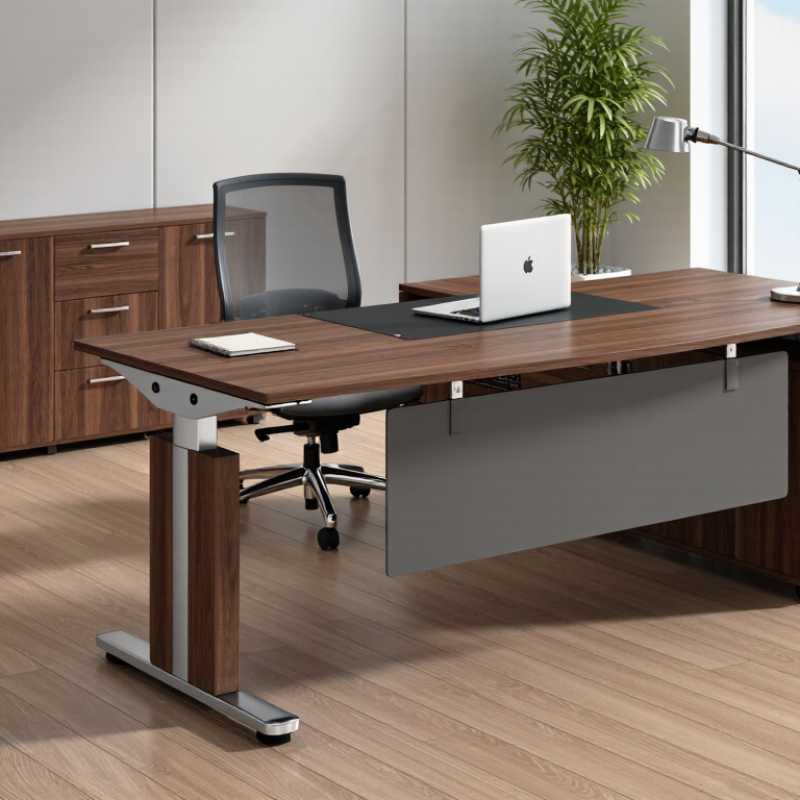
Define Workspace Needs and Executive Desk Functions
Before comparing finishes or dimensions, map how the executive desk will be used each day. Note whether the user writes on paper, reviews plans, joins video calls, or works across two screens. Measure room width, door clearance, and the delivery route; a desk that fits on paper may block a cabinet drawer. Keep a tape measure nearby. In shared offices, consider who adjusts the monitors and where visitors sit.
Desk functions should follow daily tasks, not prestige. A broad work surface can hold documents beside a laptop, while a modest return may separate focused work from quick meetings. Check cable openings, power access, and legroom with the actual chair in place. Storage needs vary. Deep drawers hold files, but can reduce knee space or put frequently used items out of reach.
It is easy to overestimate usable space. A desk can look generous in a showroom, then feel cramped beside screens, a task lamp, and paperwork. Mark the footprint with tape before ordering, and test the chair’s movement. For teams working across regions, confirm metric dimensions, assembly access, and local power arrangements.
Choose Desk Size, Layout, and Ergonomic Features
An executive desk should fit the work, not just the room. Measure the doorway, elevator, and final desk area before ordering; international projects often stumble over access, not the furniture itself. Allow space for a monitor, laptop, documents, and a clear writing area. A 60-inch-wide surface may feel generous until two screens and a phone occupy it. Measure twice.
Layout shapes daily movement. Put frequently used items within easy reach, and keep cables away from walking paths. For shared offices, check chair clearance and whether drawers open without blocking circulation. OSHA’s Computer Workstations eTool recommends placing the monitor about 20–40 inches from the eyes, with its top at or below eye level. Treat that range as a starting point, not a universal fit; screen size and eyesight matter. Small details matter.
Desk height deserves the same care. Seated users should be able to keep feet supported and shoulders relaxed while typing. A height-adjustable desk can accommodate different users, but only if its usable range suits them. Before buying in volume, test one workstation with the actual chair, monitor, and keyboard. I would not skip this step, even when specifications look convincing; a neat product sheet cannot reveal an awkward reach.
Compare Materials, Construction, and Long-Term Durability
An executive desk should look composed, but its materials determine how well it ages. Solid wood can be repaired and refinished, though seasonal humidity may cause movement. Veneered panels offer a consistent finish, but exposed edges need careful protection. Quality laminate resists everyday spills and scratches, yet damaged surfaces can be difficult to restore. Ask for a sample, not just a product photo. Run a fingernail along its edge and check whether the finish feels even.
Construction matters as much as appearance. Look for reinforced joints, stable legs, and drawers that glide smoothly when loaded. Open and close each drawer several times; wobbling or scraping may signal poor alignment. Check the desk’s stated weight capacity and confirm whether it includes attached storage. A heavy desk is not automatically durable. Weight can hide weak joints.
For global buyers, request clear specifications for materials, finishes, packaging, and assembly. Long shipping routes can expose furniture to rough handling, so inspect corner protection and carton strength. Ask how the finish responds to heat, sunlight, and routine cleaning. No single test tells the whole story. Compare written warranties, but read exclusions closely; wear, moisture, and commercial use may be treated differently. If details are missing, pause before ordering. A small question now can prevent an expensive replacement later.
Check Quality Standards, Customs Rules, and Shipping Options
Before ordering executive office desks across borders, ask for written specifications, not just polished photos. Check panel thickness, edge finishing, load capacity, and the stability of drawers and legs. Request test reports for relevant quality or emissions standards, then confirm that the report covers the exact materials and model you plan to buy. A certificate can look convincing and still refer to a different product. I have learned that the hard way.
Customs requirements vary by destination and can change. Give your broker accurate product descriptions, material details, country of origin, and the proposed tariff classification for review. Ask whether wood components need additional documentation or inspection. Keep the commercial invoice and packing list consistent; mismatched quantities can delay clearance. Small errors matter.
Shipping deserves equal scrutiny. Compare sea freight with air options, but include port charges, customs fees, inland delivery, and possible storage costs. Confirm whether the quote covers delivery to your building or only to the curb. For desks, request carton dimensions, gross weights, protective packing details, and a clear damage-claim process. Measure doorways and elevators before dispatch. It is easy to overlook. Transit estimates are not guarantees, and my own planning has sometimes been too optimistic. Leave room for delays, especially when installation depends on a specific date.
10 Executive Office Desk Buying Tips for Global Buyers
Compare typical container capacity when planning desk shipments.
A 40-foot high-cube container typically offers the greatest internal volume. Actual usable space depends on container specifications, packaging, and load limits; confirm dimensions and shipping requirements with your freight provider.
Evaluate Suppliers, Warranty Terms, and Total Cost of Ownership
For global buyers, compare executive desks by delivered performance, not catalogue price. Request a written quote that separates the desk, packaging, freight, duties, installation, and spare parts. Ask suppliers to document material specifications, load capacity, finish testing, and lead times. Then check whether local technicians can replace a damaged drawer runner or desktop panel. Small details matter.
Tip: Read warranty exclusions line by line. Confirm coverage length, shipping responsibility, claim response time, and whether replacement parts remain available. NIST’s Handbook 135-2022 describes life-cycle cost analysis as a way to assess costs over an asset’s service life. Apply that logic: compare purchase and maintenance costs across the same expected use period. A lower price can become expensive after repeated repairs. Still, service-life estimates are assumptions, not promises.
The U.S. EPA’s 2018 materials report estimated 12.1 million tons of furniture and furnishings in municipal solid waste. This figure is U.S.-specific, but it highlights why repairability and end-of-life options deserve attention. Ask suppliers about replaceable components, refurbishment, and take-back arrangements. Put their answers in writing. I would also challenge one common assumption: a long warranty is not automatically valuable if claims are slow or parts are unavailable. Request sample claim procedures and confirm who handles service in each destination market.
| # | Buying Tip | What to Evaluate | Evidence to Request | Cost or Risk Consideration |
|---|---|---|---|---|
| 1 | Define the workspace requirements | Measure room dimensions, doorways, circulation space, user needs, and required desk features before comparing products. | A dimensioned floor plan, desk drawings, material specifications, and a list of required features. | Accurate measurements help avoid expensive returns, rework, and delivery-access problems. |
| 2 | Assess supplier capability | Check relevant production experience, quality-control processes, order capacity, lead-time planning, and communication practices. | Business references, production details, inspection procedures, and a written order schedule. | Compare the supplier’s ability to meet the specification and delivery plan, not just the quoted unit price. |
| 3 | Verify materials and construction | Review the specified desktop material, edge treatment, frame construction, hardware, finish, and applicable safety or emissions documentation. | Material data sheets, finish samples, construction drawings, and applicable test reports or certificates. | Material and finish choices affect durability, maintenance needs, appearance, and replacement cost. |
| 4 | Check dimensions and ergonomics | Confirm the desk’s height, width, depth, legroom, cable access, and compatibility with the intended chair and equipment. | A product specification sheet with finished dimensions and, where relevant, adjustment range. | A desk that does not fit the user or space may require modification or early replacement. |
| 5 | Review warranty terms carefully | Check coverage period, covered components, exclusions, claim process, remedies, and who pays shipping or service costs. | The written warranty, including the start date and procedures for submitting a claim. | Warranty length alone does not show the likely value of coverage; exclusions and claim costs matter too. |
| 6 | Compare samples and pre-shipment inspections | Agree how samples, production checks, packaging condition, and acceptable quality criteria will be assessed. | An approved sample, inspection checklist, and inspection report before shipment. | Inspection can identify defects before goods travel internationally, when correction is usually more complicated. |
| 7 | Clarify delivery terms and responsibilities | Specify the delivery location, handover point, transport responsibilities, and the agreed Incoterms® rule and named place, if used. | A quotation and purchase contract that state the delivery term, named place, and shipment schedule. | Freight, insurance, import clearance, duties, and final delivery responsibility depend on the contract and delivery arrangement. |
| 8 | Calculate import and installation costs | Check the correct tariff classification, country-specific import requirements, applicable duties and taxes, and local assembly needs. | A landed-cost estimate reviewed with a qualified customs broker or relevant local authority where appropriate. | Do not assume duties or taxes are included in a product quote; rates and requirements vary by destination and product classification. |
| 9 | Plan packaging and after-sales support | Review protective packaging, assembly instructions, spare-part availability, replacement hardware, and support response arrangements. | Packaging details, assembly documentation, parts list, and written after-sales contact procedures. | Packaging damage, missing parts, and delayed service can add costs beyond the purchase price. |
| 10 | Compare total cost of ownership | Estimate purchase price, freight, insurance, duties and taxes, installation, maintenance, repairs, and expected replacement costs over the planned use period. | A comparable, itemized cost worksheet for each shortlisted offer. | Total cost of ownership = purchase and delivery costs + installation + expected maintenance and repair − any confirmed residual value. Use the same assumptions when comparing suppliers. |
Related Posts
-
Top Strategies for Choosing the Best Office Desk Furniture to Boost Productivity and Comfort
-

Top 10 Work Desks in China for Global Buyers to Consider?
-

Why Your Office Needs an Executive Desk for Enhanced Productivity
-
Advantages of Choosing an Executive Desk for Your Office Environment
-

How to Choose a Modern Executive Desk in 2026
-
2025 How to Choose the Perfect Executive Office Desk for Your Workspace