Why Choose Commercial Office Furniture for Your Business?
A business environment communicates its priorities before anyone speaks. Commercial office furniture can support focus, collaboration, comfort, and professional credibility. It also needs to survive daily use, frequent movement, cleaning, and changing team requirements. A desk may look attractive in a showroom, yet feel cramped after eight hours. A chair may seem affordable, yet create discomfort when employees use it every day.
George Nelson, former design director at Herman Miller, said, “Design is a manifestation of how we see the world.” His observation remains relevant to modern workplaces. Furniture reflects how a company values people, space, and long-term performance. Durable materials, adjustable seating, practical storage, and well-planned workstations can create a more dependable office experience. These details matter.
But furniture is not a complete solution. It cannot repair unclear management, poor communication, or an unhealthy workload. That is an uncomfortable truth. Good design supports better work; it does not guarantee it. Businesses should examine employee tasks, room dimensions, accessibility needs, maintenance demands, and future growth before purchasing.
The wrong choice can waste money. It can also create visual clutter, unused meeting areas, or uncomfortable workstations. A better approach combines professional advice with direct employee feedback. Measure the space. Test the chair. Watch how people move through the room. Commercial office furniture becomes valuable when it serves real behavior, not imagined perfection. Mistakes may still happen, but thoughtful planning makes them smaller, clearer, and easier to correct.
What Defines Commercial Office Furniture?
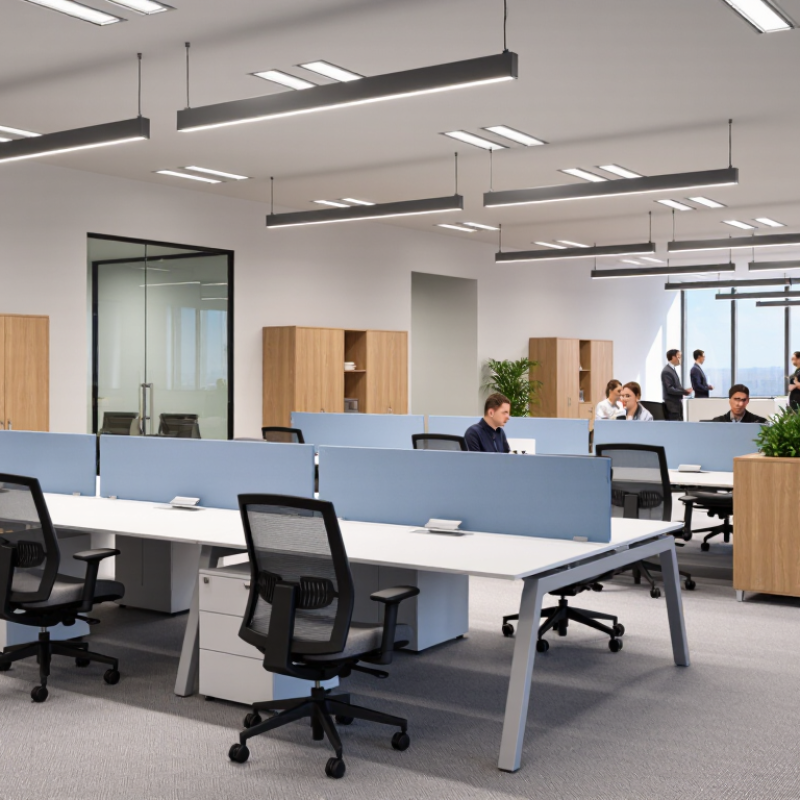
Commercial office furniture is built for repeated, shared use—not just for a spare room that happens to contain desks. It typically includes task chairs, desks, storage, and meeting tables designed for daily wear, frequent adjustment, and practical maintenance. A chair may need to support different users across a single workday. A desk should remain stable while holding monitors, cables, and notebooks. The details matter.
Standards and ergonomic fit
Standards help define that difference. The Business and Institutional Furniture Manufacturers Association (BIFMA) publishes performance and safety standards for commercial furniture, including tests for strength, durability, and stability. These tests give buyers a clearer basis for comparing products than appearance alone. Ergonomic fit matters, too: adjustable seat height, supportive backrests, and reachable work surfaces can make a workstation more usable across different body sizes. Not every “ergonomic” label guarantees a good fit.
Making choices for real workplaces
Workplace research adds useful context. Gensler’s 2024 Global Workplace Survey collected responses from more than 16,000 office workers, underscoring how varied workplace needs can be. Furniture choices should reflect the actual mix of focused work, collaboration, and movement in a business. Measure the room, check adjustment ranges, and consider repair and replacement needs. A polished showroom setup can still feel wrong after a full week of use.
How Does It Meet the Needs of a Business?
Commercial office furniture meets business needs by supporting different tasks, people, and working patterns. A sturdy desk can hold monitors, documents, and charging equipment without turning every workday into a cable hunt. Adjustable chairs and monitor arms help staff set up workstations around their bodies, rather than forcing everyone into one fixed posture. Small details matter. So does fit.
The U.S. Bureau of Labor Statistics reported 2.4 nonfatal injury and illness cases per 100 full-time-equivalent workers across private industry in 2023. That figure is not specific to office work, but it is a useful reminder to consider comfort and safe movement when planning workspaces. Commercial-grade furniture is typically designed for frequent daily use, making durability and maintenance relevant for busy teams. Shared tables, lockable storage, and movable screens can also help businesses adapt rooms as headcounts or tasks change. Flexible, not fussy.
A practical selection process starts with observing how employees actually work: who needs quiet focus, who meets clients, and where equipment accumulates. The answer may be fewer desks and better storage, not more furniture. One caveat: adjustable features only help when people know how to use them. A brief setup demonstration can make the difference, though teams may still need to revisit layouts after real use. BIFMA’s furniture standards provide recognized performance and safety benchmarks that buyers can include in procurement requirements.
Why Choose Commercial Office Furniture for Your Business?
Commercial furniture can support everyday work, comfort, and access. These reference dimensions help illustrate practical workspace planning.
Desk and chair figures are typical planning dimensions, not universal requirements. ADA figures show minimum clear widths for accessible routes and doorways; verify applicable standards and site conditions when planning a space.
What Benefits Does Commercial Furniture Provide?
Commercial office furniture supports more than appearance. It shapes posture, concentration, collaboration, and daily comfort. Adjustable desks, supportive chairs, and monitor arms help employees maintain healthier working positions. These details matter during long meetings and focused computer work.
Gallup’s State of the Global Workplace 2024 reports that only 23% of employees are engaged worldwide. Furniture cannot solve engagement alone. However, uncomfortable seating, poor lighting, and crowded desks can quietly increase frustration. The 2023 Global Workplace Survey from the Gensler Research Institute also identifies individual work areas and meeting spaces as important workplace features. Commercial furniture offers stronger durability, consistent ergonomics, and flexible layouts for changing teams. It can also reduce replacement costs over time, although higher quality usually requires a larger initial budget. That trade-off deserves honest review.
Tips: Measure real work patterns before purchasing. Observe where employees stand, collaborate, or work silently. Choose chairs with adjustable seat height, lumbar support, and armrests. Keep walkways clear, and leave enough space for movement. A perfect layout is unlikely. Test a small area first, then ask employees what feels uncomfortable. Their feedback may challenge the original plan. Do not ignore it.
Which Factors Should Guide Furniture Selection?
Choosing commercial office furniture starts with observing how people work, not just how a floor plan looks.
Count daily users, note their tasks, and watch where bags, cables, and shared equipment collect. A reception chair used for five minutes has different needs from a task chair used for six hours. Comfort matters, but fit matters too. Check seat height, lumbar support, desk clearance, and whether staff can adjust settings easily. Small mismatches become daily irritations.
Measure rooms and circulation routes before ordering; include door swings, drawers, and accessible paths. Compare materials against real use: busy meeting tables need surfaces that clean easily, while fabric panels can soften sound in quiet work areas.
Ask about load ratings, replacement parts, warranties, and cleaning instructions. These details affect ownership costs beyond the purchase price. Plans still miss things. A mock-up may reveal that a chair blocks a cabinet or a monitor arm crowds the desk.
Allow for different body sizes, hybrid schedules, and future team changes, while keeping the budget honest. Not every premium feature earns its place.
How Can Businesses Plan a Commercial Furniture Purchase?
A commercial furniture purchase should begin with evidence, not attractive pictures. Measure the office carefully before requesting quotes. Record window positions, door swings, power points, and walkways. Note where daylight falls during the afternoon. Walk the space. Then speak with employees who use it daily. Ask about back support, storage, noise, and meeting privacy. Quiet workers may need different settings from reception staff. Managers often overlook this difference.
Set a realistic budget that includes delivery, installation, maintenance, and future replacements. Separate essential items from attractive extras. A cheaper desk can create higher costs if it fails early. Quality is not only appearance. Check load ratings, adjustment ranges, surface durability, and cleaning requirements. Ask for product specifications and warranty terms in writing. Use current workplace safety guidance when evaluating chairs, screen positions, and circulation space. Sit in sample chairs for at least ten minutes. Short tests can mislead.
Plan delivery around business operations. Confirm lift access, loading restrictions, assembly time, and packaging removal. Keep a simple floor plan with exact dimensions. Leave enough clearance for movement and emergency access. Allow some spare capacity for new employees. Our first office layout looked efficient, but crowded storage blocked two walkways. That mistake delayed installation and caused unnecessary rework. A pilot area can expose similar problems before the full order. Review the plan with facilities staff, employees, and an independent safety professional when risks remain unclear.
Why Choose Commercial Office Furniture for Your Business? - How Can Businesses Plan a Commercial Furniture Purchase?
| Planning Dimension | Practical Reference | What to Assess | Purchase Planning Action |
|---|---|---|---|
| Workstation size | Common individual desk sizes are approximately 48–72 inches wide and 24–30 inches deep. | Available floor area, monitor and equipment needs, storage, and circulation space. | Measure the room and map desks, doors, windows, power outlets, and walkways before selecting furniture. |
| Desk height | Many standard desks are about 28–30 inches high; adjustable models offer a broader working range. | User comfort, chair adjustment, monitor position, and whether employees need seated or sit-stand work. | Check desk and chair compatibility, and assess adjustable options for varied users and tasks. |
| Office chairs | Adjustable seat height, back support, and a stable base are common features of task chairs. | Daily hours of use, user fit, adjustability, ease of cleaning, and expected maintenance. | Test representative chairs with employees and confirm that the adjustments suit the intended users. |
| Accessible circulation | In the United States, ADA standards generally require accessible routes to be at least 36 inches wide, subject to specified exceptions. | Route continuity, door clearances, turning areas, and access to work areas and shared facilities. | Include accessibility review in the layout process; confirm applicable local requirements for the project. |
| Meeting-room capacity | Table size and seating capacity depend on chair dimensions, room shape, and circulation space. | Typical meeting size, presentation equipment, accessible seating, and entry and exit paths. | Plan the room around the expected number of users and test the layout with chairs pulled out. |
| Total cost of ownership | The purchase price is only one cost; delivery, installation, maintenance, replacement, and disposal may also matter. | Budget limits, warranty terms, expected service life, repair options, and future expansion. | Compare complete project quotes and document ongoing costs, not just the unit price. |
| Delivery and installation | Lead times and installation requirements vary by product, order size, location, and supplier capacity. | Move-in date, building access, elevators, loading arrangements, and installation coordination. | Confirm current lead times and delivery scope in writing before setting the office opening schedule. |
| Future flexibility | Modular desks, mobile storage, and reconfigurable meeting furniture can make layout changes easier. | Hiring plans, hybrid work patterns, changing team sizes, and room-use requirements. | Prioritize adaptable pieces where future space needs are uncertain, and standardize compatible dimensions where practical. |
Dimensions are planning references, not universal requirements. Verify measurements, accessibility rules, and product specifications for the project location and intended users.
Related Posts
-
What Is the Best Commercial Office Furniture in 2026?
-
10 Best Office Furniture Liquidators for Global Buyers?
-
Innovative Ways to Utilize the Best Conference Room Table in Collaborative Workspaces
-
10 Best Executive Office Furniture for Global Buyers
-
How to Choose the Best Executive Office Desk?
-

Essential Tips for Choosing Modern Office Furniture?